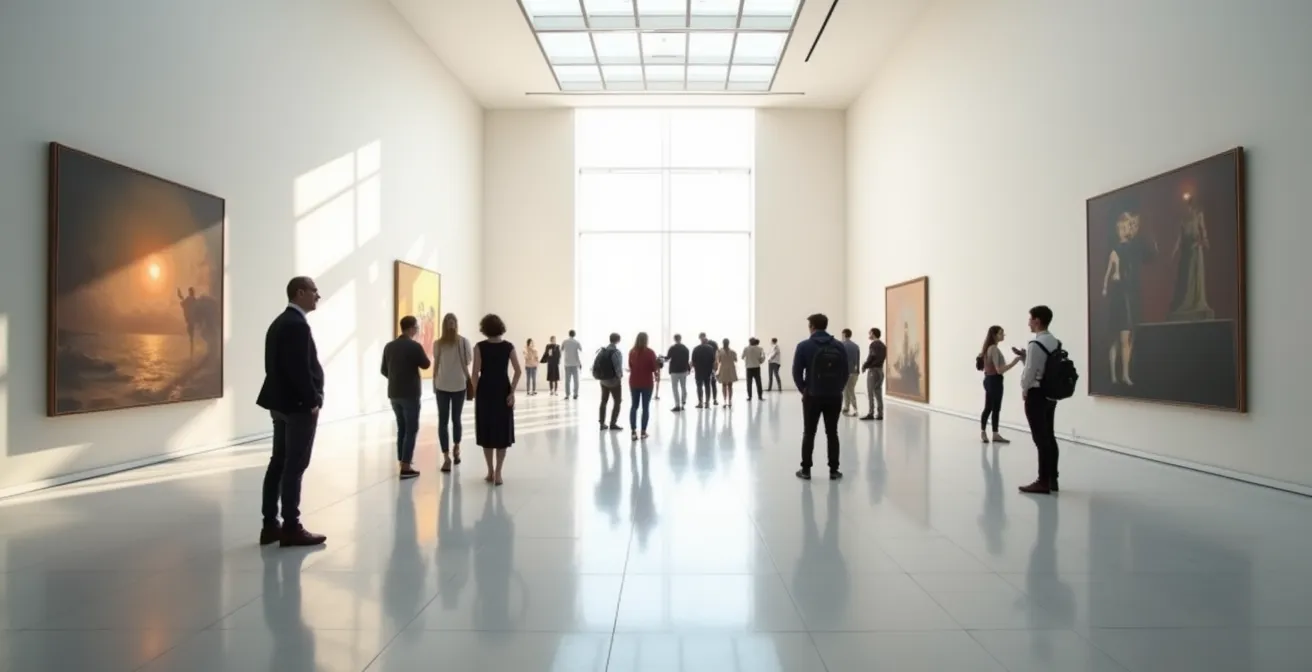
In summary:
- Forget crowded “free days”; the real hack is understanding the U.S. museum funding model based on private philanthropy.
- A single $100 museum membership can grant you free entry to over 1,000 institutions via reciprocal networks.
- Strategic timing—like visiting during member-only hours or choosing less-famous museums—offers a better experience than popular free-for-alls.
- For some historic sites, paying the ticket price is a crucial act of supporting preservation, which is its own reward.
The sticker shock is real. You arrive at a world-class American museum, ready for a day of cultural immersion, only to be met with a $30 admission fee. For budget travelers, this can be a significant barrier, turning a day of art into a costly outing. The common advice is to hunt for elusive “free admission days” or “pay-what-you-wish” hours, but this often leads to battling massive crowds for a fleeting glimpse of famous works. It’s a frustrating trade-off between your wallet and your sanity.
This approach misses the bigger picture. Unlike many state-funded European counterparts, American high culture runs on a system of private philanthropy. This isn’t a barrier; it’s a system with its own rules, and rules can be learned. The real secret to affordable and superior museum access isn’t just about finding a loophole for free entry. It’s about becoming a “culture hacker”—someone who understands this patronage system and uses its own mechanisms to their advantage.
This guide will show you how to move beyond the obvious. We’ll explore how to leverage reciprocal memberships for vast access, why a smaller, intimate museum can offer more value than a crowded mega-institution, and when paying the ticket price is actually the smartest and most rewarding move. By understanding the ‘why’ behind the costs, you can unlock premium experiences without breaking the bank, transforming yourself from a mere tourist into a savvy cultural navigator.
This article breaks down the essential strategies for navigating the American museum landscape. From understanding funding models to mastering crowd avoidance, each section provides a key piece of the puzzle for the aspiring culture hacker.
Summary: How to Hack Your Way into the Best U.S. Museums
- Why American Museums Have Names on Every Hall and Bench?
- How to Use Reciprocal Memberships to Enter 50 Museums for One Price?
- Mega-Museum vs. House Museum: Which Offers a Better Intimate Experience?
- The ‘Everything at Once’ Mistake That Ruins Your Visit to the Louvre equivalent
- When to Visit the MOMA to Avoid the ‘Starry Night’ Crowd Crush?
- Why Your $20 Ticket to Mount Vernon Is Crucial for Preservation?
- Why You Can’t Enter the Tent Before 2 PM Without a Black Card?
- How to See the Impressionist Collection at the Art Institute Without the Crowds?
Why American Museums Have Names on Every Hall and Bench?
Walk through any major American museum, and you’ll see them everywhere: names. The David H. Koch Plaza, the Sackler Wing, a small plaque on a gallery bench crediting the “Smith Family.” This isn’t just decoration; it’s the bedrock of the American cultural funding model. Unlike government-subsidized institutions common in Europe, most U.S. museums are non-profits that rely heavily on private philanthropy to operate, expand, and acquire art. Every named object, from a gallery to a bench, represents a donation, creating a visible hierarchy of patronage.
Understanding this is the first step in becoming a culture hacker. This patronage system is a tiered structure where access and recognition are tied to financial support. A multi-million dollar gift might get a wing named after the donor, while a more modest donation secures a name on a bench. The Metropolitan Museum of Art perfectly illustrates this model. Major architectural features represent enormous contributions, while smaller gifts for things like “object adoption” or bench sponsorships create a broader base of support. This entire ecosystem is incentivized by the U.S. tax code, which allows for deductions on charitable giving, encouraging a continuous flow of private money into public culture.
For the budget traveler, this system seems impenetrable, but it reveals a fundamental truth: these institutions are built on relationships with their supporters. While you may not be donating millions, this principle of tiered access and benefits extends all the way down to the entry-level membership, which is a powerful tool we will explore next. It’s not about being a billionaire; it’s about understanding that the museum is designed to reward its supporters at every level.
How to Use Reciprocal Memberships to Enter 50 Museums for One Price?
Here is the single most powerful hack for any frequent U.S. traveler: reciprocal museum networks. Instead of thinking about a membership as just supporting one local institution, you should see it as a key that unlocks hundreds of doors nationwide. This is the essence of access arbitrage—buying into one program to gain benefits far beyond its home institution. For the cost of a single membership, typically around $100-$150, you can gain free general admission to a vast network of participating museums.
Several major reciprocal programs exist, each with a slightly different focus. The key is to choose a “home” museum to join based on the network it belongs to, not just the museum itself. For example, joining a small local art museum that is part of the North American Reciprocal Museum (NARM) Association gives you access to over 1,200 institutions. The most important detail to understand is the “exclusion zone” rule: a membership’s reciprocal benefits are typically not valid at other museums within a certain radius (often 90 miles) of the home museum you joined. The smart hack is to buy a membership at a museum far from where you live or plan to travel most.
The following table breaks down the major players in the reciprocal membership space. Choosing the right one depends entirely on your travel habits and cultural interests.
| Program | Number of Museums | Best For | Average Membership Cost | Key Restrictions |
|---|---|---|---|---|
| NARM | 1,200+ | Art Museums | $100-150 | 90-mile exclusion zone |
| ASTC Passport | 350+ | Science Centers | $125-175 | 90-mile exclusion zone |
| ROAM | 900+ | Regional Museums | $75-125 | 15-mile exclusion zone |
| Time Travelers | 300+ | History Museums | $100-140 | 90-mile exclusion zone |
By strategically purchasing one of these memberships, a family or couple can easily save hundreds of dollars a year while dramatically expanding their cultural horizons. It’s the ultimate example of leveraging the system for maximum value.
Mega-Museum vs. House Museum: Which Offers a Better Intimate Experience?
The allure of the mega-museum—the Met, the Art Institute of Chicago, MoMA—is undeniable. They hold the world’s most famous masterpieces and offer a dizzying array of collections under one roof. However, for a truly memorable and personal connection with art, the humble house museum often delivers a far superior experience. These smaller institutions, frequently the former homes of collectors or artists, trade blockbuster scale for intimacy and atmosphere. This is a shift in mindset from consumption to connection, prioritizing experience density over sheer volume of art seen.
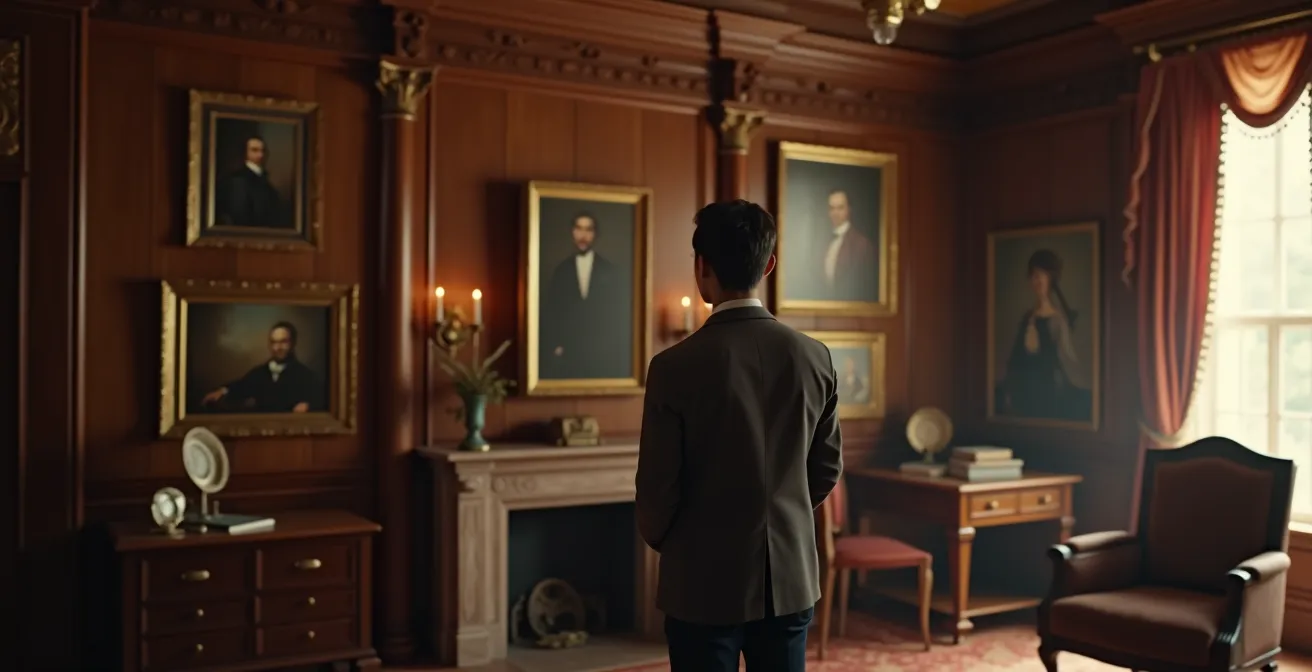
Visiting a house museum like The Frick Collection in New York or the Isabella Stewart Gardner Museum in Boston feels less like a clinical tour and more like being a personal guest. The art is displayed in a domestic context, surrounded by furniture, tapestries, and personal objects, allowing you to see it through the eyes of the collector. This context provides a narrative and a human scale that is often lost in the vast, anonymous galleries of a large institution. The crowds are smaller, the pace is slower, and the opportunity for quiet contemplation is infinitely greater.
The image below captures the essence of this intimate encounter—a space designed for personal reflection, not mass tourism.
Choosing a house museum is a strategic decision. It’s an acknowledgment that one hour spent deeply engaged with a handful of works in a beautiful, serene setting can be more enriching than a four-hour marathon sprint through a mega-museum. For the culture hacker, it’s about seeking out the highest quality experience, which isn’t always found in the biggest building.
The ‘Everything at Once’ Mistake That Ruins Your Visit to the Louvre equivalent
The single biggest mistake visitors make at a mega-museum is trying to see everything. Confronted with a collection of two million square feet, like at the Metropolitan Museum of Art, the instinct is to rush from one famous masterpiece to the next, ticking items off a mental checklist. This “everything at once” approach inevitably leads to exhaustion, overwhelm, and a superficial experience. You’ll have “seen” the Temple of Dendur and *Washington Crossing the Delaware*, but you won’t have truly connected with any of it. The culture hacker knows that a successful visit to a large institution is an exercise in strategic restraint.
The goal is to curate your own visit. Before you go, look at the museum map online and choose a maximum of two or three galleries that are thematically connected or of particular interest to you. Treat it like a surgical strike, not a full-scale invasion. Your goal is to leave feeling inspired and wanting more, not defeated and culturally overloaded. Limiting your visit to a hard maximum of two hours is a crucial discipline that forces you to prioritize and focus.
By having a clear plan, you can not only avoid the biggest crowds but also engage with the art on a much deeper level. Spending twenty minutes with a single painting, understanding its context and technique, is infinitely more rewarding than spending thirty seconds each on forty different works.
Your Action Plan: Strategic Met Museum Visit
- Enter through the 81st Street entrance, which is typically less crowded than the main entrance, right at 10 AM on a weekday.
- Start with less-visited collections to avoid initial bottlenecks, such as the Arts of Africa, Oceania, and the Americas on the ground floor.
- Choose ONE masterpiece as your anchor for the visit. Spend a full 20 minutes with it, perhaps using the museum’s audio guide to understand its context.
- Limit your total visit to a maximum of two hours, focusing your energy on just 2-3 connected galleries that interest you.
- Use a museum app, like the Met’s ‘One Met Many Worlds’ feature, for curated paths designed to avoid the largest crowds.
- Resist the urge for comprehensive coverage. Plan a second, separate visit for other sections rather than extending your stay into exhaustion.
This disciplined approach transforms the museum from an overwhelming labyrinth into a manageable and deeply rewarding space.
When to Visit the MOMA to Avoid the ‘Starry Night’ Crowd Crush?
Vincent van Gogh’s *The Starry Night* at New York’s Museum of Modern Art (MoMA) is a masterpiece. It’s also the epicenter of one of the most intense crowd crushes in the art world. At peak times, you’ll be lucky to get within 15 feet of it, viewing it over a sea of smartphones. The standard tourist experience is a frustrating battle. But the culture hacker knows that seeing iconic art in peace is often a matter of strategic timing and leveraging the museum’s own systems against the crowd.
The most powerful tool is accessing the museum outside of general public hours. MoMA, like many major institutions, offers member-only preview hours. These early morning slots are transformative. An analysis of visitor data shows that member preview hours from 9:30-10:30 AM have 75% fewer visitors than the first public hour. This is your golden window to stand before *The Starry Night* or a Pollock drip painting in relative solitude. A basic MoMA membership might seem like an expense, but if seeing this art is your goal, it’s a small price to pay for an experience of this quality.
Another key strategy is to consider high-quality alternatives. New York City is home to several world-class modern art collections that are often overlooked by tourists bee-lining for MoMA. This is a form of geographic arbitrage that yields incredible results.
Case Study: NYC Modern Art Alternatives
The Whitney Museum of American Art and the Neue Galerie offer world-class modern art with significantly smaller crowds. The Whitney focuses on 20th and 21st-century American artists and averages about 1,500 daily visitors compared to MoMA’s 7,000, providing much more intimate viewing experiences. For an even more unique visit, the Neue Galerie specializes in early 20th-century German and Austrian art. It limits capacity to just 200 visitors at a time through timed entry, allowing you to see masterpieces by Klimt and Schiele in a stunning mansion setting that recreates the European salon experience.
By combining smart timing with an awareness of excellent, less-crowded alternatives, you can curate a far more profound and personal encounter with modern art.
Why Your $20 Ticket to Mount Vernon Is Crucial for Preservation?
After learning so many hacks to get in for less, it can feel like paying full price is a failure. But a true culture hacker is also appreciative and understands when a ticket price isn’t just an entry fee, but a direct contribution to a vital cause. This is especially true for historic sites like George Washington’s Mount Vernon, which, unlike federally-run national parks, receives no government funding for its operations. Your $20 ticket is not profit; it is the primary revenue stream keeping the estate alive.
The cost of maintaining a 250-year-old mansion, its outbuildings, and 500 acres of grounds is staggering. From fighting the humidity of the Potomac River that threatens antique furniture to repairing the roof and conserving priceless artifacts, every dollar is essential. The work is constant and highly specialized, requiring expert conservators, historians, and archivists. The ticket you buy is a direct investment in that preservation, ensuring that future generations can walk the same floors and see the same views as the nation’s first president.
This image of a conservator at work provides a small glimpse into the meticulous, behind-the-scenes effort that your admission fee supports.

Understanding exactly where the money goes transforms the act of purchasing a ticket from a simple transaction into a meaningful act of patronage. Mount Vernon is transparent about its budget, showing how revenue is allocated across different critical needs.
| Budget Category | Percentage | Annual Amount | Specific Uses |
|---|---|---|---|
| Building Preservation | 30% | $6M | Structural repairs, climate control, roof maintenance |
| Curatorial & Conservation | 25% | $5M | Staff salaries, artifact restoration, archival work |
| Education Programs | 20% | $4M | School tours, interpretive programs, digital resources |
| Grounds & Agriculture | 15% | $3M | Historic gardens, working farm, landscape restoration |
| Security & Climate Control | 10% | $2M | 24/7 monitoring, HVAC for artifact preservation |
In this context, paying the full admission price isn’t being a sucker; it’s being a stakeholder. It is a conscious choice to support the immense, often invisible, effort of preserving a priceless piece of American history.
Why You Can’t Enter the Tent Before 2 PM Without a Black Card?
If museums represent the historical and institutional side of art, then major art fairs like Art Basel or Frieze are the vibrant, commercial frontline. Here, the rules of access are even more rigid and explicitly tied to status and purchasing power. For the general public, an art fair can be an exciting but overwhelming spectacle. For serious collectors, it’s a high-stakes marketplace, and the hierarchy of access is designed to give them a critical head start. The infamous “black card” (like an Amex Centurion) is a symbol of this top-tier status, often granting cardholders access to VIP previews.
These fairs operate on a strictly tiered schedule. The most important buyers—museum directors, advisors, and mega-collectors—are granted “First Choice” invitations, allowing them to enter and purchase works a day or two before anyone else. By the time the doors open to the general public, many of the most sought-after pieces are already sold. This isn’t unfair; it’s the business model. Galleries pay tens of thousands of dollars for a booth and need to ensure their best clients get the first opportunity to buy.
Case Study: The Art Basel Miami Beach VIP Hierarchy
Art Basel Miami Beach is a prime example of this strict access hierarchy. The fair begins with an invitation-only “First Choice” preview, where top collectors and museum curators have exclusive buying opportunities. This is followed by a “Collectors Preview” for VIP cardholders, which can include members of top museum patron groups or holders of elite credit cards. Public access only begins on the third day, with general admission tickets costing around $65. By this point, the frenzy has subsided, and many of the most significant works have red dots, indicating they’ve been sold. In contrast, satellite fairs like NADA and Untitled offer a more democratic model, with day passes starting at $30 and a focus on emerging artists.
For the culture hacker without a seven-figure art budget, breaking into this world seems impossible. But there are still ways to climb the ladder of access without being a billionaire. It requires shifting your focus from the main event to its periphery and building credentials in other ways.
- Join a major museum at the Patron level (often $2,500+). These memberships frequently come with invitations to VIP previews at major art fairs as a perk.
- Become a client of a gallery that participates in the fairs. Loyal clients are often given passes for the client preview days.
- Build a presence as an art writer. If you have a blog or social media account with a significant following (e.g., 10k+), you can apply for press credentials.
- Look for “First Access” or “Vernissage” passes. Some fairs sell a limited number of these early-access tickets for a premium price ($500-$1,000).
- Focus on the satellite fairs. These smaller fairs often have higher quality-to-price ratios for emerging art and much lower barriers to entry.
Key takeaways
- The smartest way to visit museums affordably is by leveraging reciprocal membership programs like NARM, not just chasing “free days.”
- Prioritize the quality of your experience over the quantity of art seen. Choose intimate house museums or limit your time in mega-museums to a few key galleries.
- Strategic timing is everything. Visiting during member-only hours or on weekday mornings can provide a crowd-free experience with iconic masterpieces.
How to See the Impressionist Collection at the Art Institute Without the Crowds?
The Art Institute of Chicago boasts one of the world’s greatest collections of Impressionist and Post-Impressionist art outside of Paris. It’s a must-see, but also a major bottleneck. The galleries containing works by Monet, Renoir, and Caillebotte are perpetually packed, especially on weekends and during the summer. The museum generously offers free admission days for Illinois residents, but this is a classic trap for the quality-seeking visitor. It’s a perfect example of how “free” does not equal “good.”
The data tells the story clearly. The Art Institute of Chicago has noted that Illinois Resident Free Days see a 300% increase in attendance over a typical day. This transforms the galleries into a crowded shuffle, making quiet contemplation of Caillebotte’s *Paris Street; Rainy Day* nearly impossible. The savvy culture hacker avoids these days at all costs, understanding that paying the standard admission on a quiet weekday morning provides exponentially more value in terms of experience.
The ultimate hack, however, might be to seek out an alternative institution that offers a world-class collection with a superior viewing experience built into its very design. For Impressionist lovers, there is no better example than the Barnes Foundation in Philadelphia.
Case Study: The Barnes Foundation’s Curated Intimacy
The Barnes Foundation houses one of the world’s most significant collections of Impressionist, Post-Impressionist, and early Modern art, but it offers a radically different experience from the Art Institute. Access is strictly controlled via mandatory timed tickets, limiting capacity to just 250 visitors per hour. This completely eliminates the crowd problem. Furthermore, the collection, which includes an astonishing 181 works by Renoir and 69 by Cézanne, is displayed in intimate rooms arranged in “ensembles” by Dr. Albert Barnes himself. This unique curatorial intent encourages viewers to find visual relationships between paintings, furniture, and metalwork, creating a deeply personal and intellectual experience that is simply not possible in a traditional museum’s open-flow galleries.
By choosing a museum like the Barnes, or by strategically visiting the Art Institute on a paid, off-peak day, you are making a conscious choice for quality over quantity. You are trading the chaos of a “free” day for the priceless opportunity to truly connect with the art.
Now that you’re armed with these strategies, you can stop thinking like a tourist and start planning your next cultural adventure as a culture hacker. Choose your memberships wisely, plan your visits with surgical precision, and always seek the most meaningful experience, not just the cheapest ticket. Start putting these principles into practice to transform your relationship with America’s greatest cultural institutions.