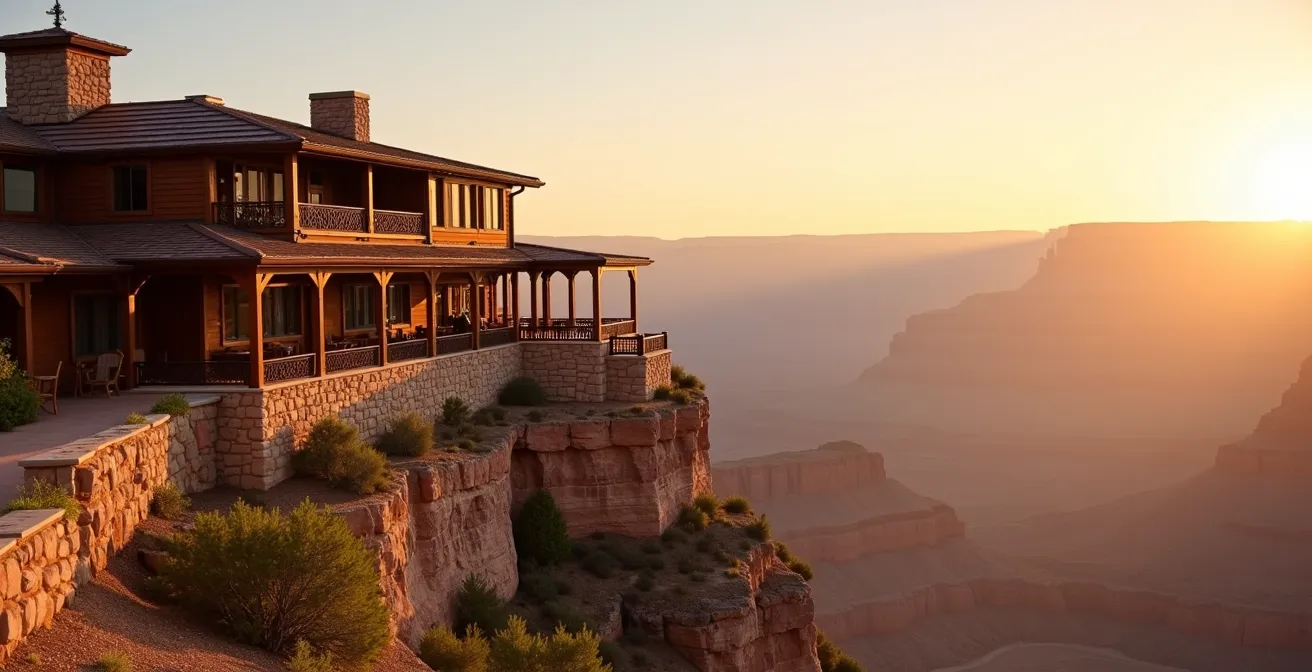
Securing a sold-out room at a legendary national park lodge like El Tovar feels impossible, but the real strategy isn’t booking earlier—it’s mastering the cancellation system.
- Most travelers compete for rooms 13 months out, but the prime opportunity lies in strategically monitoring specific cancellation windows.
- Success requires a holistic approach; a room reservation is incomplete without coordinating dining and park access in parallel.
Recommendation: Stop refreshing randomly. Start using a systematic approach that tracks cancellations and understands each park’s unique booking rhythm to turn frustration into a front-porch view.
The notification is always the same: “No Availability.” For nature lovers dreaming of waking up on the rim of the Grand Canyon at the historic El Tovar hotel, this message is a digital dead end. You followed the common advice—you tried to book a year in advance, you checked multiple dates, and you’re still left planning a stay in a gateway town an hour away, missing the magic of a sunrise over the canyon. This frustration is a rite of passage for anyone attempting to book America’s most iconic national park lodges, from the geyser-side Old Faithful Inn to the majestic Many Glacier Hotel.
The conventional wisdom about booking these coveted rooms is fundamentally flawed. It focuses entirely on the initial reservation window, a period of intense competition that leaves most travelers disappointed. But what if the real key wasn’t getting in the front door first, but knowing exactly where the secret side doors open? The truth is that a steady stream of cancellations creates a dynamic, secondary market for these rooms. Mastering this “second-chance system” is the difference between settling for a distant hotel and experiencing the park as it was meant to be seen.
This guide abandons the platitudes. Instead, it provides an expert, systematic approach to securing these “impossible” reservations. We will deconstruct the unique booking ecology of different parks, from the Grand Canyon to Yellowstone and Glacier, to give you a replicable strategy. You will learn not just when to look, but how to look, transforming your approach from one of passive hope to active, informed strategy.
To navigate this complex landscape, this article breaks down the essential strategies you need to master. From understanding the historic demand for these lodges to deploying the right tools and tactics, each section builds upon the last to create a comprehensive action plan.
Summary: Your Guide to America’s Most Coveted Lodge Reservations
- Why the Old Faithful Inn Is the Largest Log Structure in the World?
- How to Use Refresh Tools to Snag a Room 2 Weeks Out?
- Lodge vs. Gateway Hotel: Is Saving 1 Hour of Driving Worth $200?
- The Dinner Reservation Mistake That Leaves You Eating Granola Bars
- When to Visit Glacier Park Lodges Before They Close for Winter?
- Wigwam Motel vs. Blue Swallow: Where to Sleep for Peak Nostalgia?
- How to Book a Lodge in Yellowstone 12 Months in Advance?
- How to See Yellowstone’s Geysers Safely Without Joining the Crowds?
Why the Old Faithful Inn Is the Largest Log Structure in the World?
To understand why booking a room at a place like El Tovar or the Old Faithful Inn feels impossible, you have to understand what they represent. These aren’t just hotels; they are monuments. The Old Faithful Inn, built in 1904, is a prime example of a style known as “parkitecture.” This architectural movement sought to blend the rustic character of American log cabins with the grandeur of European chalets, creating structures that feel like a natural extension of the wilderness around them. The goal was to immerse visitors in the landscape, not just provide a place to sleep. This philosophy is why the inn’s immense lobby is built from local lodgepole pine and rhyolite stone, and why its porch offers front-row seats to geyser eruptions.
This careful blend of nature and culture creates an experience that simply cannot be replicated by a modern hotel in a nearby town. The immense demand for these historic lodges is a direct result of this unique appeal. You are not just paying for a room; you are paying for proximity, history, and atmosphere. This is why, even in the shoulder seasons, these properties command a premium. According to travel experts, even during less busy times, room rates remain high due to overwhelming demand, with prices often starting at more than $200 per night in the offseason.
This inherent demand is the first barrier to entry. But understanding it is also the first step in crafting a better strategy. You are competing for a limited, historic resource, not just a hotel room. Recognizing this shifts the focus from price to access, which is the true currency in the world of national park lodging.
How to Use Refresh Tools to Snag a Room 2 Weeks Out?
The frantic race to book a room 13 months in advance is where most travelers fail. The real opportunity isn’t at the starting line; it’s in the final few laps. This is the heart of the second-chance system: a strategic approach to capturing rooms that re-enter the inventory due to cancellations. Cancellations are not random; they happen in predictable waves, often tied to deposit refund deadlines. Park concessioners typically require cancellations 7 to 30 days prior to a stay for a full refund. These windows are your golden opportunities.
Instead of manually hitting refresh on your browser for hours, a more effective method involves using dedicated refresh tools. Services like Campnab and others are designed to automatically monitor reservation websites for openings. When a traveler cancels their booking at El Tovar or Canyon Lodge, these tools can send you an alert via text or email, allowing you to act instantly before the room is snapped up by someone else. This transforms a game of luck and patience into one of speed and preparation.
Case Study: The Power of Automated Monitoring
Until recently, many of Yellowstone’s most popular lodges, operated by Yellowstone National Park Lodges, were not scannable by third-party tools. However, services have now integrated these properties. This means automated alerts are now available for previously hard-to-track cancellations at iconic hotels and campgrounds, leveling the playing field for prepared travelers.
The key to this strategy is preparation. When you receive an alert, you must be ready to book immediately. Have your travel dates, credit card information, and account logins saved and accessible. The window of opportunity for a cancelled room can be mere minutes, so hesitation is not an option. This strategic refresh method is the single most effective way to secure a room when the “No Availability” sign seems permanent.

As the image suggests, this process is about deliberate planning, not random chance. Mark the key cancellation deadlines on your calendar and have your tools ready. By focusing on the 7, 14, and 30-day windows before your desired travel dates, you pivot from competing with everyone a year out to competing with a much smaller, less-prepared group for last-minute openings.
Lodge vs. Gateway Hotel: Is Saving 1 Hour of Driving Worth $200?
When faced with a sold-out park lodge, the default alternative is a hotel in a “gateway town” like Tusayan near the Grand Canyon or West Yellowstone. On the surface, the choice seems like a simple financial one: save a significant amount of money on the room rate. However, this calculation often ignores the most valuable asset on your vacation: time. This trade-off is what can be termed the proximity premium—the higher cost of an in-park lodge is an investment in time, access, and experience.
Staying inside the park means you are already at your destination when you wake up. You can walk to a viewpoint for sunrise while others are still in their cars, stuck in an entrance line. You can easily return to your room for a midday break without sacrificing two hours of driving. You can witness the magical “golden hour” light on the canyon rim or a geyser basin and then casually walk to dinner, rather than rushing back to a car for a long drive in the dark. As the following breakdown illustrates, the value proposition extends far beyond the room itself.
| Factor | In-Park Lodge (El Tovar) | Gateway Town (Tusayan/Williams) |
|---|---|---|
| Room Rate | $300-500+/night | $100-200/night |
| Distance to Rim | Very near to the canyon rim | Tusayan: about a 10 minute drive from Grand Canyon Village, Williams: about an hour drive |
| Booking Window | Book far enough ahead (like, an entire year in advance!) | More flexible availability |
| Park Entry Time | $35 park entry fee valid for 7 days | $35 per vehicle for a week-long permit + daily driving time |
| Sunrise/Sunset Access | Walk to viewpoints | Miss prime photography hours due to driving |
The table makes the trade-off clear. While a gateway hotel is cheaper, it comes with a significant “time tax.” A one-hour drive from Williams to the Grand Canyon rim is two hours of your day, every day, spent in a car instead of on a trail. Over a three-day trip, that’s six hours lost. Is saving $200 a night worth giving up a quarter of a day of your vacation? For many, the proximity premium is a price well worth paying for a more immersive and efficient park experience.
The Dinner Reservation Mistake That Leaves You Eating Granola Bars
Securing a room at El Tovar is only half the battle. A critical error many travelers make is failing to understand the complete reservation ecology of a national park. This ecosystem connects lodging, dining, and activities. Having a room but no place to eat dinner can quickly sour a dream trip, leaving you with vending machine snacks or granola bars. The iconic dining rooms, like the El Tovar Dining Room, are often just as hard to book as the lodges themselves.
Most visitors assume they can arrange dinner upon arrival. This is a recipe for disappointment. The best practice is to book your dining reservations the moment you confirm your lodging. Have two browser tabs open: one to finalize the room, and the second ready to book your dinner slots. For the El Tovar Dining Room, reservations open 30 days in advance, typically at 6 AM MST, and are booked solid within minutes. As U.S. News Travel highlights, the park’s most sought-after culinary experiences are intrinsically linked to the lodges.
Many of the Grand Canyon’s restaurants are housed within the park’s lodges, including the El Tovar Hotel and Bright Angel Lodge
– U.S. News Travel, Grand Canyon National Park Travel Guide
If you fail to secure a dining reservation, all is not lost. You can employ a similar “second-chance” strategy. Arrive at the dining room 30 minutes before it opens for a chance at a walk-in table, or try again an hour before closing when no-shows are more common. Always have backup options in mind, such as the Bright Angel Lodge or the Arizona Room, which may have more availability. Remember to also embrace the perks of your location, like enjoying a simple sunrise coffee on the El Tovar porch, where elk often graze on the lawn—an experience no restaurant can offer.
When to Visit Glacier Park Lodges Before They Close for Winter?
Just as you’ve mastered the booking strategy for the Grand Canyon, it’s crucial to recognize that this is not a one-size-fits-all game. Each national park operates within its own unique reservation ecology, with different operators, timelines, and constraints. Glacier National Park is a prime example. Its lodges, operated by Pursuit, use a completely different system than Yellowstone’s Xanterra-managed properties. For Glacier, the booking window opens on the first of the month for the entire same month of the following year. For example, on September 1, 2024, you can book for the entire month of September 2025.
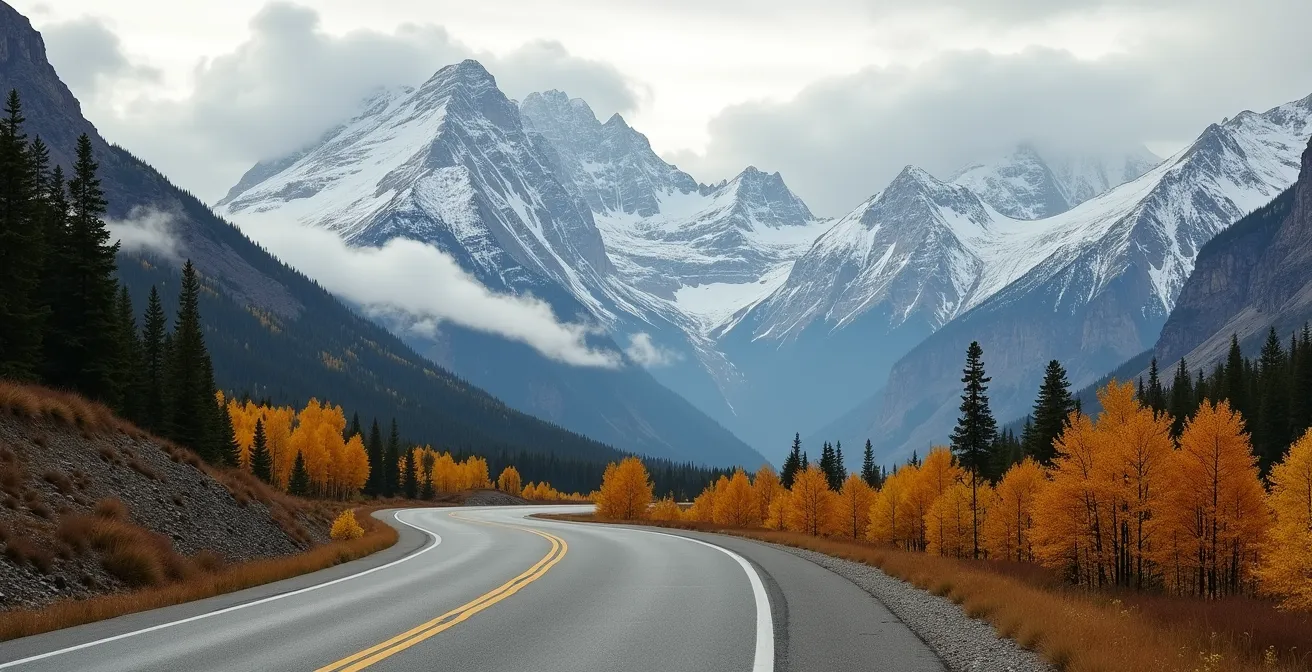
The “when” to visit is intrinsically tied to “when” you can book and “when” the park is fully accessible. Glacier’s high-elevation lodges, like the Many Glacier Hotel and Lake McDonald Lodge, have a very short operating season, typically from late May or early June to late September. Visiting in the shoulder season, particularly in September, offers a stunning landscape of autumn colors and fewer crowds. However, it’s a race against the weather, as snow can close the famous Going-to-the-Sun Road at any time.
Furthermore, the complexity of a Glacier visit has increased. Beyond lodging, you must now secure a vehicle reservation to access key areas of the park during peak season. Recent changes have made this even more challenging, as a park service update notes that vehicle reservations are valid for one day only—down from three days in 2023. This requires even more precise planning, as a multi-day lodge stay now requires multiple, separate vehicle reservations if you plan to drive into different areas on different days. This reinforces the need to treat your trip planning as a single, integrated project, not a series of disconnected bookings.
The lesson from Glacier is clear: before you even think about booking, you must first research the specific booking cadence and access rules for that particular park. Assuming the Yellowstone strategy will work here is a direct path to failure.
Wigwam Motel vs. Blue Swallow: Where to Sleep for Peak Nostalgia?
The deep-seated desire for nostalgic, iconic American lodging isn’t limited to national parks. While “parkitecture” represents one form of historic travel, the classic motels of Route 66 offer a completely different, yet equally compelling, experience. Properties like the Wigwam Motel in Holbrook, Arizona, where you can sleep in a concrete teepee, or the Blue Swallow Motel in New Mexico, with its famous neon sign, are icons of mid-century Americana and the open road. They represent a different kind of immersion—not in wilderness, but in cultural history.
The experience is fundamentally different from a grand park lodge. Where El Tovar offers rustic elegance and a connection to nature, the Wigwam Motel offers kitsch, charm, and a direct link to the golden age of the American road trip. Choosing between them isn’t about which is “better,” but about what kind of nostalgia you are seeking. Do you want the grandeur of the early 20th-century railroad expansion into the wilderness, or the quirky optimism of the post-war automobile boom?
Interestingly, these two worlds are connected. The El Tovar Hotel, considered a crown jewel of the national park lodges, was part of a hospitality empire built to serve a new wave of tourism. This is a point of pride in its history.
El Tovar was one of a chain of hotels and restaurants owned and operated by the Fred Harvey Company in conjunction with the Santa Fe Railway
– TripAdvisor, El Tovar Hotel Reviews
This highlights that both the grand lodges and the roadside motels were born from a national impulse to explore. One catered to the destination-focused traveler arriving by train, the other to the journey-focused traveler exploring by car. Understanding this distinction helps you appreciate each for its unique contribution to the American travel story. Deciding where to sleep for “peak nostalgia” depends entirely on which chapter of that story you wish to inhabit.
How to Book a Lodge in Yellowstone 12 Months in Advance?
Yellowstone National Park, America’s first national park, has one of the most complex and competitive lodging systems. With over 500 rooms at Canyon Lodge alone, the scale is vast, yet demand consistently outstrips supply. Here, a precise understanding of the booking cadence is not just an advantage; it is a necessity. Yellowstone’s lodging, managed by Xanterra, opens for reservations on the 5th of each month for the entire corresponding month of the following year. For example, on May 5, 2025, the booking window for all of May 2026 will open.
The most critical detail is the timing: this window opens at midnight (12:00 a.m.) Mountain Time online, but phone lines don’t open until 7:00 a.m. This seven-hour head start makes the online portal the only viable option for securing high-demand rooms, like those at the historic Old Faithful Inn. If you’re planning a stay that crosses over into the next month, you can book up to four additional continuous nights, but any longer requires waiting for the next month’s window to open.
This system requires a proactive, almost tactical approach. Simply showing up on the website on the 5th is not enough. You must have a clear plan of action, knowing exactly which lodge and room type you are targeting. This is where a pre-trip audit becomes invaluable.
Your Action Plan for Yellowstone Reservations
- Target Identification: Before the booking day, use the park’s official lodging website to research and list your top three preferred lodges and room types based on your itinerary, from the rustic Roosevelt Lodge Cabins to the elegant Lake Yellowstone Hotel.
- Calendar Sync: Mark your calendar for the 5th of the month, 13 months ahead of your desired stay. Set an alarm for 11:45 PM Mountain Time the night before.
- Pre-Booking Setup: Fifteen minutes before the window opens, log into your account on the booking website. Have your top lodge choices open in separate tabs and your credit card information ready for auto-fill.
- Cancellation Watch: If you miss the initial window, don’t give up. Immediately pivot to the “second-chance system.” Set daily reminders to check the official site for cancellations, focusing on the 30-day and 7-day pre-arrival penalty windows.
- Dining Coordination: The moment your room is confirmed, open a new tab and book your dining reservations. Do not delay this step, as popular options like the Old Faithful Inn Dining Room book up just as quickly.
To help narrow down your targets, consider the different experiences offered by the park’s main lodging hubs. The following table provides a quick comparison to aid in your planning.
This comparative data, drawn from official park concessioner information on the various Yellowstone properties, is essential for making a quick, informed decision when the booking window opens.
| Lodge | Location | Room Count | Best For |
|---|---|---|---|
| Old Faithful Inn | Upper Geyser Basin | Historic rooms | Geyser viewing, historic charm |
| Canyon Lodge | Canyon Area | 500+ rooms/cabins | Central location, most availability |
| Lake Yellowstone Hotel | Lake Area | Historic hotel | Lake views, elegant dining |
| Roosevelt Lodge | Tower Area | Rustic cabins | Western experience, wildlife |
Key Takeaways
- Master the “second-chance system” of cancellations; the real opportunity isn’t just booking 13 months in advance.
- Each park has a unique booking cadence. Research the specific rules for Yellowstone, Glacier, and Grand Canyon before you act.
- The in-park experience, offering unmatched proximity and early-morning access, provides a “proximity premium” that is often worth the cost.
How to See Yellowstone’s Geysers Safely Without Joining the Crowds?
The ultimate reward for successfully navigating the complex world of lodge reservations is the experience on the ground. The proximity premium you paid for isn’t just about a nicer room; it’s about buying back time and gaining privileged access. This is most evident in Yellowstone, a park that operates 9 lodges, 4 campgrounds, and 1 RV park in the summer to accommodate massive crowds. By staying at the Old Faithful Inn or Lodge, you are positioned to explore the Upper Geyser Basin during the magical hours of dawn and dusk, long before the day-trippers arrive and long after they have departed.
Instead of fighting for a spot on the boardwalk to see Old Faithful erupt, you can watch it from the inn’s porch. More importantly, you can use the predictable crowds to your advantage. While thousands gather for an Old Faithful eruption, you can be walking the nearly empty paths to see the equally spectacular but less predictable Grand Geyser or the stunningly colorful Morning Glory Pool. This is the “Lodge Guest Golden Hour” strategy: be where the crowds aren’t.
This strategy relies on a few key practices:
- Start pre-dawn walks from your lodge to explore the nearby geyser basins when the light is soft and the air is still.
- Use the National Park Service’s geyser eruption predictions not to join the crowd at Old Faithful, but to know when to explore other basins in relative solitude.
- Visit the popular Midway and Lower Geyser Basins (home to Grand Prismatic Spring) during peak Old Faithful viewing times, when traffic in other areas temporarily thins out.
Seeing these natural wonders safely also means respecting the environment. Always stay on the designated boardwalks. The ground in geyser basins is a thin, fragile crust over boiling water, and straying from the path is extremely dangerous. By leveraging your prime location and respecting the park’s rules, you can transform your visit from a stressful, crowd-filled ordeal into a series of quiet, awe-inspiring moments.
Your dream of watching the sunset from the porch of a historic lodge is not out of reach. It simply requires a new approach—one based on strategy, timing, and a deep understanding of the system. Start planning your iconic lodge stay today by choosing your target park and learning its specific reservation ecology.