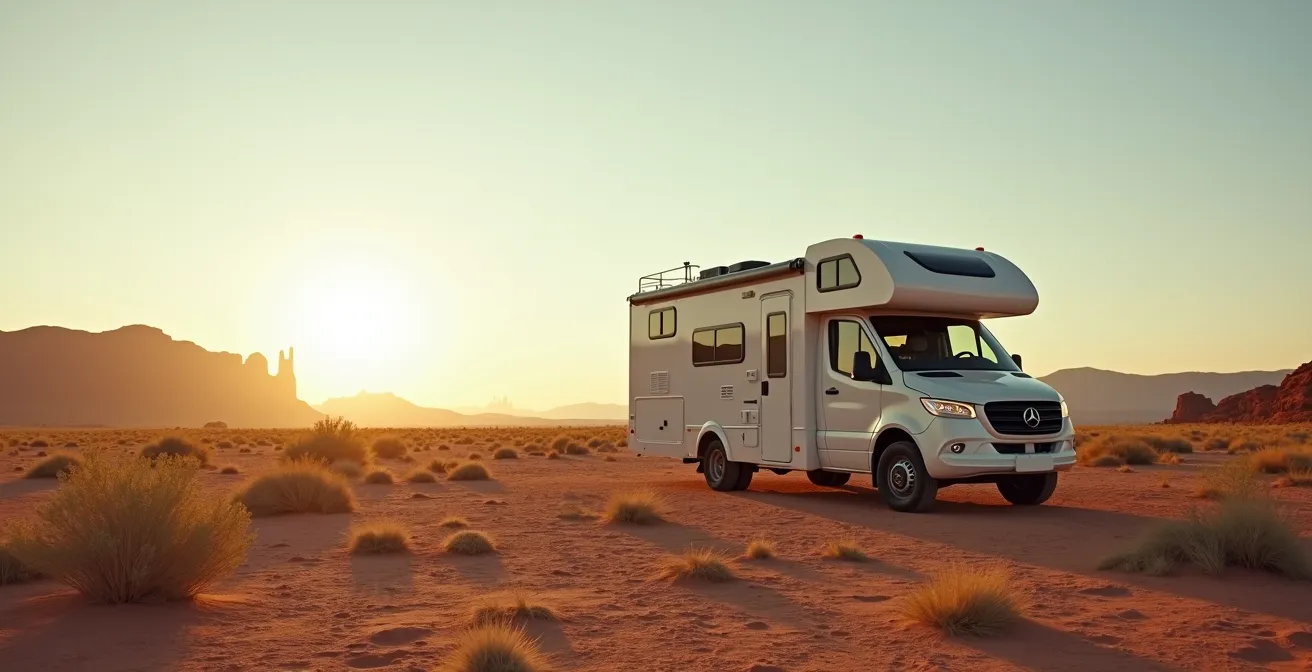
The secret to free camping isn’t a map of spots, but mastering the unwritten rules of being a resourceful, responsible, and invisible guest on America’s vast public and private lands.
- Success hinges on a mindset of self-sufficiency, situational awareness, and respecting your environment.
- Leverage a hybrid strategy, mixing free public lands with strategic, low-cost stays to manage resources like water and power.
Recommendation: Shift your focus from simply finding a free spot to becoming the type of camper who is welcomed anywhere by practicing noise discipline, supporting local economies, and leaving no trace.
For vanlife travelers and retirees, the dream of the open road often collides with the reality of nightly campground fees. The common advice is a tired refrain: try a Walmart parking lot, ask a Cracker Barrel manager, or just hope for the best. While these can work in a pinch, they are temporary solutions, not a sustainable strategy. They miss the bigger picture and the incredible freedom that comes with true boondocking expertise. The real opportunity lies in the vast landscapes between the crowded campgrounds, a network of possibilities hidden in plain sight.
The United States offers a staggering amount of land accessible to those who know the rules. In fact, a New York Times analysis of federal data revealed that 47% of all land in the American West is federally owned. This is the foundation of a resourceful travel style. This guide goes beyond the obvious. It’s not a list of GPS coordinates. It’s a manual for adopting the resourceful mindset of a seasoned boondocker—a mindset built on understanding systems, respecting boundaries, and becoming an “invisible guest.”
This approach is about mastering the unwritten rules of the road. It’s about knowing how to safely draw power from a friend’s house without causing damage, understanding the subtle etiquette of noise that separates a welcome visitor from a nuisance, and learning how to use public lands to get five-star views for free. By mastering these principles, you’re not just saving money; you’re unlocking a more authentic, sustainable, and liberating way to travel.
Table of Contents: Mastering Free and Legal Camper Van Parking
- Why You Can Camp for Free on BLM Land for 14 Days?
- How to Connect Your RV to Shore Power Without Blowing a Fuse?
- KOA vs. State Park: Which Offers Better Value for Families?
- The Noise Mistake That Makes Your Camp Neighbors Hate You
- When to Book a Site at Yosemite to Beat the Bots?
- How to Shop at Co-ops Instead of Superstores on Your Route?
- The Food Storage Error That Attracts Grizzlies to Your Campsite
- How to See Yellowstone’s Geysers Safely Without Joining the Crowds?
Why You Can Camp for Free on BLM Land for 14 Days?
The Bureau of Land Management (BLM) is a boondocker’s best friend. This federal agency oversees vast swaths of public land, primarily in the western states, with a mandate that includes recreation. This is why you can legally camp for free on most of this land. According to the Bureau of Land Management’s current data, there are over 240 million acres of BLM land available in the U.S. for activities like dispersed camping. “Dispersed camping” means camping outside of a designated campground, without amenities like water, toilets, or trash service.
The crucial rule to understand is the 14-day limit. You can camp in one spot for up to 14 consecutive days within a 28-day period. After 14 days, you must move to a new site at least 25 miles away. This rule isn’t arbitrary; it’s designed to prevent squatting and protect the land from overuse. The core principle is simple: be an invisible guest. This means practicing strict Leave No Trace ethics: pack out everything you pack in, use designated fire rings or skip campfires altogether, and properly dispose of all waste (including human waste) far from water sources.
While the site itself is free, it’s a mistake to think this style of camping has zero cost. A resourceful boondocker budgets for the hidden expenses that come with self-sufficiency.
Case Study: The Real Cost of “Free” Camping
An 89-day study documented on Boondock or Bust revealed the true operational costs of BLM camping. While the nightly fee is $0, the study found that hidden costs average $4.21 to $9.07 per day. These expenses include fuel to reach remote sites (often 50+ miles from towns), periodic water tank refills, and dump station fees. A typical 14-day boondocking trip can still total $59 to $127 in essential operational costs, making it far cheaper than a campground but not entirely free.
How to Connect Your RV to Shore Power Without Blowing a Fuse?
“Moochdocking”—parking on a friend’s or family’s driveway—is a fantastic way to resupply and reconnect. But the most common mistake is treating their home’s electrical outlet like a dedicated campground pedestal. A standard household circuit is not designed for the heavy load of an RV, and a simple mistake can blow a fuse, damage your host’s electrical system, or even create a fire hazard. The key is understanding amperage limits.
Most RVs have a 30-amp or 50-amp system, while a typical household outlet is only 15 or 20 amps. You’ll need a “dogbone” adapter to physically connect your cord, but this adapter doesn’t change the electrical limits. You cannot run your air conditioner, microwave, and water heater simultaneously. Your goal is to draw less power than the circuit’s maximum safe load, which is typically 80% of its rating. For a 15-amp circuit, that’s 12 amps. Your RV’s power converter alone can draw 4-7 amps just to charge your batteries and run 12V systems.
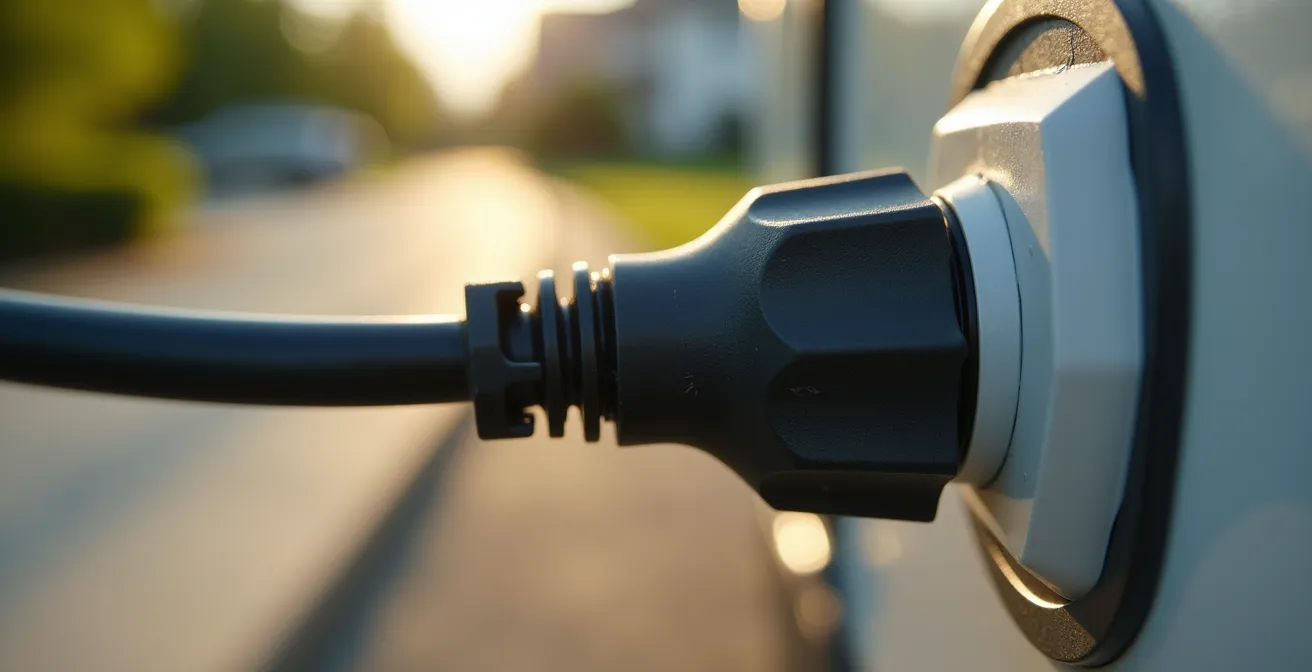
As the visual shows, a proper connection is simple, but the knowledge behind it is critical. Before plugging in, turn off all major appliances in your RV. Once connected, run only the essentials. Your main priority should be recharging your house batteries. If you need to run a high-draw appliance like a microwave, make sure everything else is off. This table breaks down what you can realistically expect to run.
| Circuit Type | Max Amperage | Safe Continuous Load (80%) | RV Appliances You Can Run |
|---|---|---|---|
| Standard 15A/120V | 15 amps | 12 amps | Converter + LED lights + phone charging |
| Standard 20A/120V | 20 amps | 16 amps | Above + small fridge OR microwave (not both) |
| Dedicated 30A/120V | 30 amps | 24 amps | Most RV systems except large AC units |
KOA vs. State Park: Which Offers Better Value for Families?
The frugal traveler knows that “free” isn’t always the best value. Sometimes, paying for a campsite is a strategic move to reset your resources. But where you choose to pay makes a huge difference. The choice often comes down to private campgrounds like Kampgrounds of America (KOA) versus public state parks. For families, the decision hinges on balancing cost against amenities.
A KOA is a full-service resort. You’re paying for convenience: full hookups (water, sewer, electric), swimming pools, playgrounds, laundry facilities, and social events. It’s an easy, predictable experience but comes at a premium. With the average price of a campground site now pushing $40 or more, a week at a KOA can cost as much as a hotel stay. It’s a good option for a vacation-style trip or for families with young children who need constant entertainment.
A State Park offers a different kind of value. The sites are typically more spacious, more scenic, and more affordable. While some offer full hookups, many provide only electric and a central water/dump station. The “amenities” are the natural surroundings: hiking trails, lakes, and wildlife. State parks provide a crucial middle ground. They allow you to enjoy nature while still having access to essentials like a hot shower and a place to legally dump your tanks—luxuries you don’t get when boondocking. A hybrid strategy is often the most cost-effective: spend most of your time on free BLM or National Forest land, then book 1-2 nights at a state park to shower, do laundry, and recharge your water and battery systems before heading back out.
The Noise Mistake That Makes Your Camp Neighbors Hate You
When you’re parked in a campground, your neighbors are other campers. But when you’re stealth camping in a residential area or a quiet parking lot, your neighbors are residents who are quick to report anything unusual. In this context, noise is the number one reason stealth campers get the dreaded “knock” from law enforcement. The mistake isn’t being loud; it’s being unintentionally conspicuous. It’s the repetitive, metallic, or sharp sounds that scream “someone is living in that van.”
Successful urban campers practice what can only be called noise discipline. This is an active, conscious effort to minimize every sound. It starts with modifying your van: placing felt pads on all cabinet doors and drawers to eliminate the *click-clack* of them closing. It extends to your habits: placing a rubber or silicone mat in the sink to prevent the clatter of dishes. It’s about being prepared: having everything you need for the night ready *before* you park, so you’re not opening and closing doors and drawers multiple times.
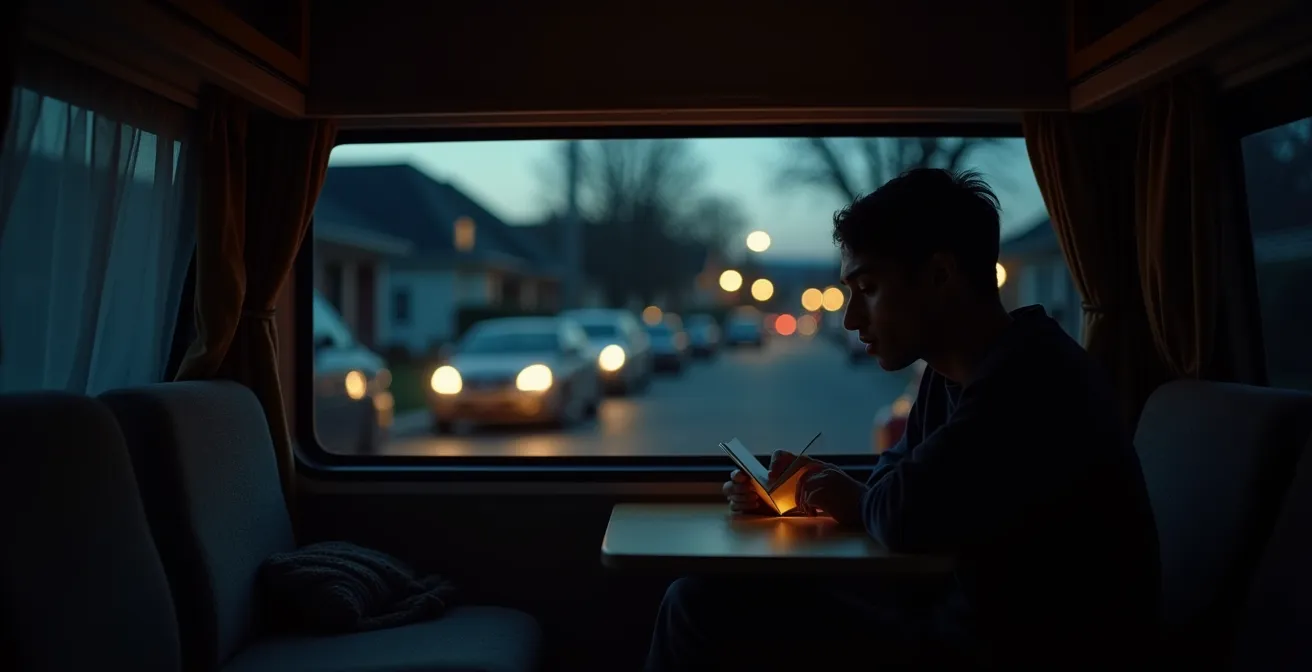
The most critical moments are arrival and departure. Avoid slamming doors—close them gently until they latch. If you have a manual transmission, rolling the last 50 feet to your spot in neutral with the engine off is an advanced technique. The goal is to blend in, to become part of the ambient streetscape. A quiet, dark van is just another parked vehicle. A van with slamming doors, bright interior lights, and loud talking is a target.
Case Study: The Discipline of Urban Stealth
Interviews with long-term urban vanlifers reveal a shared methodology. The most successful ones emphasize that arrival and departure protocols are more critical than the time of day. One camper who spent weeks undetected in a single neighborhood credited their success to a strict “no-slam” rule and pre-positioning all items before parking. Another noted that using the vehicle’s quietest side (often the side without a sliding door) to face residences dramatically reduces the sound footprint that travels to nearby homes, making their presence virtually undetectable.
When to Book a Site at Yosemite to Beat the Bots?
The short answer is: you don’t. Trying to book a campsite inside hyper-popular national parks like Yosemite or Zion is a losing game. Sites are released months in advance and are often snapped up by automated bots within seconds. With US national parks achieving a record 331.9 million recreation visits in 2024, the pressure on these prime locations is immense. The expert boondocker doesn’t play this game; they change the rules by using the Proximity Principle.
The Proximity Principle is simple: camp for free in the vast National Forest or BLM lands that surround nearly every major national park, and use that as your base. These areas are often just a 30- to 60-minute drive from the park entrance and offer incredible scenery of their own. For Yosemite, this means exploring the Stanislaus or Sierra National Forests. For Zion, the Dixie National Forest. You get the million-dollar views without the booking frenzy or the nightly fees.
The second part of the strategy is the “dawn patrol.” By camping nearby, you can wake up early and be at the park gate before 7 AM. This allows you to drive into the most popular areas, like Yosemite Valley or the Grand Prismatic Spring in Yellowstone, before the crowds and entrance queues build up. You can enjoy the main attractions in relative peace, and by the time the park is packed in the early afternoon, you can retreat to your quiet, free campsite in the adjacent forest. This strategy combines the best of both worlds: you get to experience America’s crown jewels without fighting for a spot within them. It transforms the park from a place you *stay* to a place you *visit*—a subtle but powerful shift in mindset.
How to Shop at Co-ops Instead of Superstores on Your Route?
Being a resourceful traveler means more than just finding free places to park; it’s about thoughtfully interacting with the communities you pass through. Instead of defaulting to massive superstores, make it a point to seek out local food co-ops. This isn’t just about buying organic kale; it’s a strategic move that builds community currency. These stores are hubs of local information and goodwill.
The first step is research. Use online directories like LocalHarvest.org to map out co-ops along your intended route. Time your provisioning stops for the middle of the day, when you can shop and linger. While you’re there, check the community bulletin board—a treasure trove of local intel. You might find flyers for community events, farmers’ markets, or even informal offers for driveway parking from like-minded locals. By purchasing local produce and products, you’re not just stocking your pantry; you’re investing in the local economy, which changes the dynamic from being a freeloader to being a welcome visitor.
More importantly, co-op staff are often deeply connected to the community and sympathetic to alternative travelers. Politely asking an employee about safe areas to park for the night can yield far better advice than any app. They know the quiet streets, the overlooked municipal lots, or the local businesses that are friendly to overnighters. This act of building relationships is a core tenet of sustainable travel.
Being a woman on the road solo, I always make it a point to shop locally and build relationships. Church parking lots and VFW locations often welcome overnight campers, especially if you’re contributing to the local economy. It’s about being a good visitor, not just a freeloader passing through.
– Lindsey (@girlgoneglamping)
The Food Storage Error That Attracts Grizzlies to Your Campsite
Free camping often means venturing into wilder places where you are a visitor in the home of wildlife. The single biggest mistake a boondocker can make is improper food storage. An unsecured cooler or a bag of trash left outside is an open invitation for everything from curious raccoons to dangerous megafauna like bears. The risk isn’t just losing your food; it’s vehicle damage, aggressive encounters, and the tragic outcome of a bear becoming habituated to human food, which often leads to its destruction by wildlife managers.
Your prevention method must match the regional threat. In the Mountain West, hard-sided bear canisters or a proper bear hang (12 feet high, 6 feet from the trunk) are non-negotiable for any food stored outside your vehicle. In the desert Southwest, the primary concern is often javelinas, which are surprisingly aggressive and can easily break into standard coolers. The rule is universal: never leave food or scented items (like toothpaste) outside and unattended. Even inside your van, all food should be in airtight containers to minimize odors that can attract unwanted attention.
| Region | Primary Wildlife Concern | Prevention Method | Damage Risk |
|---|---|---|---|
| Mountain West | Bears (black & grizzly) | Bear canisters, hang bags 12ft high/6ft from trunk | Vehicle entry, food theft |
| Southwest Desert | Javelinas | Never leave food outside, secure coolers | Aggressive confrontation |
| All Regions | Rodents | Peppermint oil deterrent, seal all openings | Wiring damage ($500-2000 repairs) |
| Eastern Forests | Raccoons | Bungee cord all containers, remove door handles | Interior destruction |
Wildlife isn’t the only threat. Human safety is paramount when choosing a free spot. Your situational awareness is your best defense. Before you even arrive, use a satellite view to assess the area. When you get there, trust your gut. If a place feels wrong, it probably is. Leave immediately.
Your 5-Point Safety Check for Any Free Campsite
- Exit Routes: Use satellite view before arrival to confirm there are at least two ways out. Never park in a spot you can’t easily drive away from.
- Site Condition: Look for signs of problematic activity. Broken glass, piles of trash, or makeshift shelters are major red flags.
- Lighting Assessment: A well-lit commercial lot offers security from theft but makes stealth camping difficult. A completely dark, isolated spot offers stealth but little security. Find a balance.
- Positioning for Departure: Always park facing out, ready for a quick exit. Never back your van into a corner where you could be blocked in.
- The Gut Check: Your intuition is a powerful safety tool. If you feel uncomfortable for any reason within the first five minutes of arriving, trust that feeling and leave. No free spot is worth your safety.
Key Takeaways
- True boondocking is a skill set, not a list of spots. Focus on principles like self-sufficiency, noise discipline, and Leave No Trace.
- A hybrid camping strategy—mixing free public lands with occasional, low-cost state park stays—is the most sustainable and cost-effective approach.
- Situational awareness is your most important tool. This applies to assessing wildlife risks, human threats, and even the electrical limits of a friend’s home.
How to See Yellowstone’s Geysers Safely Without Joining the Crowds?
We’ve covered the systems and principles: using public lands, managing resources, and being an invisible guest. Now, let’s put it all together in a final masterclass strategy: tackling a world-famous destination like Yellowstone. The average visitor fights for a pricey, reserved spot months in advance and spends their days stuck in traffic jams. The expert boondocker experiences the same iconic geysers and wildlife-filled valleys in relative solitude, for a fraction of the cost.
The strategy combines the Proximity Principle with the Dawn Patrol. You use the abundant Gallatin and Custer National Forests surrounding Yellowstone as your free basecamps. One night, you might camp near the West Entrance in Gallatin NF. The next, you might be near the Northeast Entrance in Custer NF. This allows you to target different areas of the vast park on different days. You’re not commuting from a single, distant location; you’re strategically repositioning for maximum access.
From your nearby campsite, you wake at 4:30 AM. By 6:00 AM, you are driving past the entrance station—long before the lines form—and heading to Old Faithful or Grand Prismatic Spring. You get to witness these geological wonders with the rising sun, sharing the moment with a handful of dedicated photographers instead of thousands of tourists. By 10:00 AM, when the parking lots are filling and the boardwalks are jammed, you’re already hiking to a less-visited trail or heading back to your peaceful forest campsite for a mid-day nap. This approach doesn’t just save you money; it completely transforms your experience of the park from a stressful ordeal into a serene and awe-inspiring adventure.
This mindset is the key to unlocking the full potential of life on the road. It elevates you from a tourist looking for a cheap place to sleep into a resourceful traveler who is at home anywhere. Start by adopting one of these principles on your next trip and build from there. Your journey to becoming a boondocking expert begins now.