Tourism in the USA
The United States presents a unique paradox for travelers: it’s simultaneously one of the most accessible and most complex destinations in the world. With landscapes ranging from volcanic geothermal wonders to dense urban centers, and cultural experiences spanning indigenous heritage to cutting-edge metropolitan innovation, the country offers unparalleled diversity. Yet beneath this appeal lies a web of regulations, costs, and logistical challenges that catch even experienced travelers off guard.
Successfully navigating American tourism requires understanding five interconnected dimensions: the stringent entry system that can deny access for seemingly minor errors, the financial and practical realities of exploring high-density cities, the safety protocols essential for wilderness areas, the strategic planning needed for multi-region trips, and the balance between visiting famous landmarks and discovering authentic local culture. This comprehensive resource connects these elements to give you the foundational knowledge needed before planning any US journey.
Understanding Entry Requirements and Travel Logistics
The US entry system operates with a zero-tolerance philosophy that surprises many international visitors accustomed to more forgiving border processes. Unlike many countries where minor documentation errors result in warnings or secondary screening, American immigration authorities maintain permanent digital records of every interaction, and seemingly small mistakes can trigger consequences lasting decades.
The Electronic System for Travel Authorization (ESTA) and traditional visa applications require absolute accuracy. A transposed digit in a passport number, an unreported previous visit, or confusion about employment status can result in automatic denials. What makes this particularly challenging is the cumulative nature of immigration records—information submitted on one form is cross-referenced against all previous entries, social media profiles, and even travel patterns to countries considered sensitive.
For travelers from visa-waiver countries, the ESTA process appears deceptively simple, leading to complacency. However, questions about past immigration violations, criminal history, or even visits to certain countries require careful interpretation. A “yes” response to questions about moral turpitude or controlled substance violations—even for incidents that were dismissed or occurred decades ago—triggers mandatory visa applications that can take months to process.
Upon arrival, major US airports operate with varying efficiency levels. Customs and Border Protection processing times at JFK, LAX, and Miami can range from 30 minutes to over three hours depending on time of day, season, and staffing levels. International travelers should build in minimum three-hour connection windows for domestic flights, and understand that Global Entry kiosks, while faster, still require the same documentary precision as traditional processing.
Why Travel Insurance Becomes Critical in the American Context
The US healthcare system operates fundamentally differently from the universal or socialized medicine systems common in most developed countries. Medical care is privatized, profit-driven, and extraordinarily expensive for those without insurance coverage. A simple emergency room visit for a sprained ankle can result in bills exceeding two thousand dollars, while serious incidents like appendicitis surgery or multi-day hospitalizations routinely generate costs in the tens of thousands.
Standard travel insurance policies often include medical coverage limits that seem adequate—fifty thousand or one hundred thousand dollars—but these amounts can be exhausted quickly in American medical facilities. Comprehensive policies specifically designed for US travel should include:
- Medical coverage of at least $250,000 with no sub-limits for specific procedures
- Emergency medical evacuation to your home country, which can cost over $100,000 alone
- Direct billing arrangements with US hospital networks to avoid upfront payment requirements
- Coverage for pre-existing conditions if you have chronic health issues
- 24/7 assistance lines with multilingual support for navigating the complex US healthcare system
Beyond medical coverage, rental car insurance deserves special attention. The US operates under a complex patchwork of state-specific liability laws and insurance requirements. What constitutes adequate coverage in California differs from Florida or New York. Declining the collision damage waiver at rental counters can expose you to full vehicle replacement costs—potentially forty to sixty thousand dollars for SUVs—if an accident occurs, even if you’re not at fault.
Mastering Urban Tourism Across American Cities
American cities present a unique challenge: they’re designed primarily for automobile use, with public transportation systems that range from world-class to nearly nonexistent. This car-centric development pattern creates hidden costs and logistical complexities that aren’t immediately apparent when budgeting for urban stays.
Decoding the True Cost of City Tourism
Budget estimates for cities like New York, San Francisco, or Boston often focus on accommodation and major attraction costs while underestimating daily operational expenses. A realistic daily budget for comfortable urban tourism in major metropolitan areas should account for:
Transportation costs that extend beyond subway or bus fares. Ride-sharing services apply surge pricing during peak hours, potentially tripling baseline fares. A short ride that costs twelve dollars at midday can exceed forty dollars during evening rush hour. Parking in city centers ranges from thirty to seventy dollars daily, with hotels adding their own parking fees that can reach eighty dollars per night in cities like San Francisco.
Food costs demonstrate extreme variation based on neighborhood gentrification levels. Tourist-heavy areas near major landmarks routinely charge double or triple the prices found just six to eight blocks away. A breakfast that costs twenty-five dollars near Times Square costs eight dollars in Queens neighborhoods a subway ride away.
Navigating Neighborhood Selection for Safety and Convenience
American urban geography doesn’t follow European patterns where city centers are safest and most desirable. Instead, cities exhibit a patchwork quilt of micro-neighborhoods with dramatically different character, safety profiles, and convenience levels that can change within a single block.
Safety considerations require understanding that crime statistics operate at precinct or district levels that mask street-by-street variation. Online crime mapping tools provide more granular data, but interpreting them requires context. Property crimes (car break-ins, package theft) concentrate in tourist areas and affluent neighborhoods, while violent crime follows different geographic patterns, often confined to specific corridors that tourists rarely encounter if lodging is selected thoughtfully.
The most practical approach involves selecting neighborhoods that optimize the triangle of safety, transit access, and authentic dining options. In Chicago, this might mean Lincoln Park or Lakeview rather than the Loop. In Los Angeles, areas like Pasadena or Culver City offer better value and character than downtown or Hollywood. The key is prioritizing neighborhoods where locals actually live and frequent businesses, rather than districts designed exclusively for tourism.
Surviving Transit Systems and Street-Level Scams
Public transportation in US cities operates with less standardization than European systems. New York’s subway uses an entirely different payment system than Washington DC’s Metro, which differs from San Francisco’s BART, which bears no resemblance to Los Angeles’s minimal rail network. Each system requires learning unique fare structures, transfer rules, and operational quirks.
Common transit pitfalls include overnight and weekend service disruptions that aren’t clearly communicated, express vs. local train distinctions that cause missed stops, and zone-based pricing systems where crossing a boundary adds significant cost. Mobile apps have improved navigation, but cell service in subway systems remains spotty, requiring downloaded offline maps.
Street-level scams in tourist areas follow predictable patterns. The most common involve individuals offering to take photos who then demand payment, costumed characters in places like Times Square or Hollywood Boulevard who pose for photos then aggressively demand twenty to forty dollars, and various petition or donation scams where clipboards and official-looking materials disguise simple money requests. The consistent defense is never stopping forward movement—polite “no thank you” while continuing to walk proves more effective than engagement.
Exploring America’s Natural Wonders Safely
The scale and accessibility of American national parks creates a dangerous illusion of safety. Yellowstone, Yosemite, the Grand Canyon, and similar destinations welcome millions of visitors annually with infrastructure that makes access seem effortless—paved roads, visitor centers, cell phone coverage in developed areas. This accessibility masks genuine wilderness dangers that injure or kill dozens of visitors each year.
Understanding Geothermal Environments and Volcanic Activity
Yellowstone operates as the world’s largest active supervolcano system, with over ten thousand geothermal features including hot springs, geysers, and mud pots. The thin crust surrounding these features can collapse without warning, plunging anyone who strays from designated boardwalks into water exceeding 200°F (93°C). The park records severe burn injuries nearly every season, almost exclusively involving people who left marked trails.
The volcanic volatility manifests in constant small earthquakes, hydrothermal explosions that create new craters, and gradual ground deformation that shifts feature locations over time. While catastrophic eruption remains statistically unlikely in any human timeframe, the USGS monitors seismic activity continuously, and sudden area closures should be respected immediately.
Regulatory compliance in these environments isn’t bureaucratic overreach—it’s survival protocol. Boardwalk barriers, closure signs, and designated photography areas exist because the alternative is life-threatening burns or worse. The acidic nature of many thermal features means organic material dissolves rapidly, and recovery of individuals who fall in is often impossible.
Wildlife Viewing, Bear Safety, and Trail Protocols
American national parks maintain wild animal populations at densities rarely seen in other developed countries. Yellowstone alone hosts approximately 700 grizzly bears and 1,000 black bears, along with bison herds numbering in the thousands. These animals are habituated to human presence but remain fundamentally wild and unpredictable.
Bear encounters on trails require specific responses that differ by species. Grizzly bears respond to perceived threats with defensive aggression, making the recommended response to surprise encounters involve stopping, speaking calmly, and slowly backing away while avoiding eye contact. Black bears, being smaller and more timid, typically flee from loud noises and aggressive posturing. The critical distinction is that playing dead works with charging grizzlies but invites predation from black bears—a counterintuitive difference that proves crucial in the rare event of an attack.
Optimal wildlife viewing times concentrate around dawn and dusk when animals are most active. The golden hours from 5:30-8:00 AM and 6:00-8:30 PM provide the highest probability of sightings, but also present the greatest risk of surprise encounters on trails. Carrying EPA-approved bear spray, making noise while hiking, and traveling in groups of three or more reduces incident probability by over 90% compared to solo silent hiking.
Securing Accommodations and Planning Loop Itineraries
Lodging inside major national parks operates on a scarcity model that requires booking six months to a year in advance for peak season dates. Yellowstone’s in-park lodges, Grand Canyon’s rim hotels, and Yosemite’s Ahwahnee all fill within hours of their booking windows opening. The alternative—staying in gateway communities—adds one to two hours of daily driving to reach trailheads and features.
Loop itineraries optimize efficiency by minimizing backtracking. Yellowstone’s Grand Loop Road naturally supports this approach, with the figure-eight configuration allowing strategic overnight stops that position you for dawn access to different regions. The typical three-to-four-day visit should prioritize either the northern loop (Mammoth Hot Springs, Lamar Valley, Tower Fall) or southern loop (Old Faithful, Yellowstone Lake, Grand Canyon of the Yellowstone) rather than attempting comprehensive coverage that results in excessive windshield time.
Navigating Regional Corridors and Multi-Region Travel
The United States spans approximately 2,800 miles (4,500 km) from coast to coast, with climate zones ranging from arctic tundra to subtropical, and geographic features that create distinct travel corridors. Planning multi-region trips requires understanding that distances between major attractions often exceed entire European countries, and seasonal weather variations can make certain routes impassable or deeply unpleasant during specific months.
The Northeast Megalopolis: Cultural Vibes and Transport Options
The Boston-to-Washington corridor represents America’s closest approximation to European-style connected urban travel. This 400-mile stretch contains roughly 17% of the US population and supports the country’s only true high-frequency intercity rail service via Amtrak’s Northeast Regional and Acela lines.
Each city along this corridor exhibits distinct character. Boston maintains an academic and colonial historic atmosphere, New York operates as the global financial and cultural capital, Philadelphia blends working-class grit with revolutionary history, Baltimore presents post-industrial waterfront revitalization, and Washington functions as the planned governmental seat. Understanding these cultural differences helps set appropriate expectations—the aggressive pace and directness of New York differs markedly from Boston’s more reserved academic culture or Washington’s formal political atmosphere.
Transport mode comparisons reveal counterintuitive economics. While Amtrak appears expensive compared to European rail, advance booking can yield tickets under sixty dollars for segments like New York to Washington. Compared to the combined costs of car rental, tolls (often exceeding forty dollars for the full corridor), parking, and fuel, rail becomes competitive while eliminating navigation stress and traffic delays.
Avoiding toll road costs requires significant time investment. The I-95 corridor that connects these cities includes numerous toll plazas, with the full Boston-to-Washington drive accumulating fifty to seventy dollars in tolls via the most direct routes. Alternate routes using US highways can reduce tolls but add two to four hours to journey times—a trade-off that rarely makes economic sense when vehicle costs and time value are factored.
Planning for Seasonal Weather Variations
Multi-region trips encounter dramatic seasonal weather swings that affect both comfort and safety. A spring trip that finds pleasant 70°F (21°C) temperatures in the Southeast might encounter snow and freezing conditions in the northern Rockies. Summer visits to the Southwest regularly experience temperatures exceeding 110°F (43°C), making outdoor activities dangerous during midday hours.
Optimal timing for cross-regional travel generally falls in the shoulder seasons—late April through early June, or mid-September through October. These windows offer moderate temperatures across most regions while avoiding peak summer crowds and pricing. However, shoulder seasons also bring higher precipitation probability and unpredictable weather patterns that require flexible itineraries.
Balancing Iconic Attractions With Authentic Experiences
The tension between visiting world-famous landmarks and discovering genuine local culture defines modern American tourism. Sites like the Statue of Liberty, Golden Gate Bridge, or Mount Rushmore achieve iconic status through decades of media representation, creating expectation-reality gaps that disappoint visitors who arrive without understanding the commercial context surrounding these attractions.
Managing expectations at crowded landmarks starts with acknowledging that popular sites earn that status for legitimate reasons—they offer genuine historical significance, architectural achievement, or natural beauty. However, the experience of visiting during peak hours amid thousands of other tourists, navigating through gift shops and designated photo spots, and dealing with time-limited entry windows creates an atmosphere far removed from the contemplative appreciation many envision.
The commercial reality surrounding major attractions operates as a necessary consequence of high visitation volumes. Security screening, crowd management, facility maintenance, and conservation efforts require substantial revenue. This translates to admission fees that range from modest to significant, with add-on costs for audio guides, special exhibitions, or premium access options that can double or triple the baseline ticket price.
Finding alternative viewpoints—both literal and experiential—provides richer engagement. Rather than viewing the Golden Gate Bridge from the standard Battery Spencer viewpoint alongside hundreds of others, exploring less-known perspectives from Fort Point beneath the span or from Crissy Field at water level offers unique compositions and smaller crowds. Similarly, experiencing the Statue of Liberty via the free Staten Island Ferry provides excellent views without the cost and time commitment of crown access.
The icons versus hidden gems debate resolves not through binary choice but strategic allocation. First-time visitors should experience one or two genuinely iconic attractions to understand their cultural significance and check off bucket-list items, then dedicate the majority of their time to lesser-known sites, local neighborhoods, and regional specialties that provide more authentic interaction with American life. This balanced approach prevents both the regret of missing famous landmarks and the disappointment of an itinerary consisting exclusively of overcrowded tourist traps.
Preventing time wastage requires ruthless prioritization based on personal interests rather than obligation. The assumption that you “must” visit certain attractions because they’re famous leads to days spent in activities that don’t actually align with your preferences. A genuine art enthusiast should prioritize museum time over scenic viewpoints, while outdoor enthusiasts should skip urban landmarks in favor of additional national park days. The diverse scale of American tourism allows for highly customized experiences—but only if you resist the pressure to attempt comprehensive coverage.
Successfully navigating American tourism ultimately requires treating these five dimensions—entry logistics, urban navigation, wilderness safety, regional planning, and balancing famous sites with authentic experiences—as interconnected rather than isolated challenges. Your approach to one area influences your options in others, creating a complex decision matrix that becomes manageable through prioritization, realistic budgeting, and acceptance that no single trip can encompass the full American experience. The goal isn’t exhaustive coverage but rather strategic depth in the areas that align with your specific interests and travel style.

How to Visit the Hollywood Walk of Fame Without Being Disappointed?
The secret to visiting America’s iconic landmarks isn’t finding the perfect photo op; it’s surviving the reality by radically re-engineering your expectations. Most “must-see” sites are disappointing because the Instagram image clashes with the gritty, crowded, commercialized reality. The best…
Read more
How to Travel from Boston to DC by Train for Under $100? The Real Pro Strategy
The key to an affordable Boston-DC trip isn’t just a cheap ticket; it’s understanding the total cost of your journey. Driving appears cheap, but hidden tolls and fees on the I-95 corridor can easily double your anticipated cost. Train travel…
Read more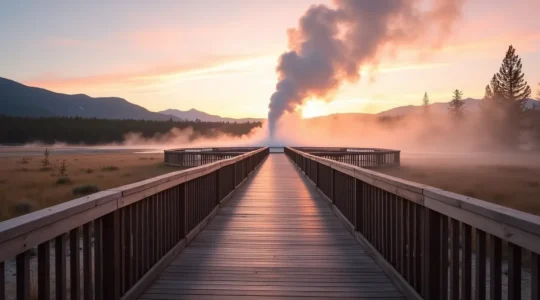
How to See Yellowstone’s Geysers Safely Without Joining the Crowds?
In summary: The greatest danger in Yellowstone is not wildlife, but the unstable ground of thermal areas. Treat every inch off the boardwalk as a potentially fatal hazard. To avoid crowds, plan lodging 13 months in advance to secure in-park…
Read more
The Savvy Local’s Playbook: Conquering Major US Cities on a Budget
Despite popular belief, saving money in big US cities isn’t about buying passes or skipping experiences—it’s about decoding the city’s hidden systems. City passes often fail to reach their “breakeven point” for the average visitor, costing you more. The “cheapest”…
Read more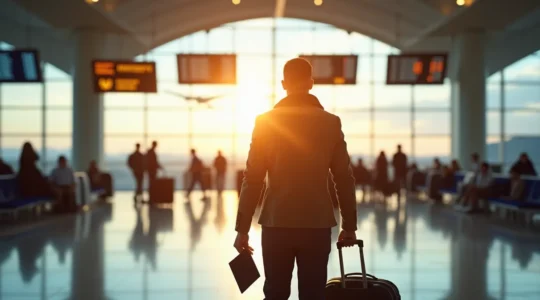
How to Secure Your ESTA for the USA Without Risking a 72-Hour Delay?
Securing your ESTA approval is not the finish line for a risk-free US trip; it’s merely the first, and easiest, step. The real risks lie in post-approval blind spots: failing to prove “non-immigrant intent” at the border, underestimating US healthcare…
Read more