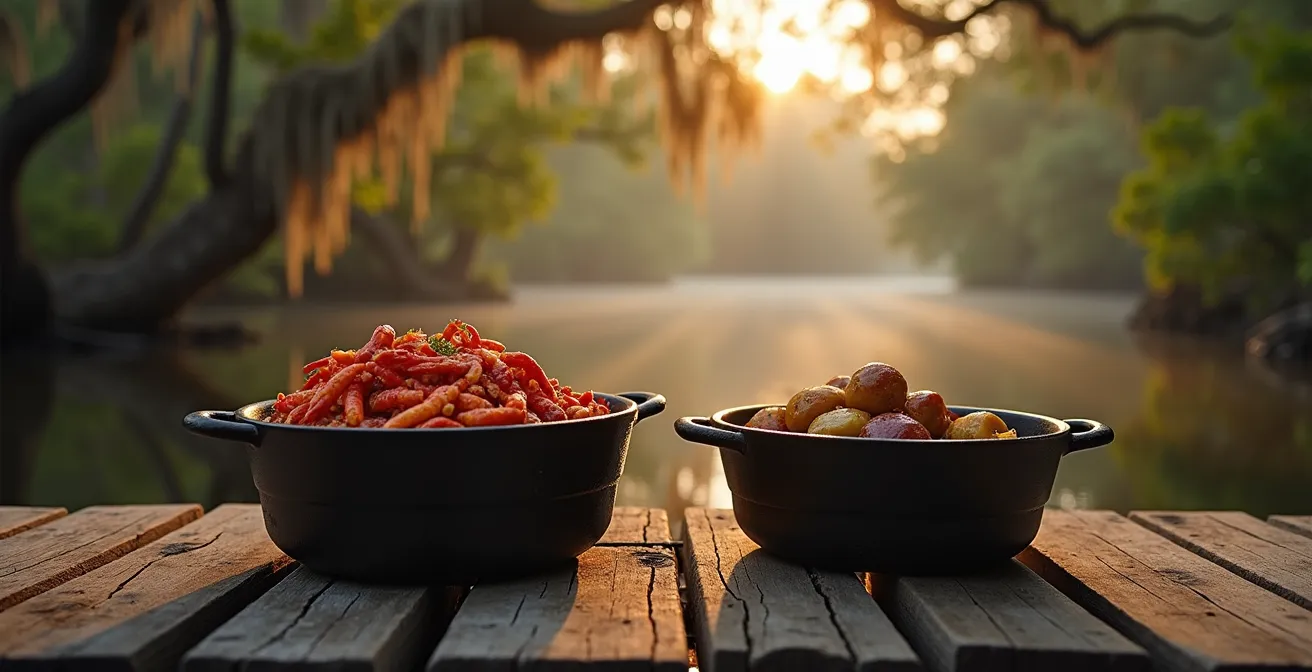
Many believe the difference between Gumbo and Étouffée is a simple checklist of roux color and ingredients. The truth is far richer. This distinction is a doorway into the soul of Louisiana, where the real difference lies not just in the pot, but in the history, geography, and cultural stories that shape every bite. To truly understand the food, you must first understand the place.
For any visitor to Louisiana, the menu can feel like a beautiful, complex puzzle. Two dishes, in particular, stand as gatekeepers to this culinary world: Gumbo and Étouffée. Ask a local the difference, and you might get a quick answer about Gumbo being a soup and Étouffée a stew, or about the color of the roux. These answers are true, but they are merely the first layer of a much deeper story. They are the “what,” but not the “why.” To a traveler confused by the subtle but significant differences between city (Creole) and country (Cajun) cooking, this can be frustrating.
The real key to telling them apart isn’t found in a simple list, but in understanding the very culinary DNA of the region. The answer lies in the historical fusion that created this unique cuisine, a story of adaptation, migration, and making do with the bounty of the land. It’s a narrative that connects French cooking techniques with Spanish ingredients, African soul with Caribbean spice, and the rural ingenuity of the Cajuns with the cosmopolitan flair of Creole New Orleans.
But what if the true path to differentiating Gumbo from Étouffée wasn’t just about the dishes themselves, but about understanding the entire flavor topography of Louisiana? This guide goes beyond the basic definitions. We will explore the foundational elements, a dish’s surprising cousins, the unwritten rules of spice, and even the cultural rhythms that pulse from the kitchen to the streets. By the end, you won’t just know the difference; you’ll feel it.
This article will guide you through the essential stories and experiences that define Louisiana’s culture. The following sections offer a roadmap to understanding not just what’s on your plate, but the history and soul behind it.
Summary: Unlocking the Secrets of Louisiana’s Flavor Topography
- Why Onions, Celery, and Peppers Are the Foundation of Every Pot?
- How to Brown Your Roux to the Color of Dark Chocolate Without Burning It?
- Jambalaya vs. Paella: What’s the Real Connection?
- The ‘Tourist Heat’ Mistake That Ruins Delicate Crawfish Flavor
- When to Visit Louisiana for the Peak of Crawfish Boil Season?
- The Bourbon Street Mistake That Ends in a Stolen Wallet
- How to Rent a Balcony on Bourbon Street Legally?
- How to Plan a Blues Trail Road Trip from Memphis to the Delta?
Why Onions, Celery, and Peppers Are the Foundation of Every Pot?
Onions, celery, and bell peppers form the ‘Holy Trinity,’ the aromatic foundation of nearly every savory Louisiana dish, because they represent a historical adaptation of classic French mirepoix to the local agriculture and terroir of the region. This simple trio is the first chapter in the story of Louisiana cooking, a perfect example of Creole and Cajun ingenuity. Its roots trace back to the French colonists who brought their culinary traditions, including the mirepoix (a 2:1:1 ratio of onion, celery, and carrot), to the New World.
The establishment of this culinary DNA happened early in the state’s history. Indeed, research on Louisiana culinary history shows that by around 1775, the core flavors we recognize today were already taking shape. The most significant change was a practical one. When the Acadians settled in Louisiana after being exiled from Canada, they discovered that carrots did not thrive in the warm, humid soil. They needed a substitute that could provide a similar sweetness and body.
The solution was the locally abundant bell pepper. This substitution wasn’t just a workaround; it created an entirely new flavor base that is distinctly Louisianan. As renowned Chef John Folse explains, this adaptation was born from necessity and knowledge:
Louisiana’s original settlers were French and Spanish, so it seems likely that the Cajun holy trinity emerged from that which they knew: onions and celery. Because carrots were not readily available, bell pepper was a great substitute.
– Chef John Folse, LSU AgCenter
This Trinity isn’t just for Gumbo or Étouffée; it’s the starting point for jambalaya, sauce piquante, and countless other dishes. Understanding this foundational trio is the first step to understanding the shared heritage of all Louisiana cooking, whether it’s the refined sauces of a Creole kitchen or the rustic one-pot meals of Cajun country.
How to Brown Your Roux to the Color of Dark Chocolate Without Burning It?
If the Holy Trinity is the foundation, the roux is the soul in the pot. This simple mixture of fat and flour, cooked to varying shades of brown, is the primary thickener and flavor-driver in both Gumbo and Étouffée, and its color is a major clue to a dish’s identity. A Cajun Gumbo is famous for its dark chocolate-colored roux, which imparts a deep, nutty, and slightly bitter complexity. An Étouffée, by contrast, typically uses a “blonde” or light peanut-butter-colored roux, which serves more as a thickener, allowing the flavor of the seafood to shine. The challenge for any cook is achieving that deep color without scorching the flour, a process that requires patience and constant attention.
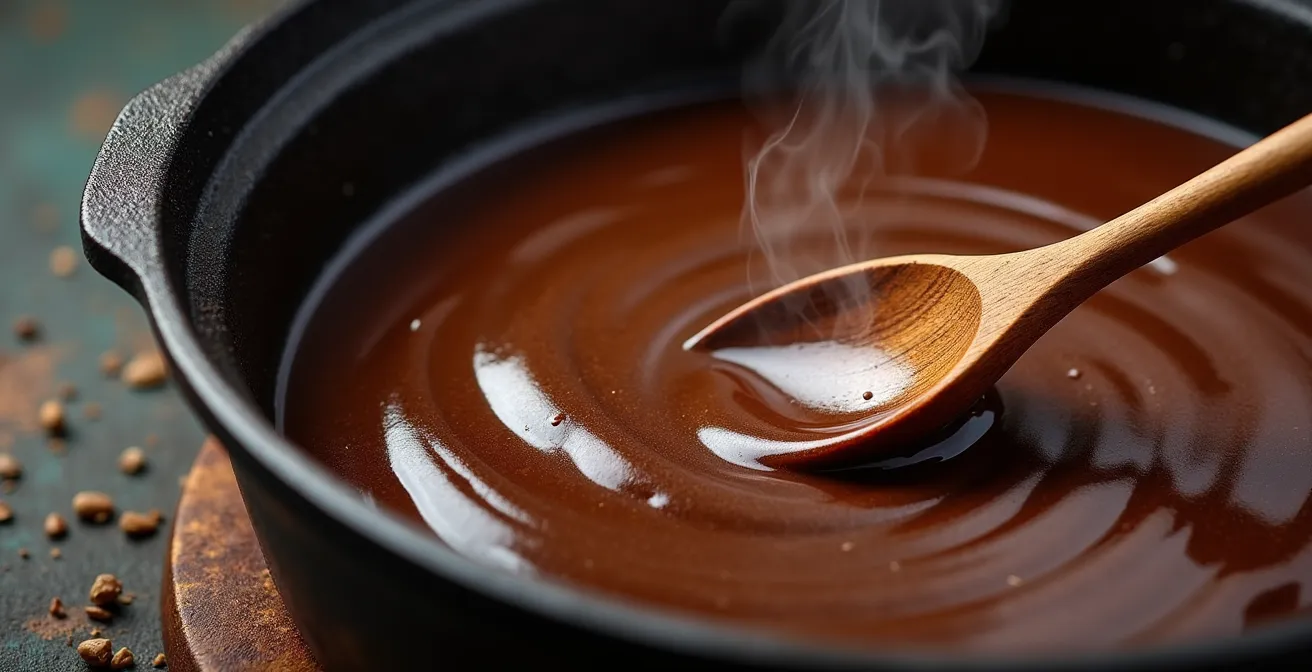
The secret is low, steady heat and constant stirring, preferably with a flat-edged wooden spoon in a heavy-bottomed pot like cast iron. The process can take anywhere from 30 minutes to over an hour. As you stir, the mixture will progress through stages: white, to blonde, to copper, and finally to a deep, glossy brown. The moment you smell a hint of burnt toast, it’s too late. While a dark roux is iconic, it’s not the only one used. In fact, documented Louisiana culinary traditions show medium roux are the most versatile and common in the Creole cuisine of New Orleans, providing a balance of thickening power and flavor.
This highlights a key difference for visitors: the rustic, slow-simmered nature of a Cajun Gumbo, defined by its dark roux, versus the often quicker, sauce-focused nature of Creole cooking. Mastering the roux isn’t just a technique; it’s a rite of passage that connects a cook to generations of tradition. It’s the story of time and care, told through color and aroma.
Jambalaya vs. Paella: What’s the Real Connection?
To understand the “city” side of the culinary coin—Creole cuisine—one must look beyond French influence to another European powerhouse: Spain. The clearest evidence of this connection is found not in Gumbo, but in its famous cousin, Jambalaya. For a visitor trying to build a flavor map of New Orleans, understanding Jambalaya’s heritage is crucial because it reveals the multicultural melting pot that defines Creole cooking. At first glance, Jambalaya and the Spanish national dish, Paella, seem quite different, but their shared DNA is undeniable. Both are one-pot rice dishes featuring a mix of proteins and vegetables.
The connection stems from the period of Spanish rule in New Orleans (1763-1803). Spanish settlers, longing for their beloved Paella, had to adapt the recipe. Saffron, the key spice in Paella, was prohibitively expensive or unavailable. They substituted it with the next best thing for color and flavor: tomatoes. They also incorporated local proteins like andouille sausage alongside the chicken and seafood. A food historian writing for Adventure.com makes this point succinctly:
Jambalaya, with its Spanish roots and a tomato-heavy profile, is quintessentially Creole. This helps the reader better understand why Gumbo can be either Cajun or Creole, but Jambalaya is firmly rooted in the city’s specific melting-pot history.
– Food historian, Adventure.com
This Creole, or “red,” Jambalaya stands in contrast to its Cajun cousin, which typically omits the tomatoes and gets its brown color from browned meat and stock. For travelers, seeing tomatoes in a dish is often the clearest signal of Creole influence. This table, based on information from The Historic New Orleans Collection, breaks down the key differences.
| Aspect | Jambalaya (Creole) | Paella (Spanish) |
|---|---|---|
| Origin | New Orleans, Louisiana | Valencia, Spain |
| Key Spice | Cayenne, paprika | Saffron |
| Protein | Chicken, sausage, seafood | Rabbit, chicken, seafood |
| Tomatoes | Yes (Creole version) | Sometimes |
| Cooking Method | One-pot, stirred | Wide pan, not stirred |
This “story in the pot” shows how a dish can travel across an ocean, adapt to a new home, and become something entirely new yet comfortingly familiar. It’s a testament to the city’s ability to absorb and transform influences into a culture all its own.
The ‘Tourist Heat’ Mistake That Ruins Delicate Crawfish Flavor
Navigating the spice level in Louisiana is a delicate art, and it’s another area where visitors often stumble. The common misconception is that all Louisiana food is fiery hot. This leads to the “Tourist Heat” mistake: ordering something “extra spicy” in an attempt to be authentic, only to receive a dish where raw heat completely obliterates the nuanced flavors. True Louisiana cooking is about flavor, not just fire. The heat from cayenne pepper is an important layer, but it should never dominate the symphony of garlic, onion, paprika, thyme, and other herbs and spices.
Generally, there is a difference in philosophy between the two cuisines. According to culinary experts at the Escoffier School of Culinary Arts, Cajun food is typically spicier than Creole food, and it also features more rustic ingredients like pork and crawfish. Creole cuisine, with its classic European sauce techniques, often uses spice more as a subtle background note. When ordering, especially with a delicate protein like crawfish in an Étouffée, asking for overwhelming heat is a cardinal sin. It masks the sweet, subtle flavor of the shellfish, which is the star of the dish.
So, how do you signal to the kitchen that you want an authentic, balanced experience? It’s about using the right language. Instead of asking for “hot,” you’re asking for “flavor.” This tells the chef you understand and respect the cuisine’s complexity. For any traveler wanting to taste the real Louisiana, this is an essential skill.
Your Action Plan: Ordering Authentic Louisiana Spice
- Ask for ‘traditional Louisiana heat,’ not ‘extra spicy.’ This shows you’re seeking balance.
- Request ‘flavor-forward seasoning’ to signal you understand the complexity of the cuisine beyond just cayenne.
- Say ‘I’m looking for traditional flavor, not just heat’ to give the kitchen clear guidance.
- Look for dishes described with complex spice blends like paprika, garlic powder, and onion powder, not just ‘hot’.
- Avoid restaurants that advertise ‘the hottest’ anything; authentic establishments prioritize flavor over pure capsaicin.
Learning this local dialect of flavor ensures you experience the dishes as they were meant to be enjoyed, with every layer of their history and seasoning intact.
When to Visit Louisiana for the Peak of Crawfish Boil Season?
Timing your visit to Louisiana can dramatically shape your culinary experience, and nowhere is this truer than with crawfish. While Gumbo and Étouffée are available year-round, the iconic crawfish boil is a deeply seasonal ritual. Visiting during peak season, typically from late February through May, means you’ll experience this cultural tradition at its most vibrant and affordable. This is when the weather is mild, outdoor festivals are in full swing, and crawfish are at their largest, most plentiful, and cheapest.
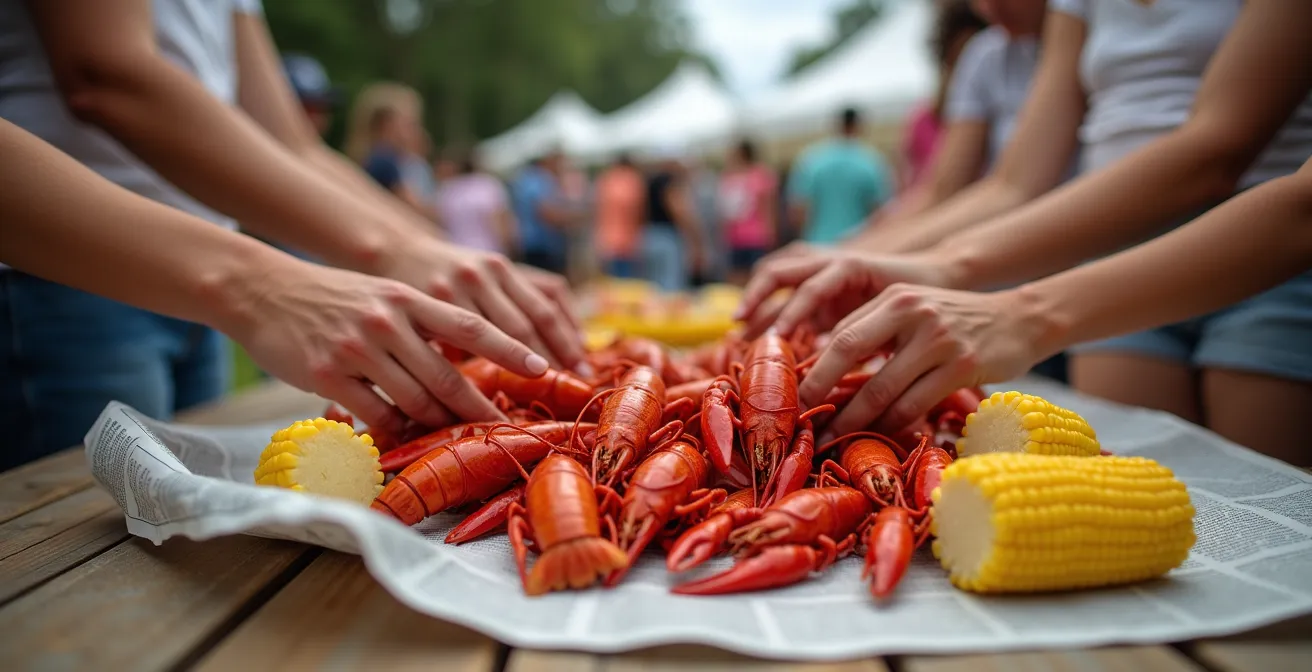
The crawfish industry is a cornerstone of the state’s culture and economy. Beyond just a food source, the Louisiana crawfish industry generates a $300 million annual economic contribution and supports over 7,000 livelihoods. A crawfish boil is more than a meal; it’s a social event where families and friends gather around newspaper-lined tables to peel, eat, and socialize for hours. The crustaceans are boiled in giant pots with a fiery seasoning blend, along with potatoes, corn on the cob, onions, and sometimes mushrooms or andouille sausage.
The season’s strength can vary year-to-year based on weather, affecting availability and price. For example, analysis of the 2024-2025 season showed how a strong supply can lead to significantly lower prices for consumers. One Baton Rouge restaurant started selling boiled crawfish at $10.99 per pound, a notable drop from the previous year’s $14.99 starting price, signaling a bountiful season ahead. While you can find crawfish outside of the peak spring window, they are often smaller, more expensive, or previously frozen (a taboo for boils, though acceptable in dishes like Étouffée). For the quintessential Louisiana experience, plan your trip around this springtime harvest.
The Bourbon Street Mistake That Ends in a Stolen Wallet
A visitor’s sensory compass can easily get overwhelmed on Bourbon Street. The explosion of sights, sounds, and crowds is part of its allure, but it’s also where tourists are most vulnerable. The biggest mistake is becoming so distracted by the spectacle that you lose awareness of your surroundings, making you an easy target for pickpockets. While you’re looking up at the balconies and bead-throwing, someone else might be looking at your back pocket or purse. This is why understanding the local landscape extends beyond food; it’s about navigating the environment with informed awareness.
The key is to balance immersion with caution. Seeking authenticity can often be your best defense. As many locals will tell you, the most memorable culinary and cultural experiences are rarely found in the heart of the tourist-heavy zones. This sentiment is beautifully captured by Chef Edgar ‘Dooky’ Chase, IV, a pillar of the New Orleans culinary community, who speaks to the peaceful coexistence of the city’s cuisines beyond the tourist fray:
The method of making each dish is primarily different. There’s no superiority though and that’s the beauty of Louisiana, where both cuisines co-exist peacefully, like cousins.
– Chef Edgar ‘Dooky’ Chase, IV, Adventure.com
His words are a reminder that the soul of the city often resides in the neighborhoods, in establishments frequented by locals. Venturing to these places not only rewards you with more authentic food but also takes you away from the dense crowds where petty crime is more common. To enjoy the vibrant energy of the French Quarter without incident, a few practical steps are all it takes:
- Research restaurants in advance: Look for authentic spots in adjacent, safer neighborhoods like the Marigny or the Warehouse District.
- Travel in groups: Especially when exploring the dining and music scenes at night.
- Secure your valuables: Use a front pocket for your wallet, carry a cross-body bag, and avoid displaying expensive jewelry or large amounts of cash.
- Trust the locals: Ask your hotel concierge or a friendly shop owner for recommendations and specific neighborhood safety updates.
How to Rent a Balcony on Bourbon Street Legally?
Renting a balcony on Bourbon Street legally requires navigating a complex web of city ordinances, with the safest and most straightforward method being to book a hotel room that includes a private balcony. The dream of tossing beads from a wrought-iron perch during Mardi Gras is a quintessential New Orleans fantasy, but achieving it requires planning and caution. The city has strict regulations regarding short-term rentals and commercial use of private balconies, especially in the historic French Quarter. This makes unofficial or third-party rentals risky, often leading to scams or last-minute cancellations.
For visitors, the most reliable path is to go through established hotels located directly on Bourbon Street or on intersecting streets with corner views. These establishments are licensed and operate within the city’s legal framework. While this option is often more expensive, it provides security and peace of mind. Booking well in advance—sometimes up to a year for peak events like Mardi Gras or Jazz Fest—is absolutely essential, as these coveted rooms sell out quickly. The allure of the balcony is its role as a private stage above the public spectacle, a part of the city’s unique social architecture. But participating in this tradition legally is key to ensuring your experience is memorable for the right reasons.
Key takeaways
- The Gumbo vs. Étouffée distinction is a starting point for understanding Louisiana’s entire cultural history, from French techniques to Spanish ingredients.
- Authentic Louisiana cooking is about a deep, complex balance of flavors (‘flavor-forward’), not just overwhelming heat.
- The best experiences, both culinary and cultural, often lie just beyond the main tourist areas, in neighborhoods where local traditions thrive.
How to Plan a Blues Trail Road Trip from Memphis to the Delta?
The cultural terroir of Louisiana doesn’t stop at the state line. The flavors in a New Orleans kitchen share a deep, historical soul with the music born in the fields of the Mississippi Delta. To truly complete your understanding, you must follow the flavor to its source. A road trip along the Blues Trail, from the musical hub of Memphis down through the Mississippi Delta, is the final chapter in this story. This journey connects the dots between the Great Migration, the birth of the Blues, and the culinary traditions that traveled downriver and fused into what we now know as Creole and soul food.
This connection between food and music is not just theoretical; it’s a living history. The same African American diaspora that created the Blues also carried the cooking techniques and flavor profiles that became foundational to Louisiana cuisine. This is the “soul” in the food. A leading cultural historian from The Historic New Orleans Collection articulates this powerful link: “The same African American diaspora that created the Blues in the fields of the Delta also carried the culinary traditions that became the ‘soul’ in Louisiana’s soul food, Creole, and Cajun cooking.”
This shared heritage was further shaped by culinary pioneers like Chef Paul Prudhomme. Prudhomme famously and creatively blended the rural, rustic Cajun style of his upbringing with the refined, sauce-based French Creole dishes of New Orleans. His insistence on fresh, locally sourced ingredients helped codify and elevate the cuisine, making it a global phenomenon. Planning this road trip means visiting the juke joints in Clarksdale, Mississippi, exploring the B.B. King Museum, and eating at roadside diners, all while recognizing the familiar notes of smoke, spice, and soul that echo in the Gumbo pots of New Orleans. It transforms a culinary question into a profound cultural pilgrimage.
Now that you can see the deep cultural currents connecting every dish and every song, the next step is to go out and experience this living history for yourself, armed with a newfound appreciation for the stories in every pot.
Frequently Asked Questions about Renting a Balcony on Bourbon Street
Can I rent a private balcony for Mardi Gras?
Private balcony rentals are subject to strict city ordinances. Hotels with balconies are the simplest, most legal option.
What’s the difference between hotel and private rentals?
Hotel balcony rooms are straightforward rentals, while private subletting often violates city regulations and may involve scams.
When should I book a balcony for peak season?
For Mardi Gras or Jazz Fest, book at least 6-12 months in advance as balcony rooms sell out quickly.