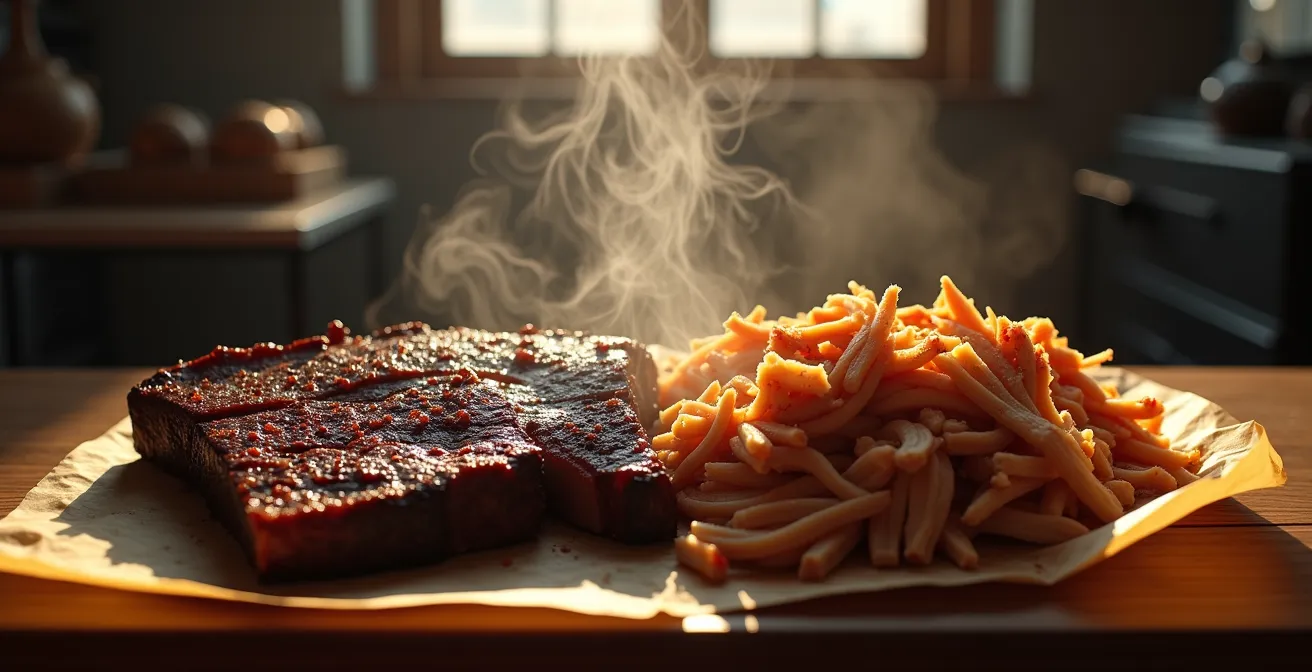
The real difference between BBQ styles isn’t the meat; it’s a holy trinity of wood, sauce, and time that defines each region’s sacred tradition.
- Wood acts as the ‘terroir,’ infusing a unique regional flavor before the meat ever hits the pit.
- Sauce is a cultural fingerprint, telling a story of immigration and local history, not just a condiment.
Recommendation: To find authentic BBQ, look for a ‘sold out’ sign and a woodpile, not a fancy menu. That’s your signal that they respect the craft.
So, you’re standing in the heart of the BBQ Belt, the smoky air thick with promise, and the great American debate rages on: Texas brisket versus Carolina pulled pork. Most folks will tell you it’s simple: “Texas is beef, Carolina is pork.” And they’re not wrong, but they’re not right either. That’s like saying wine is just “red or white.” It misses the soul of the thing. As a pitmaster, I’m here to tell you that focusing on the meat is looking at the wrong end of the smoker. You’re asking the wrong question.
The generic advice is to look at the sauce, or the side dishes like collard greens or mac and cheese. These are clues, sure, but they’re just part of the story. The truth, the gospel of real American barbecue, is that each legendary style is built on a foundation, a holy trinity of elements that define its character long before you take your first bite. To truly understand the difference, you need to learn to read the signs and taste the history.
Forget the surface-level arguments. The real key lies in understanding three pillars: the wood that provides the smoke, the sauce that acts as a cultural fingerprint, and the sacred timing of the cook. This isn’t just about a meal; it’s about a regional identity forged in fire and patience. You don’t just eat barbecue; you partake in a tradition.
This guide will walk you through that tradition. We’ll decode the smoke signals, demystify the sauces, and reveal the unwritten rules of ordering that separate the tourists from the true connoisseurs. By the end, you won’t just know the difference between brisket and pulled pork—you’ll understand the religion behind them.
Summary: Your Guide to the Religion of American Barbecue
- Why Hickory Wood Creates a Different Flavor Profile Than Mesquite?
- How to Spot a Real BBQ Shack by the Pile of Wood Outside?
- Vinegar vs. Molasses Base: Which Sauce Rules the South?
- The ‘Lunch Only’ Rule That Saves You from Dry Brisket
- How to Order ‘Burnt Ends’ Before They Sell Out for the Day?
- Diner vs. Bistro: Which Defines the True American Neighborhood Vibe?
- How to Eat Deep-Fried Butter Without Getting Sick?
- How to Plan a Blues Trail Road Trip from Memphis to the Delta?
Why Hickory Wood Creates a Different Flavor Profile Than Mesquite?
Before you even think about sauce, you have to talk about the smoke. The wood is the soul of the barbecue; it’s the terroir. It’s the very first ingredient. The idea that all smoke is the same is the biggest lie in barbecue. The type of tree, its density, and its chemical makeup fundamentally change the taste of the final product. It’s not just fuel; it’s a seasoning. For example, hickory, the king of Carolina, delivers a strong, bacon-like flavor that penetrates deep into pork shoulder. It’s a classic, robust smoke.
Mesquite, on the other hand, is the wild child of Texas. It burns hot and fast, producing a powerfully earthy and intense smoke. The reason for this difference is pure science. According to some research, mesquite can contain up to 64% lignin, the organic polymer that imparts that classic smoky flavor when burned, compared to hickory’s much lower concentration. This high lignin content is why mesquite can easily overpower meat, making it ideal for quick grilling like fajitas but a risky choice for a 12-hour brisket smoke unless you really know what you’re doing.
This is why Texas pitmasters almost universally swear by post oak. It’s the perfect middle ground—a milder, slower-burning wood that imparts a subtle smokiness that complements beef without masking its natural flavor. Understanding this is the first step. You’re not just tasting the meat; you’re tasting the forest it was smoked with. The wood selection is a deliberate choice that defines the region’s flavor profile:
- Central Texas: Post oak is used for a moderate smoke that enhances beef’s natural flavor.
- Eastern North Carolina: A mix of oak and hickory is burned down to coals for steady, consistent heat for whole hog cooking.
- Kansas City: A blend of hickory and oak provides a strong smoke foundation for sweet sauces.
How to Spot a Real BBQ Shack by the Pile of Wood Outside?
Forget the fancy signs and clever marketing. The single most reliable indicator of a legitimate barbecue joint is a massive, disorderly pile of wood out back. If you see neat little bags of wood chunks from a hardware store, or worse, no wood at all, turn around and walk away. That place is using gas or electricity, and that’s not barbecue; that’s just an outdoor oven. A real pitmaster lives by their woodpile. It’s their fuel source, their spice rack, and the heart of their operation.
This woodpile tells a story. Look for seasoned, split logs, not perfectly cut chips. You want to see oak, hickory, or mesquite that has been weathered by the sun and rain. This is a sign of a high-volume operation that burns through wood day and night. The legendary Franklin Barbecue in Austin, for example, is known to burn through about a ton of post oak every single day. That’s not a hobby; that’s an industrial-scale commitment to the craft. The size and type of wood tell you everything.
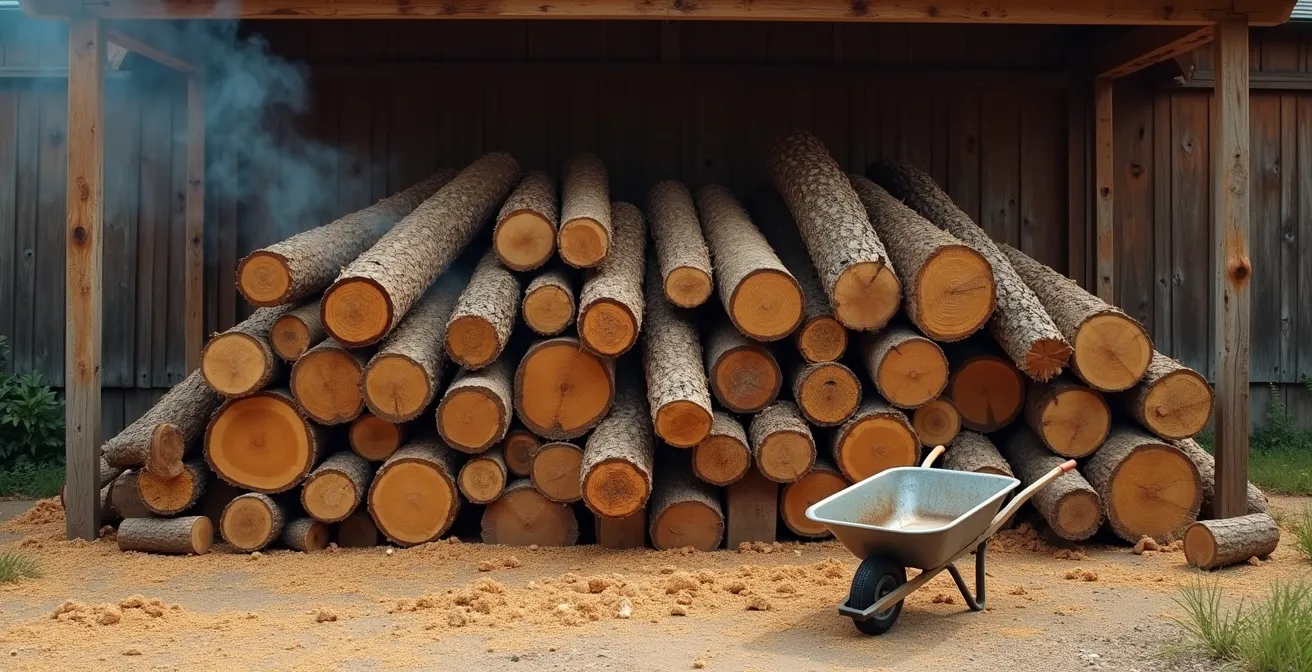
As Aaron Franklin, one of the most respected pitmasters in the country, said in his PBS series “BBQ with Franklin” when talking about identifying quality post oak:
You can always tell it because it always has red streaks, and it has a real tight bark on it.
– Aaron Franklin, PBS Food series BBQ with Franklin
This is the level of detail that matters. A true pitmaster knows their wood intimately. So next time you’re on a BBQ hunt, use your eyes and your nose before you even look at a menu. Look for the woodpile, look for the faint, steady stream of real wood smoke from the chimney, and listen for the rhythmic thud of an axe splitting logs. That’s the sound of authenticity.
Vinegar vs. Molasses Base: Which Sauce Rules the South?
If wood is the soul of barbecue, then sauce is its voice. And in the South, that voice can be a fiery sermon or a sweet hymn. The sauce is a cultural fingerprint, a liquid history of a region’s agriculture, economy, and immigrant roots. In Texas, the philosophy is that a perfectly smoked brisket needs no sauce. It’s often served on the side, a thin, unsweetened liquid more like a broth, considered by many old-school pitmasters as an insult to their craft if you use it too liberally.
The Carolinas are another world entirely. Here, the sauce isn’t an option; it’s an integral part of the meat. In Eastern North Carolina, you’ll find a brutally simple and historic sauce of vinegar, salt, and red pepper flakes. It’s thin, acidic, and designed to cut through the richness of whole hog barbecue. Head west to the Lexington style, and they introduce a bit of tomato or ketchup to the vinegar base, creating a slightly thicker “dip” for pork shoulder. And then there’s South Carolina, the most diverse of all. Culinary historians have documented that South Carolina has 4 distinct regional sauce styles, with the most famous being the “Carolina Gold” sauce, a tangy, mustard-based concoction brought by German immigrants.
To the west, in places like Kansas City, the sauce becomes king. It’s thick, sweet, and heavy with molasses and tomato. It’s designed to coat everything from ribs to burnt ends, creating a sticky, caramelized glaze. This comparative table breaks down the core philosophies:
| Region | Base Ingredient | Typical Meat | Sauce Philosophy |
|---|---|---|---|
| Eastern North Carolina | Vinegar & Pepper | Whole Hog | Sauce as essential component |
| Western North Carolina | Vinegar & Tomato | Pork Shoulder | Lexington Dip tradition |
| South Carolina | Mustard (Gold) | Pulled Pork | German immigrant influence |
| Kansas City | Molasses & Tomato | All meats | Sweet & thick coating |
| Texas | Minimal/None | Brisket | Sauce as insult to meat quality |
So which rules the South? None of them. They all do. Each sauce is a proud declaration of local identity. To understand the barbecue, you must first understand the story in the sauce.
The ‘Lunch Only’ Rule That Saves You from Dry Brisket
Here’s one of the most important, unwritten laws of barbecue: real barbecue is a lunch food. If a famous joint promises you world-class brisket at 8 PM, be skeptical. Why? Because great barbecue is a product of time, and that clock starts ticking the moment it comes off the pit. Brisket and pork shoulders are smoked low and slow for 12, 14, even 18 hours overnight. They come off the smoker in the morning, rest for a crucial period, and are at their absolute peak of moisture and tenderness around 11 AM to 2 PM.
The best pitmasters embrace what I call the “Gospel of ‘Sold Out’.” They cook a set amount of meat for the day, and when it’s gone, it’s gone. They would rather close early than serve you dry, reheated, day-old meat. Franklin BBQ is the poster child for this model; they open at 11 AM and are famously sold out by early afternoon, with a line that starts forming at sunrise. They never, ever serve brisket from a previous day. This isn’t a marketing gimmick; it’s a commitment to quality. That brisket you’re eating for dinner was likely held in a warmer for hours, slowly drying out and losing the magic it had at noon.
This means you, the pilgrim, must adjust your schedule to the barbecue’s schedule, not the other way around. Plan for a big, late lunch. Show up early, be prepared to wait, and be rewarded with meat at its absolute zenith. Waiting in line for 3-4 hours isn’t a bug; it’s a feature. It’s part of the ritual, a testament to the pitmaster’s craft. Your patience is the price of admission for perfection.
Your Action Plan: Getting BBQ at Peak Quality
- Arrive no later than 9:30 AM to ensure you get your preferred choice of meat.
- Follow the restaurant’s social media channels for real-time “sold out” announcements.
- Bring folding chairs, water, and snacks for the potential 2-4 hour wait in line.
- For groups, consider pre-ordering bulk amounts (5+ lbs) weeks in advance to skip the line.
- Visit on a weekday (Tuesday-Thursday) for typically shorter lines than on weekends.
How to Order ‘Burnt Ends’ Before They Sell Out for the Day?
Ah, burnt ends. The holy grail. The meat candy of the barbecue world. Many people think “burnt ends” are just charred, dried-out pieces of brisket. That is a crime against barbecue. True burnt ends are a delicacy born from the specific anatomy of a whole brisket. A brisket is made of two muscles: the leaner “flat” and the fattier “point.” The flat is what you get when you order sliced brisket. The point, a thick, fat-marbled cap, is the source of true burnt ends.
After the initial long smoke, the point is often separated from the flat, cubed up, tossed in a little sauce, and put back in the smoker for a second cook. This process renders out more of the rich fat, caramelizes the sugars in the sauce, and creates intensely flavorful, melt-in-your-mouth cubes that are crispy on the outside and impossibly tender on the inside. They are not “burnt”; they are perfected.
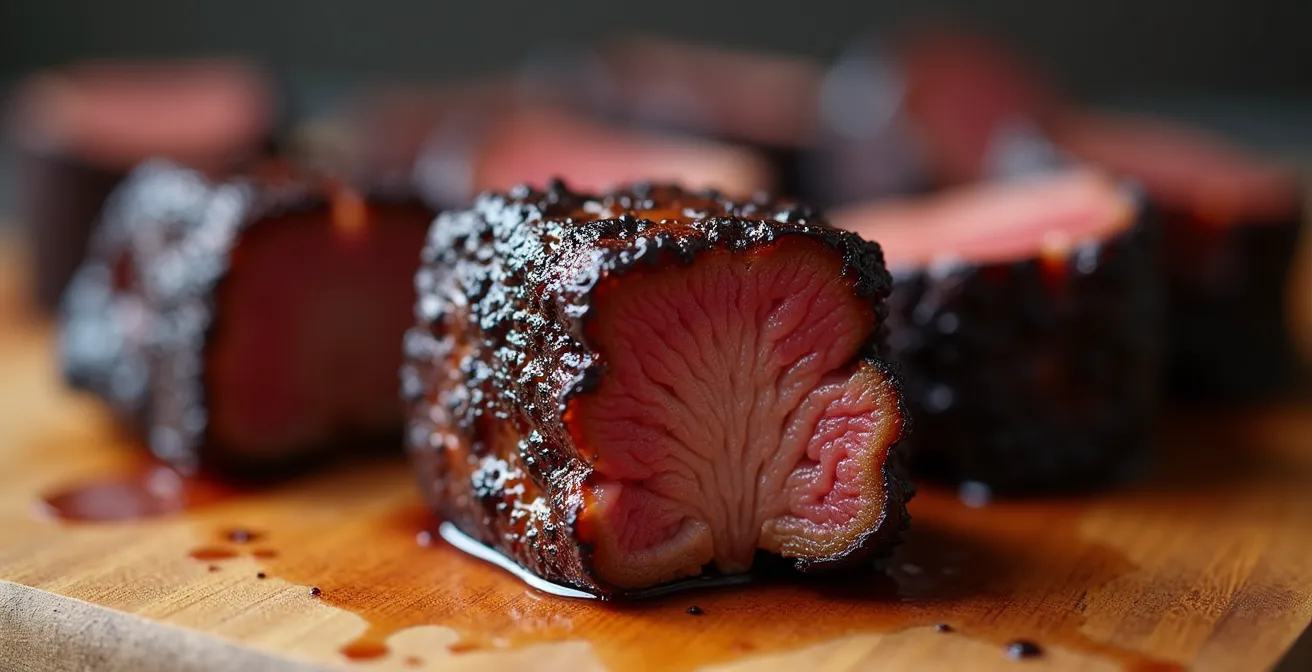
Because they come from only one part of the brisket, supply is extremely limited. A 15-pound brisket might only yield a few pounds of burnt ends. This is why they sell out, and they sell out fast—often within the first hour of service. So, how do you get them? First, you go to the right place. Burnt ends are a Kansas City specialty, though many joints across the country now offer them. Second, you follow the ‘lunch only’ rule and get there before they even open. Third, when you get to the counter, you order them with confidence. Don’t ask, “Do you have any of those, uh, burnt things?” Say, “I’ll take a half-pound of burnt ends, please.” Some places may only offer them on certain days, so a quick check of their website or a call ahead can save you from disappointment.
Diner vs. Bistro: Which Defines the True American Neighborhood Vibe?
When you’re on a culinary road trip through America, you’ll notice that the best food experiences are about more than just what’s on the plate. They’re about the atmosphere, the community. The debate between the diner and the bistro as the quintessential neighborhood spot is a good one, but the authentic BBQ shack carves out its own unique space that borrows from the best of both. It’s neither a white-tablecloth bistro nor a chrome-and-vinyl diner; it’s something else entirely. It’s a community hub.
A bistro can feel formal, a place for quiet conversation. A classic American diner is more democratic, a bustling crossroads of the community. A great BBQ joint captures that diner energy but elevates it into a shared, almost celebratory, experience. The long lines, the communal picnic tables, the shared anticipation—it all fosters a sense of camaraderie. It’s a place where strangers become friends, bonded by a mutual love of smoked meat. It’s the modern equivalent of a town square.
One regular at Franklin BBQ described the experience perfectly, capturing a vibe that is closer to a tailgate party than a restaurant:
The line itself is an experience. We met Austinites and travelers from all over the country, made connections with people who love food and Texas. It reminded us of tailgating culture – everyone was in a great mood even after hours of waiting. The staff greets multiple customers by name as they walk in.
– A Franklin BBQ regular, That’s What She Had
That last line is key. The true American neighborhood vibe is defined by recognition and welcome. Whether it’s a diner, a dive bar, or a BBQ shack, the truest test is counting how many customers the staff greets by name. This is the heartbeat of a community. So while a diner provides the fuel for the start of the day and a bistro might offer a refined end, the BBQ joint often serves as the culinary and social peak—the main event that brings everyone together.
How to Eat Deep-Fried Butter Without Getting Sick?
As you travel the backroads, you’ll encounter another side of American culinary tradition: the glorious, unapologetic absurdity of state fair food. This is where you find the infamous deep-fried butter. While barbecue is a craft of patience and nuance—the sacred—fair food is an exercise in shock and awe—the profane. And there’s a place for both. The State Fair of Texas, for instance, attracts over 2 million visitors a year, many of whom are there for a once-a-year dive into culinary extremism.
So, how do you tackle something as daunting as deep-fried butter? First, understand what it is: a stick of frozen butter, battered, and flash-fried. The goal is a molten center and a crispy shell. Eating this is not a meal; it’s an event. The key to survival is a strategy of moderation and balance. This is not a solo mission.
Here’s your survival guide:
- Share the Burden: Never attempt deep-fried butter alone. This is a dish for 3-4 people to try a single bite each.
- Balance the Elements: Follow the Rule of Three. You have an immense amount of fat. You must immediately counter it with acid (like a fresh-squeezed lemonade) and salt (perhaps from a roasted ear of corn).
- Keep Moving: Don’t sit down after eating it. Walk. Let gravity and movement aid your digestive system’s valiant effort.
- Contrast with Function: Appreciate the difference between this kind of novelty frying and functional fried foods like hushpuppies or fried okra in a BBQ joint, where the frying serves a textural purpose, not just a shock-value one.
Embracing fair food is about embracing the spectacle. It’s a joyful, temporary departure from culinary sanity. Treat it as such, a once-a-year pilgrimage to the wild side, and you’ll walk away with a great story instead of a stomach ache.
Key Takeaways
- Real barbecue is defined by its Holy Trinity: the wood for flavor, the sauce for history, and the timing for quality.
- A pile of split logs outside a shack is the most honest advertisement for authentic, wood-fired barbecue.
- The best barbecue is a lunch food. A “sold out” sign is a mark of quality, not a flaw.
How to Plan a Blues Trail Road Trip from Memphis to the Delta?
Now that you understand the religion of barbecue, it’s time for a pilgrimage. There is no better journey for the American food and music lover than a road trip down Highway 61, the legendary Blues Highway, from Memphis, Tennessee, into the heart of the Mississippi Delta. This is where the intertwined roots of blues music and southern barbecue run deepest. This trip is not just a drive; it’s a journey through the soul of America.
The route is steeped in history. Your starting point, Memphis, is home to both Beale Street and iconic dry-rub ribs. From there, you’ll head south into the Delta, a land of cotton fields, juke joints, and crossroads where legends like Robert Johnson supposedly sold their souls. Along the way, you’ll find barbecue joints that have been serving their communities for nearly a century, their pits seasoned by time and history. The iconic Highway 61 corridor offers a perfect pairing of blues and BBQ. In Clarksdale, MS, you can visit Ground Zero Blues Club (co-owned by Morgan Freeman) for live music and then eat at Abe’s Bar-B-Q, which has operated at the “crossroads” since 1924.
A successful trip requires a loose plan that allows for spontaneous discovery. The goal is to alternate between historic blues markers, live music venues, and legendary food stops. Here is a sample itinerary to get you started on your pilgrimage:
| Stop | BBQ Joint | Blues Venue | Distance from Memphis |
|---|---|---|---|
| Memphis, TN | The Rendezvous | B.B. King’s Blues Club | Starting Point |
| Tunica, MS | Blue & White Restaurant | Gateway to Blues Museum | 40 miles |
| Clarksdale, MS | Abe’s Bar-B-Q | Ground Zero Blues Club | 90 miles |
| Cleveland, MS | Airport Grocery BBQ | GRAMMY Museum Mississippi | 120 miles |
| Greenville, MS | Doe’s Eat Place | Highway 61 Blues Museum | 150 miles |
This journey is the ultimate final exam. It’s where you put all your knowledge to the test—spotting the woodpiles, decoding the sauces, and showing up at the right time. You’ll taste the history, hear the soul, and finally, truly understand what American barbecue is all about.
Now, stop reading and start planning. The open road, the smoky pits, and the soulful sound of the blues are calling your name. It’s time to go on your own culinary pilgrimage.