In summary:
- Hosting a fly-in tailgate is not about owning gear, but mastering “logistical leverage” through rentals and local services.
- Success depends on planning your gameday with a “reverse timeline” from kickoff to manage food, gear, and timing.
- Embrace the local culture by understanding unique stadium rules, sourcing authentic food, and participating in team traditions.
- Strategize your setup and budget by choosing between a classic, DIY-style tailgate or a modern, full-service experience.
The dream of every out-of-state SEC fan is to be in the heart of the action on gameday, surrounded by the scent of barbecue and the roar of the crowd. You imagine hosting your own spot, sharing food and drinks, and soaking in one of America’s greatest sporting traditions. But then, reality hits. You’re flying in with a suitcase, not driving a pickup truck loaded with coolers, grills, and tents. The logistical challenge feels insurmountable, and many simply resign themselves to being a spectator rather than a participant. The common advice—”pack light” or “make friends”—often feels hollow without a real game plan.
But what if the secret to a legendary fly-in tailgate wasn’t about what you own, but how you strategize? The key is mastering logistical leverage. It’s an approach that shifts the focus from hauling gear to intelligently using local services, understanding the unwritten social rules, and planning your day with the precision of a head coach. It’s about creating an authentic, memorable experience that rivals that of any seasoned local, all without the burden of ownership. Forget the idea that you need a truck and a garage full of equipment. You just need the right playbook.
This guide provides that playbook. We’ll break down how to secure your gear, navigate the spectrum of tailgate styles, manage food and costs, and master the gameday timeline. Get ready to transform from a visiting fan into a true gameday host.
Contents: Your Playbook for the Perfect Fly-In Tailgate
- Why an Auburn vs. Alabama Game Is More Intense Than the Super Bowl?
- How to Spot Fake NFL Tickets on Craigslist 2 Hours Before Kickoff?
- Lambeau Field vs. AT&T Stadium: Classic Cold or Modern Luxury?
- The Purse Mistake That Forces You to Walk Back to the Car
- When to Enter the Stadium to Watch Warm-Ups from the Front Row?
- How to Spot a Real BBQ Shack by the Pile of Wood Outside?
- Texas State Fair vs. Minnesota State Fair: Which Is the Ultimate Experience?
- How to Watch a Bull Riding Event and Understand the Scoring?
Why an Auburn vs. Alabama Game Is More Intense Than the Super Bowl?
To host a tailgate in the SEC, you first have to understand you’re not just throwing a party; you’re stepping into a cultural arena. The passion surrounding a game like the Iron Bowl between Auburn and Alabama is a year-round affair built on generations of rivalry. It’s a level of intensity the Super Bowl, with its corporate gloss and neutral-site crowds, can’t replicate. The history is palpable; historical data shows a fierce rivalry that has defined the state of Alabama for over a century. This isn’t just a game; it’s about family, pride, and bragging rights that last 365 days.
Understanding this intensity is your first strategic advantage. It explains why fans arrive at dawn, why hospitality is a competitive sport, and why knowing a few local traditions can instantly earn you respect. Your goal as a fly-in host is to honor this culture. Don’t show up empty-handed. Prepare a menu with universally loved Southern foods—think pimento cheese, not regional delicacies that might spark a friendly debate. Most importantly, remember that the real purpose of tailgating is creating memories. Your success will be measured not by the size of your tent, but by the quality of your contribution to the gameday spirit.
How to Spot Fake NFL Tickets on Craigslist 2 Hours Before Kickoff?
While navigating the ticket market is one challenge, a more immediate hurdle for the fly-in fan is avoiding equipment rental scams. The “Craigslist” problem for a tailgate host isn’t fake tickets; it’s the phantom tent and grill you paid for that never show up. As tailgate-for-hire services grow in popularity, so do the opportunities for disappointment. Your first act of logistical leverage is to secure your gear from a reputable source, protecting your investment and ensuring your gameday setup is waiting for you.
Never pay the full amount for a rental upfront; legitimate services will almost always accept a partial deposit to secure the booking. Your best bet is to use established companies recommended in official SEC city and university guides. These guides often vet local businesses that cater specifically to the gameday crowd. Before committing, cross-reference any potential rental service with reviews on local fan forums, like team-specific boards on Rivals or 247Sports, where you’ll get honest feedback from seasoned tailgaters. This due diligence is what separates a rookie from a pro.
Your Pre-Game Rental Verification Plan
- Request Proof of Life: Ask the vendor for recent, timestamped photos or a short video of the actual equipment being rented (tents, coolers, chairs).
- Confirm the Drop-Off: Verify that the pickup or drop-off location is a recognized tailgating lot and within a reasonable walking distance from the stadium.
- Check Local Fan Forums: Search for the company’s name on team-specific boards on sites like Rivals or 247Sports to find unfiltered reviews from other fans.
- Use Vetted Services: Prioritize “tailgate-for-hire” companies recommended in official SEC city guides for dining, lodging, and gameday activities.
- Deposit, Don’t Prepay: Never pay the full amount upfront. Legitimate services understand the need for a security deposit, with the balance due upon delivery.
Lambeau Field vs. AT&T Stadium: Classic Cold or Modern Luxury?
While NFL stadiums offer their own brand of spectacle, the real choice for an SEC traveler is between two distinct tailgating philosophies. On one end, you have the traditional, sprawling-grove experience. On the other, the modern, all-inclusive luxury setup. Understanding this spectrum is crucial for deciding how you’ll execute your fly-in tailgate. Your choice will define your budget, your logistics, and your overall gameday experience.
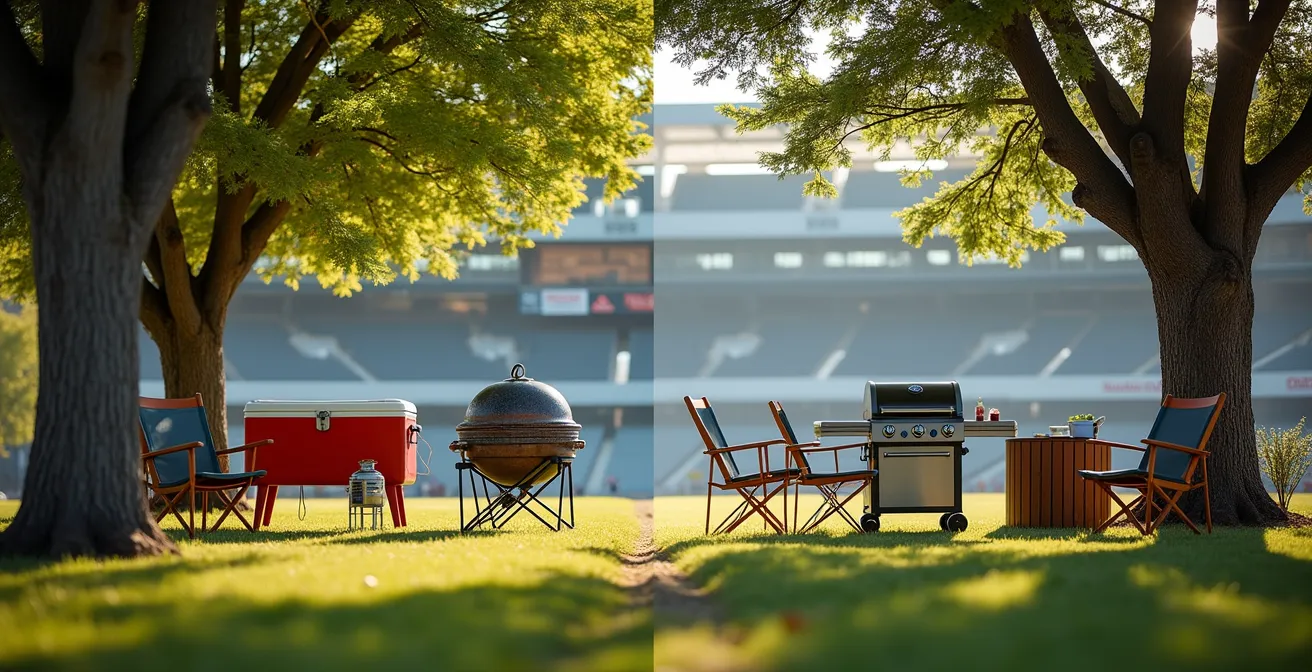
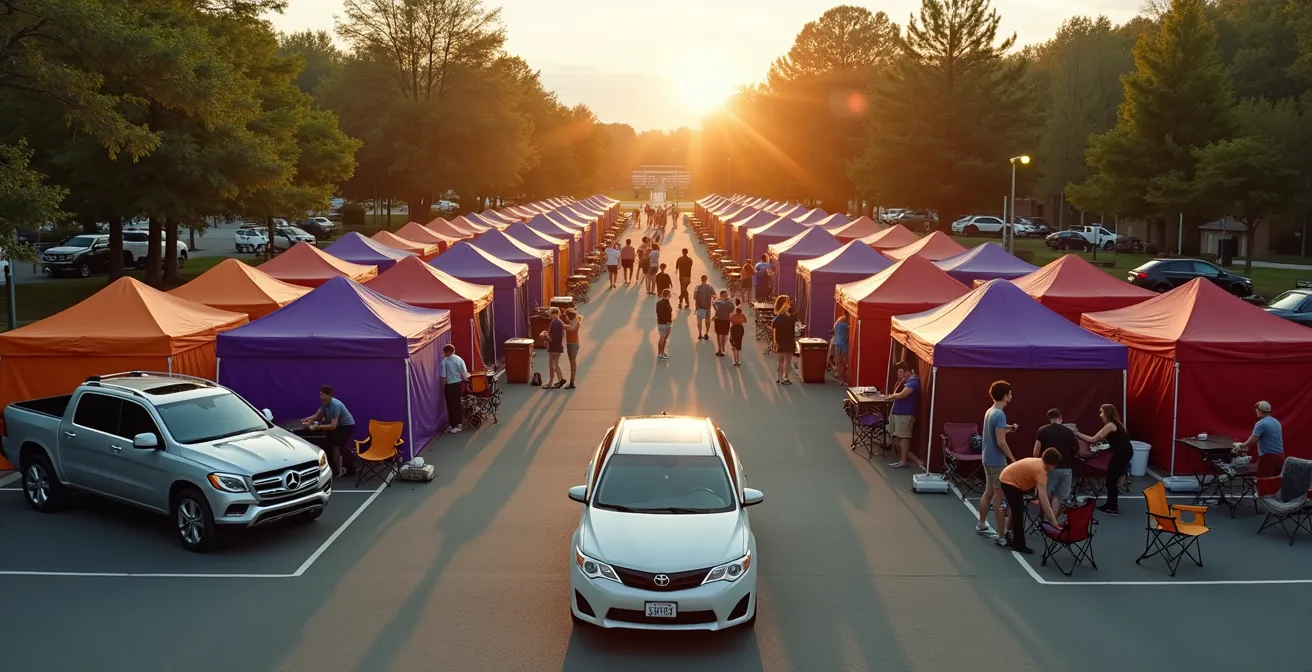
The “classic” style, exemplified by The Grove at Ole Miss, is a sea of tents across a car-free, 10-acre park. It’s a DIY-heavy affair where you bring everything, and spots are first-come, first-served. For a fly-in fan, this means renting basic gear (tent, chairs, cooler) and embracing a more hands-on approach. The “modern” style, like South Carolina’s Cockaboose Railroad, involves renting one of 22 renovated rail cars complete with kitchens and rooftop decks. This is a high-cost, high-convenience option. A unique hybrid is the Vol Navy at the University of Tennessee, where fans have tailgated on boats docked on the Tennessee River since 1962, proving that SEC tailgating isn’t confined to parking lots.
This table breaks down the core differences to help you decide which path fits your group and budget.
| Stadium Feature | Traditional (Ole Miss Grove) | Modern (South Carolina Cockaboose) |
|---|---|---|
| Setup Type | 10-acre open land, no cars allowed | 22 renovated rail cars with flat screens and kitchens |
| Reservation System | First-come, first-served tent pitching | Private ownership, rental available for games |
| Amenities | DIY setup, bring everything | Full kitchens, rooftop decks included |
| Cost for Fly-in Fans | Low (tent, chairs, cooler rental) | High (premium rail car rental) |
The Purse Mistake That Forces You to Walk Back to the Car
A successful tailgate pro plans the entire day, from setup to teardown—and that includes the final walk to the stadium. Nothing ruins the pre-game buzz faster than getting turned away at the gate because of a non-compliant bag or prohibited item, forcing a long walk of shame back to your car or rental locker. Every SEC stadium enforces a strict clear bag policy, but the list of banned items extends far beyond that. For the fly-in fan without a vehicle nearby, knowing these rules isn’t just a suggestion; it’s a critical part of your gameday logistics.
Beyond the standard prohibitions like weapons or outside alcohol, SEC tailgate zones have specific regulations that can catch visitors by surprise. For example, many stadiums, like Mercedes-Benz in Atlanta, have banned charcoal grills, permitting only natural gas or propane. Tents are often limited to a 10’x10′ footprint per parking space and cannot be staked into the ground. A crucial part of your exit strategy is what to do with your gear. If you’ve rented, confirm the pickup time. If you purchased items, consider the “Hog Walk” model at Arkansas: tailgating near a well-known fan walk makes it easy to find local students who would gladly take a cooler or chairs off your hands as a post-game donation.
Before you even pack for your trip, check the specific stadium’s official website for their gameday policies. Here are some commonly prohibited items in tailgating areas:
- Charcoal grills and lighter fluid
- Oversized vehicles like RVs, buses, and trailers in standard lots
- Glass containers
- Personal transportation like golf carts, scooters, or bikes
- Stakes for securing tents (only weights are allowed)
When to Enter the Stadium to Watch Warm-Ups from the Front Row?
The ultimate tool for a tailgate pro is the reverse timeline. Instead of planning your day forward from when you wake up, you plan it backward from kickoff. This ensures you hit every critical moment—from team walks and band marches to final cleanup and stadium entry—without feeling rushed. For a fly-in fan juggling rented gear and a tight schedule, this method is non-negotiable. It transforms a potentially chaotic day into a smooth, perfectly executed operation.
Start with the kickoff time and work backward. Want to be in your seat for the pre-game hype? Plan to be through security 45 minutes prior. To watch warm-ups from the front row, you’ll need to enter the stadium about 90 minutes before the game. This means your tailgate needs to be completely packed up and cleaned by T-minus 1:45. Many stadiums have rules that tailgating must officially end 30 minutes after the game starts, but you’ll be long gone by then. Furthermore, be aware that official tailgating may only be permitted for a set window, with some venues allowing it to begin only 4.5 hours before game time.
Your timeline should also include the unique traditions of your host school. These are can’t-miss photo ops and the heart of the SEC experience. Here’s a sample reverse timeline to adapt:
- T-minus 2 hours, 20 minutes: Team “walks” begin (e.g., Gamecock Park, Georgia’s Dawg Walk). Find your spot to cheer on the players.
- T-minus 1 hour, 30 minutes: Begin your final tailgate cleanup. Pack non-essentials and consolidate trash.
- T-minus 1 hour, 15 minutes: Hand off any gear you’re donating or coordinate pickup with your rental company.
- T-minus 1 hour: Head toward the stadium. This gives you plenty of time for security lines and bathroom stops.
- T-minus 45 minutes: Be in your seat, ready for the band’s pre-game show and team introductions.
How to Spot a Real BBQ Shack by the Pile of Wood Outside?
While a pile of hickory or oak outside a roadside shack is a sure sign of authentic barbecue, you don’t need to be a pitmaster to bring great food to your tailgate. For the fly-in fan, “spotting the real stuff” is about sourcing authentic, local-approved food that requires minimal effort. This is your social currency. A guest who brings delicious, shareable food is always welcome, and you can achieve this without a grill or kitchen. The secret is leveraging the South’s incredible grocery store and deli culture.
Forget trying to cook. Your mission is to assemble. Southern grocery chains like Publix are famous for their “Pub Sub” sandwiches and fried chicken, both of which are tailgate staples. Many local delis and BBQ joints offer gameday platters or bulk takeout that can be ordered a day in advance. This is “authenticity-on-demand.” As legendary host Paul Finebaum once described his first trip to The Grove, it’s a place of incredible hospitality where the food offerings are as elaborate as they are delicious. You can tap into that spirit with store-bought excellence.
Paul Finebaum describes his first trip to The Grove in Oxford, Mississippi as the Holy Grail of Tailgating, noting the team spirit, hospitality to newcomers, and the most inventive and elaborate camping set-ups ever seen.
– Paul Finebaum, as noted in The Food Channel
Pro-tip: enhance simple dishes with local flavor. Grab a bag of chips and a tub of pimento cheese. Buy a pack of plain chicken wings and toss them in a bottle of local BBQ sauce. It’s an easy way to contribute a dish that feels homemade and authentic, securing your status as a savvy gameday host.
Texas State Fair vs. Minnesota State Fair: Which Is the Ultimate Experience?
Just as state fairs offer vastly different experiences and costs, so do SEC tailgates. Budgeting is a core part of your logistical plan. As a fly-in fan, your costs can range from a couple of hundred dollars for a minimalist setup to well over a thousand for a premium, catered affair. Deciding on your budget upfront will dictate whether you’re pursuing a DIY experience or opting for a full-service rental package. There’s no right or wrong answer—only what’s right for your group and your gameday goals.
A DIY approach is perfect for walkable campuses where you can easily carry in a cooler and a couple of chairs. It’s budget-friendly and gives you maximum flexibility. On the other hand, full rental packages offer incredible convenience. Companies like REVELxp provide organized tent layouts, professional planning, and even full catering, creating an instant, high-end tailgate community. This is an excellent option for larger groups or corporate events where you want to impress without the stress. Your strategy may also involve migration. Start at your own small setup and then move to larger fan fests, like “Hogtown” at Arkansas, which offer live music, big-screen TVs, and a wider social atmosphere.
To help you plan, here is a general breakdown of what you can expect to spend.
| Tailgate Style | Setup Cost | Features | Best For |
|---|---|---|---|
| DIY Minimalist | $100-200 | Basic cooler, chairs, simple food | Walkable campuses, budget travelers |
| Full Rental Package | $500-800 | Organized tent layout with professional community planning | Groups wanting convenience |
| Premium Catered | $1000+ | Full catering service with menu options | Corporate groups, special occasions |
Key Takeaways
- Strategy Over Stuff: Success as a fly-in host comes from smart planning and logistical leverage, not from the gear you own.
- Plan Backwards: Use a reverse timeline from kickoff to manage your entire gameday, from team walks to stadium entry.
- Embrace Local Culture: Understand the stadium rules, source authentic local food, and learn the team traditions to earn respect and fit in.
How to Watch a Bull Riding Event and Understand the Scoring?
Navigating an SEC tailgate can sometimes feel as complex as understanding the scoring of a rodeo. It’s a vibrant, chaotic scene with its own set of unwritten rules, rituals, and social cues. But once you decode them, you’re no longer an outsider looking in; you’re part of the experience. This is the final layer of your pro-level plan: understanding the social dynamics. It’s knowing that at Mississippi State, the “Dawg Walk” brings the team right through the heart of The Junction, or that at Texas A&M, the “Midnight Yell” pep rally the night before the game is a can’t-miss tradition.
Pay attention to the status symbols. High-end YETI coolers, elaborate tent setups, and top-tier grills are signs of seasoned veterans. But hospitality is the ultimate currency. LSU fans, for example, are legendary for their incredible Cajun food and their willingness to share it with newcomers. Don’t be shy. A friendly “Roll Tide” or “Go Dawgs” can open doors. Offer to share a drink or a snack from your own cooler. Participate in the traditions, whether it’s learning the words to the fight song or trying a bowl of Kentucky’s signature Burgoo stew. These small acts of participation show respect for the culture and will be returned with genuine Southern hospitality.
Ultimately, your goal is to be a great guest. Be social, be generous, and be respectful of the traditions that make SEC gameday so special. As you’ll quickly discover, the passion is contagious, and you’ll be welcomed into the fold. A great example of this is the famous “Hog Call” at Arkansas, where fans collectively yell “Wooooooooo. Pig. Sooie!”—a ritual that unites tens of thousands of people in a single, joyful moment described in detail by guides to unique SEC traditions.
Now that you have the complete playbook, the next step is to choose your game, book your flight, and start putting these strategies into action. Start planning your legendary fly-in tailgate today.