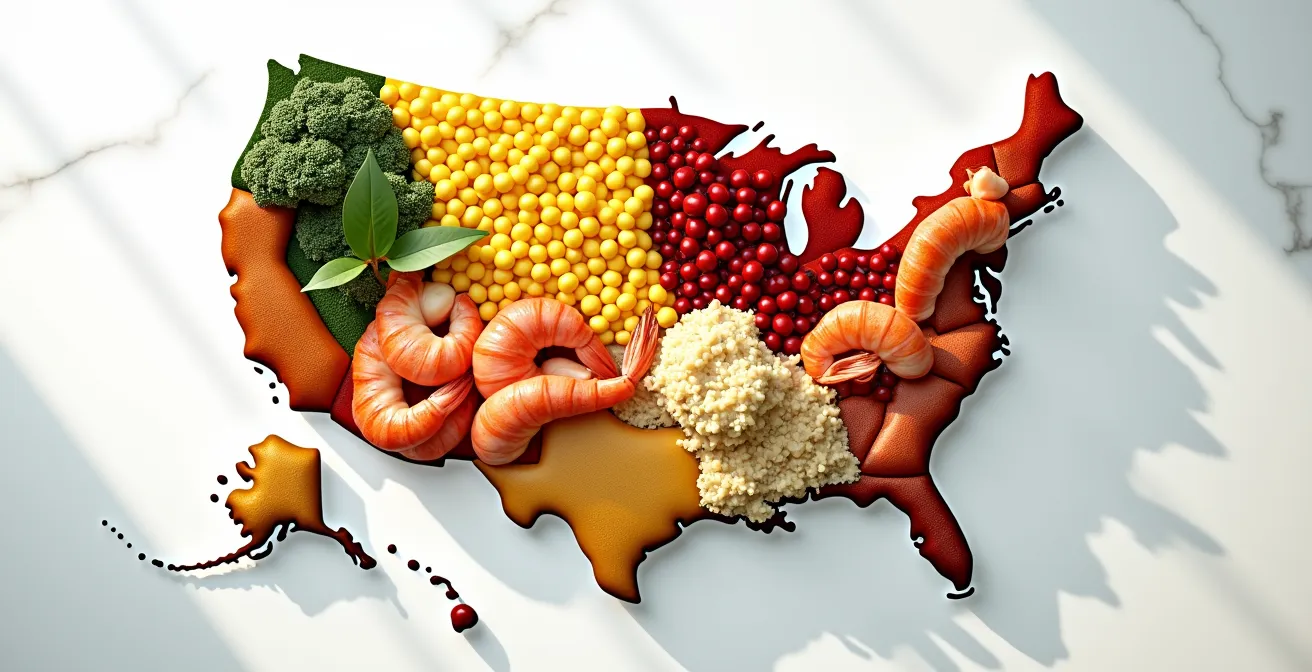
In summary:
- American regional flavor is not defined by ingredients alone, but by a “culinary terroir” of geography, history, and cooking philosophy.
- Key differentiators include wood smoke chemistry (Hickory vs. Mesquite), soil and climate’s effect on grapes (Riesling), and cultural approaches to spice (Cajun vs. Tex-Mex).
- Barbecue is a prime example of flavor philosophy, pitting Texas’s beef purism against Carolina’s sauce-centric pork traditions.
- Authenticity often lies in subtle details, like the natural pale yellow of a true Key lime pie versus artificial green imitations.
- Effectively exploring these profiles requires strategic planning to appreciate the depth of each region without sensory overload.
To understand American food, most will point you to a list of iconic dishes: a Philly cheesesteak, a Chicago deep-dish pizza, a New Orleans po’boy. While delicious, this approach is like describing a library by listing a few book titles. It misses the plot. The true story of American cuisine isn’t written in menus, but on the land itself. It’s a narrative of geography, migration, and philosophy that creates distinct regional flavor profiles, a concept best described as “culinary terroir.”
This terroir is the unique combination of a region’s climate, soil, native flora, and, most importantly, the cultural mindset of the people who settled there. It’s the reason the Pacific Northwest is defined by the forest floor and the Southeast by the smokehouse. As culinary historian Chef Albert Schmid notes, “The regional cuisines are just incredible here in the United States, and I think they resonate with people because it is something special.” Going beyond a simple checklist of “must-eat” foods to understand these foundational philosophies is the key to truly tasting America.
This guide isn’t another list. It’s a map for your palate. We will deconstruct the sensory signatures of America’s key culinary zones, exploring why things taste the way they do, how to spot authentic regional character, and how to plan a journey to experience it all firsthand. By understanding the principles of culinary terroir, you can learn to identify and appreciate the deep, complex flavors of the United States like a true food geographer.
Summary: Mapping the Flavor Profiles of the United States
- Why Northwest Cuisine Is Obsessed with Mushrooms and Berries?
- Why Hickory Wood Creates a Different Flavor Profile Than Mesquite?
- Why New York Riesling Tastes Different Than Washington Riesling?
- Tex-Mex vs. Cajun Heat: Which Spice Profile Suits Your Palate?
- How to Distinguish Texas Brisket from Carolina Pulled Pork?
- The ‘Authentic’ Key Lime Pie Scam in Tourist Shops
- How to Plan a Southern Food Road Trip That Doesn’t Overload You?
- How to Pack Regional Sauces in Your Checked Luggage Safely?
Why Northwest Cuisine Is Obsessed with Mushrooms and Berries?
The flavor profile of the Pacific Northwest (PNW) is a direct reflection of its environment: damp, temperate rainforests, and a rugged coastline. This is a prime example of geographic determinism in cuisine. The region’s identity isn’t forged in a spice grinder but discovered on the forest floor. The obsession with mushrooms and berries is not a trend; it’s the natural culinary expression of the landscape.
The constant moisture and rich, loamy soil create one of the world’s most fertile grounds for wild fungi. Foraging for chanterelles, morels, and porcinis is more than a hobby; it’s a cultural institution that dictates seasonal menus for home cooks and Michelin-starred chefs alike. This deep-rooted connection to the land is backed by significant production; culinary education data shows that the Pacific Northwest produces over 500 million pounds of mushrooms annually. This abundance of wild, earthy, and umami-rich ingredients forms the savory base of the PNW palate.
This savory foundation is balanced by the sharp, sweet-tart burst of native berries. Huckleberries, marionberries, and salmonberries thrive in the same cool, wet climate. They provide the acidic counterpoint to rich, oily fish like salmon—another pillar of the region. This simple, elegant pairing of forest and stream defines the PNW’s culinary terroir: clean, ingredient-forward, and deeply tied to the seasons of the wild.
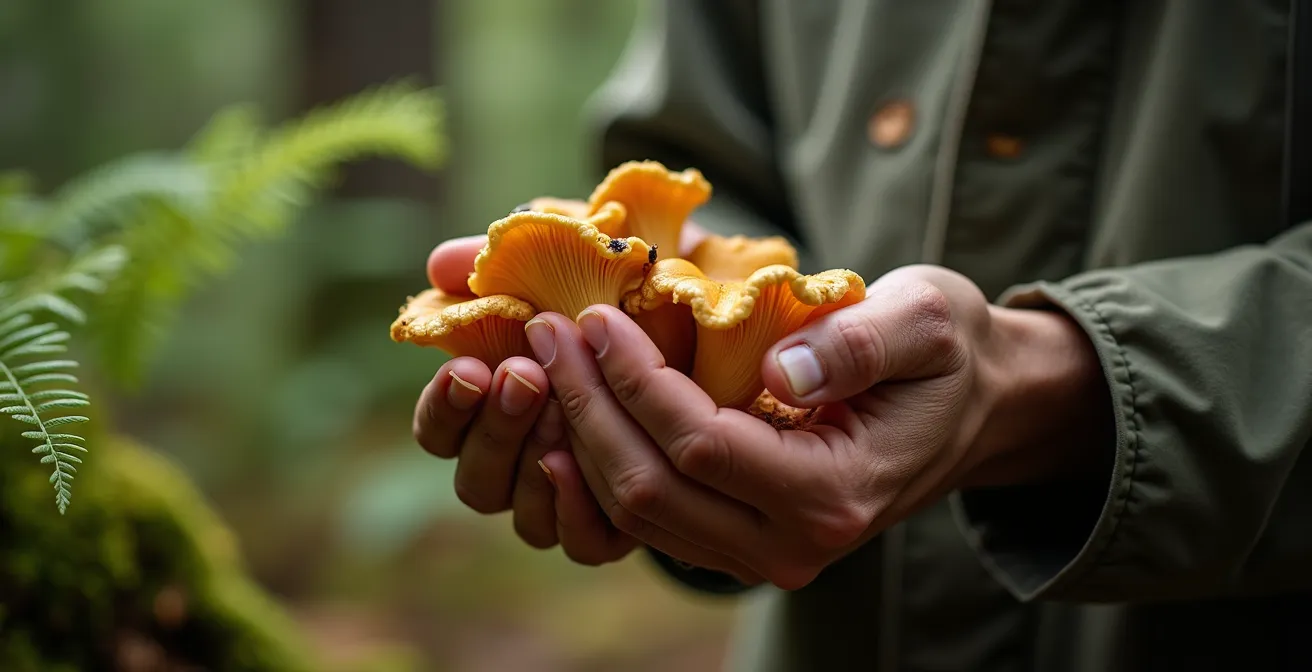
As seen in the act of foraging, the connection is tactile and immediate. The flavors aren’t imported or engineered; they are harvested. This focus on hyper-local, foraged ingredients results in a cuisine that values freshness and subtlety over heavy-handed seasoning, creating a sensory signature that is unmistakably tied to the mists and moss of the Pacific Northwest.
Why Hickory Wood Creates a Different Flavor Profile Than Mesquite?
Moving from the forest floor to the fire pit, culinary terroir extends to the very smoke used to cook food. In the world of American barbecue, the choice of wood is as crucial as the cut of meat. The distinct flavors imparted by hickory versus mesquite are not a matter of opinion but of chemistry. This illustrates how a single element within a region’s terroir can fundamentally alter a food’s sensory signature.
Hickory, the quintessential wood of the central and eastern barbecue belts (think Carolina and Memphis), burns slower and cooler than mesquite. Its smoke is dense with a chemical compound called guaiacol, which is responsible for the classic, bacon-like, and slightly sweet smoky flavor. Wood smoke chemistry analysis reveals that Hickory contains 45% more guaiacol than mesquite, delivering that familiar, well-rounded smokiness perfect for long cooking times required by pork shoulder and ribs.
Mesquite, on the other hand, is the signature wood of the hot, arid Southwest, particularly Texas. As a desert hardwood, it is extremely dense and burns significantly hotter and faster. Its smoke is intense and earthy, with a flavor profile that can quickly become bitter if not managed correctly. This aggressive flavor is why mesquite is ideal for grilling—cooking meat quickly over high heat—rather than the “low and slow” smoking characteristic of other BBQ regions. Its potent flavor stands up well to the robust character of beef, the dominant barbecue meat in Texas.
Ultimately, hickory offers a balanced, pervasive smokiness that complements the meat, while mesquite delivers a powerful, sharp, and earthy flavor that is a defining ingredient in its own right. Understanding this chemical difference is key to identifying regional BBQ styles. One imparts a sweet, smoky cloak; the other, a fierce, earthy char. The choice is a core part of the region’s flavor philosophy.
Why New York Riesling Tastes Different Than Washington Riesling?
Nowhere is the concept of terroir more evident than in winemaking. The same grape varietal, Riesling, planted in two different American regions—New York’s Finger Lakes and Washington’s Columbia Valley—produces two profoundly different wines. This side-by-side comparison offers a perfect lesson in how soil, climate, and geography sculpt flavor, even when the core ingredient is identical.
New York’s Finger Lakes region is defined by its deep, narrow glacial lakes, which create a moderating microclimate in an otherwise cool, humid continental zone. The soil is predominantly slate, shale, and limestone—very similar to the famous Mosel region in Germany. This combination results in Rieslings with high acidity, a distinct mineral or “wet stone” quality, and often a touch of residual sugar to balance the crispness. The wines are delicate, aromatic, and typically lower in alcohol.
Washington’s Columbia Valley, conversely, is a high desert east of the Cascade Mountains. It receives intense sunshine, minimal rainfall, and experiences a dramatic temperature swing between day and night. The soil is sandy, loamy, and laced with volcanic ash. This environment produces Rieslings that are riper, fruit-forward, and more powerful. The abundant sun allows the grapes to develop more sugar, leading to notes of stone fruit (peach, apricot) and honeysuckle, with a fuller body and often a higher alcohol content.
The following table, based on common wine industry analysis, breaks down these key terroir-driven differences:
| Factor | New York Finger Lakes | Washington Columbia Valley |
|---|---|---|
| Climate | Cool, humid continental | Warm, dry desert |
| Soil | Slate, shale, limestone | Sandy loam, volcanic ash |
| Style | Crisp, mineral, off-dry | Ripe, fruit-forward, powerful |
| Tasting Notes | Petrol, wet stone, citrus | Stone fruit, honeysuckle |
| Alcohol Level | 11-12% | 12-14% |
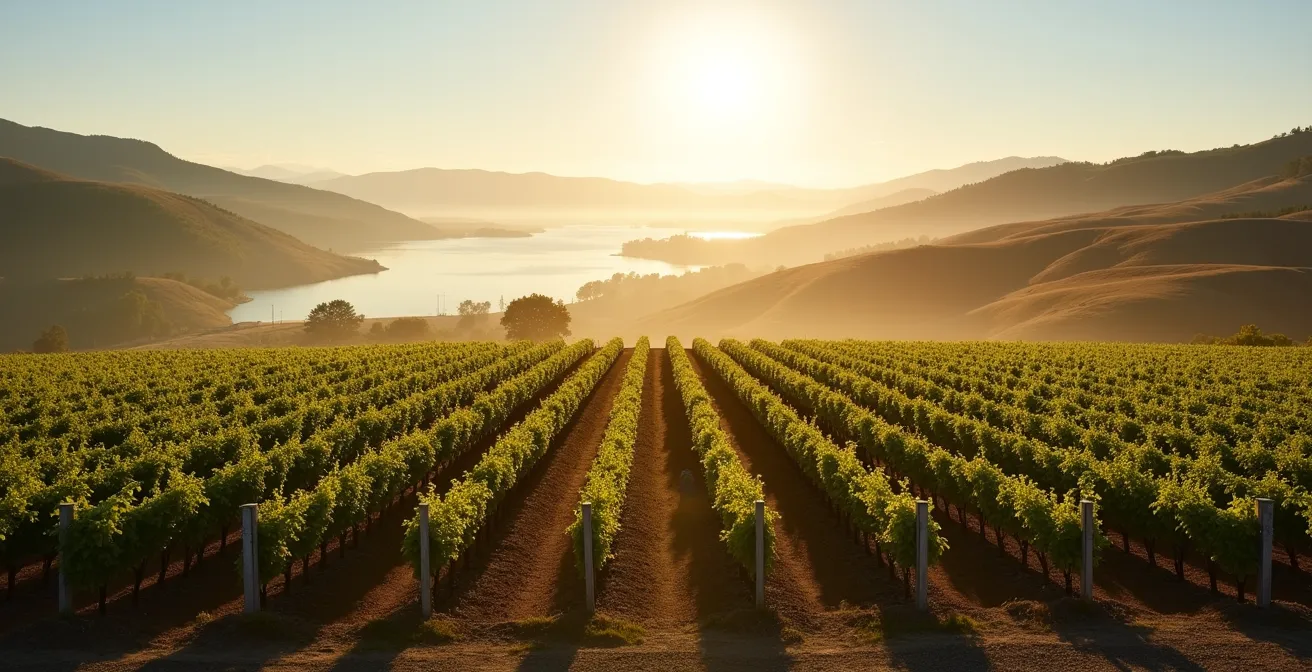
In essence, Finger Lakes Riesling speaks of its cool, damp, stony ground, while Columbia Valley Riesling tells the story of its sun-drenched, dry, volcanic origins. They are two different expressions of the same grape, each a pure reflection of its unique American terroir.
Tex-Mex vs. Cajun Heat: Which Spice Profile Suits Your Palate?
While often conflated by outsiders as simply “spicy,” the heat of the American Southwest and the Louisiana bayou come from entirely different cultural and culinary philosophies. Distinguishing between the smoky, heavy heat of Tex-Mex and the bright, layered heat of Cajun cuisine is a crucial step in mapping America’s flavor profiles. The difference lies not in the intensity of the spice, but in its purpose and composition.
Tex-Mex heat is born of the desert. It is deep, earthy, and often driven by dried chilies like ancho and chipotle, which are smoked and dried jalapeños. The defining spice is cumin, which provides a pungent, musky foundation. The heat in Tex-Mex is a slow, smoldering burn designed to stand up to grilled meats, melted cheese, and corn tortillas. It’s a robust and straightforward heat, reflecting the region’s cowboy and vaquero culture.
Cajun heat, by contrast, is born of the swampy, humid wetlands of Louisiana. It is a brighter, sharper, and more complex spice. The foundation is the “Holy Trinity” of onion, celery, and bell pepper, which provides a sweet and vegetal base. The heat comes primarily from cayenne pepper, which offers a quick, clean sting rather than a slow burn. As culinary anthropologist Maya clarifies, “Creole seasoning is more herbaceous with tomatoes and bell peppers, while Cajun seasoning is spicier with more cayenne pepper.” This spice is part of a larger ensemble of herbs like thyme, paprika, and oregano, creating a layered, aromatic experience. It’s a heat designed to complement seafood, wild game, and rice.
To put it simply: Tex-Mex spice is a soloist, a dominant, smoky flavor. Cajun spice is part of an orchestra, a bright, pungent note in a complex, herbaceous symphony. One is earthy and grounding; the other is vibrant and vivacious.
Your Palate’s Spice Profile Audit: A Checklist for Tasting
- Identify the heat source: Is it a sharp, clean burn (likely cayenne, pointing to Cajun) or a deep, smoky warmth (likely dried chilies like chipotle, pointing to Tex-Mex)?
- Assess the spice background: Do you taste earthy, musky notes (likely cumin, a Tex-Mex marker) or a complex blend of herbs like oregano, thyme, and paprika (Cajun/Creole)?
- Analyze the vegetable base: Does the dish have a foundation of sweet, sautéed onions, celery, and bell peppers (the “Holy Trinity” of Cajun/Creole) or is it more focused on tomatoes, jalapeños, and cilantro?
- Consider the fat/oil: Is the flavor carried by lard and rich cheese (common in Tex-Mex) or a dark roux made from flour and oil/butter (the soul of a gumbo)?
- Evaluate the acidity: Is there a bright finish from vinegar or lemon (common in Louisiana hot sauces) or a milder acidity from lime juice (used in Tex-Mex)?
How to Distinguish Texas Brisket from Carolina Pulled Pork?
Nowhere is regional flavor philosophy more fiercely debated than in American barbecue. To the uninitiated, it’s all smoked meat. To a food geographer, the difference between Texas brisket and Carolina pulled pork represents two opposing culinary belief systems. It’s a fundamental clash of philosophies: one of purist minimalism, the other of sauce-centric alchemy. Distinguishing them requires looking at the meat, the seasoning, and most importantly, the role of sauce.
Texas Brisket, particularly from the Central Texas tradition, embodies a “purist” ethos heavily influenced by the German and Czech butchers who settled the region. The philosophy is that high-quality beef needs little adornment. The seasoning, or “dalmatian rub,” is defiantly simple: just coarse salt and black pepper. The meat is smoked low and slow over post oak or mesquite until it’s meltingly tender but still holds its sliced shape. The sauce is an afterthought, often served on the side (if at all) and is typically thin and beefy, designed not to mask but to moisten. The meat is the hero.
Carolina Pulled Pork operates on a completely different principle. Here, the pork shoulder (or whole hog) is a vessel for the sauce. The meat is smoked, often over hickory, until it’s so tender it can be shredded or “pulled” into strands. The flavor philosophy is sauce-centric. The specific sauce defines the sub-region. In Eastern North Carolina, it’s a fiery, astringent vinegar-and-pepper concoction. Move to the Piedmont (Lexington style), and a touch of tomato (ketchup) is added. In South Carolina, a mustard-based “Carolina Gold” sauce reigns supreme. The complex spice rubs and mopping sauces used during cooking are integral. Here, the sauce is the soul.
This table summarizes the core philosophical divide:
| Aspect | Texas Brisket | Carolina Pulled Pork |
|---|---|---|
| Philosophy | Purist – meat speaks for itself | Sauce-centric vessel |
| Seasoning | Salt and pepper only | Complex rub, mop sauce |
| Texture Test | Slice holds shape but pulls apart | Completely shredded strands |
| Regional Sauces | None or minimal on side | Eastern NC: vinegar-pepper Piedmont: light tomato SC: mustard-based |
| Cultural Origin | Central European butcher traditions | Preservation techniques, multiple influences |
In short, to identify Texas brisket, look for sliced beef with a simple black crust where the meat is the star. To identify Carolina pork, look for shredded meat saturated in a tangy, region-specific sauce. One is a testament to the ingredient; the other is a celebration of the condiment.
The ‘Authentic’ Key Lime Pie Scam in Tourist Shops
Once you understand a region’s flavor profile, the next step is identifying authenticity. The iconic Key Lime Pie of Florida offers a stark lesson in how regional classics are often diluted for mass consumption. For the culinary traveler, knowing the key authenticity markers can mean the difference between a genuine taste of place and a tourist trap confection.
The scam is simple and widespread: many pies sold as “Key Lime” are not made with Key limes at all. They use the more common, less expensive, and less aromatic Persian lime. Worse, they often use green food coloring to create the vibrant green hue that tourists have come to expect. This is the ultimate red flag. An authentic Key lime pie is not green. Key lime juice is pale yellow, and when mixed with egg yolks and condensed milk, it creates a custard with a distinctly pale yellow color.
The difference is not just aesthetic. True Key limes (Citrus aurantiifolia) are smaller, seedier, and have a much higher acidity and a more intense, floral aroma than their Persian counterparts. This results in a tartness that is the signature of the dish. Regional food authenticity studies confirm the scale of this issue, with some reports finding that only 10% of ‘Key Lime’ pies sold in Florida tourist areas use actual Key limes. The use of Persian limes results in a milder, less complex flavor, often masked with extra sugar and the aforementioned artificial coloring.
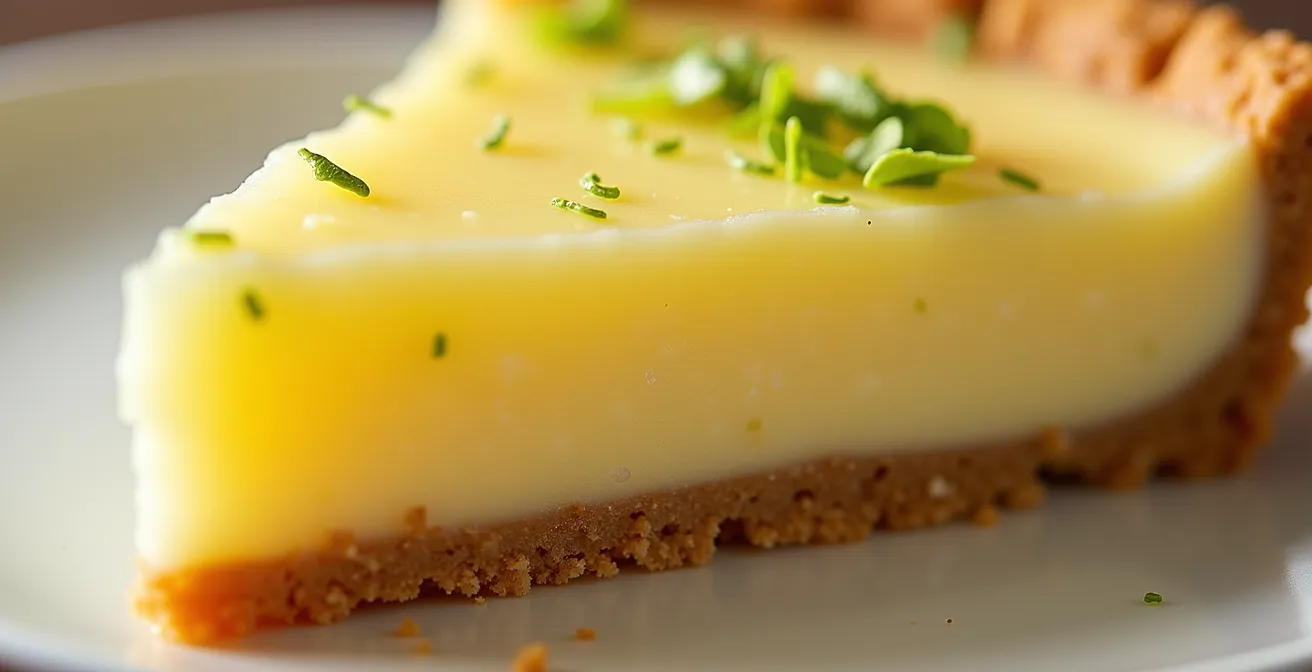
The state of Florida took this so seriously that in 2006, it legally designated Key lime pie as the official state pie, setting standards for its preparation. Benchmarks like Kermit’s Key West Key Lime Shoppe champion this authenticity. Therefore, for a traveler on a quest for the real deal, the rule is simple: if the pie is neon green, walk away. Look for a simple pie with a graham cracker crust and a pale, creamy yellow filling. That’s the true sensory signature of the Florida Keys.
Key Takeaways
- American cuisine is best understood through ‘culinary terroir’—the combination of geography, history, and cooking philosophy that defines a region’s taste.
- Specific elements like soil composition (NY vs. WA Riesling) and wood smoke chemistry (Hickory vs. Mesquite) create dramatically different flavor profiles from the same base ingredients.
- Authenticity is found in details: the pale yellow of a true Key lime pie or the minimalist salt-and-pepper rub of a Texas brisket are non-negotiable regional markers.
How to Plan a Southern Food Road Trip That Doesn’t Overload You?
Understanding regional flavors is one thing; experiencing them is another. The American South, a dense tapestry of culinary traditions, presents a unique challenge for the food traveler. With a staggering number of distinct food zones—regional cuisine mapping studies have documented that of the 77 distinct food regions that exist across the US, the South contains 23—a road trip can quickly devolve into a calorie-dense overload. A strategic approach is essential to appreciate the nuance without succumbing to palate fatigue.
The key is to think like a geographer, not a tourist. Instead of a random checklist of restaurants, structure your trip into “culinary legs,” focusing on one or two signature profiles per region. This allows you to immerse yourself in a specific terroir before moving on. For example, dedicate a few days to the Lowcountry flavors of Charleston and Savannah before heading west into the heart of Cajun and Creole country.
Within each leg, balance is crucial. Do not plan three heavy, sit-down meals a day. A successful strategy involves alternating major culinary commitments with lighter fare. If you have a legendary barbecue joint scheduled for lunch, opt for a light salad or a simple fruit stand snack for dinner. This resets your palate and digestion, allowing you to fully appreciate the next major meal. Furthermore, integrate non-food activities that connect you to the region’s terroir. A walking tour of Charleston’s historic district or a kayak trip through a Louisiana bayou provides context for the food you are eating and helps build an appetite.
Consider this strategic framework for a Southern food journey:
- Days 1-2: Lowcountry Leg (Charleston/Savannah): Focus on the coastal terroir. Prioritize seafood dishes like shrimp and grits or she-crab soup. Keep it light and savory.
- Days 3-4: Cajun/Creole Leg (New Orleans/Lafayette): Shift to the rich, spicy flavors of the bayou. Schedule a gumbo for one meal and a lighter po’boy for another. Notice the difference in spice from the coastal region.
- Days 5-6: BBQ Belt (Memphis/Nashville): Move into smoke and fire territory. Limit yourself to one major barbecue meal per day, balanced with ample vegetable sides (greens, slaw) to cut the richness.
By planning methodically, you transform a potentially overwhelming trip into a structured, educational, and deeply satisfying exploration of the South’s diverse culinary landscape.
How to Pack Regional Sauces in Your Checked Luggage Safely?
A successful culinary road trip inevitably ends with a desire to bring the region’s terroir home. Whether it’s a bottle of fiery Louisiana hot sauce, a jar of tangy South Carolina mustard barbecue sauce, or a unique berry vinaigrette from the Pacific Northwest, transporting these liquid souvenirs requires careful planning. Navigating TSA regulations and preventing a suitcase catastrophe is the final leg of your food journey.
The first rule is to distinguish between carry-on and checked luggage. For carry-on bags, all liquids must adhere to the TSA’s 3-1-1 rule: bottles must be 3.4 ounces (100ml) or less, placed in a single, clear, quart-sized zip-top bag. This is suitable for very small bottles of hot sauce. For anything larger—like a standard bottle of barbecue sauce or wine—you must use your checked luggage, where there is no size limit for liquids (though alcohol regulations may apply).
When packing in checked luggage, the primary goal is to prevent leakage and breakage. The best practice is a multi-layered defense. First, ensure the cap is screwed on tightly. You can add a layer of security by placing plastic wrap over the bottle’s opening before sealing it with the cap. Next, place each bottle inside its own sealed plastic bag; a zip-top freezer bag is ideal. If it leaks, the mess is contained. For ultimate protection, use two bags per bottle (double-bagging).
Finally, cushioning is critical. Wrap each double-bagged bottle in soft, bulky clothing like sweaters or jeans. The key is to place these bundles in the center of your suitcase, surrounded on all sides by other soft items. This creates a buffer zone that absorbs shock from being thrown or dropped by baggage handlers. For particularly prized bottles, consider investing in specialized products like a WineSkin or similar inflatable bottle protector. Following these steps ensures your carefully selected regional flavors arrive home intact, ready to extend the sensory memories of your trip.
Your culinary exploration of the United States doesn’t have to end when your vacation does. By applying these principles of identifying terroir, spotting authenticity, and safely transporting your finds, you can begin to build your own library of American flavors. Start your next journey by looking at a map, not a menu.