Ordering street food isn’t about patience; it’s about hacking a system of hidden cues and unspoken rules.
- The price of your food reflects massive hidden costs, not just ingredients.
- You can accurately judge hygiene in seconds without ever seeing the kitchen.
- The longest lines often lead to “hype traps” that a smart local knows how to bypass.
Recommendation: Stop being a passive customer. Start thinking like a street food insider to get better food, faster, and for a fairer price.
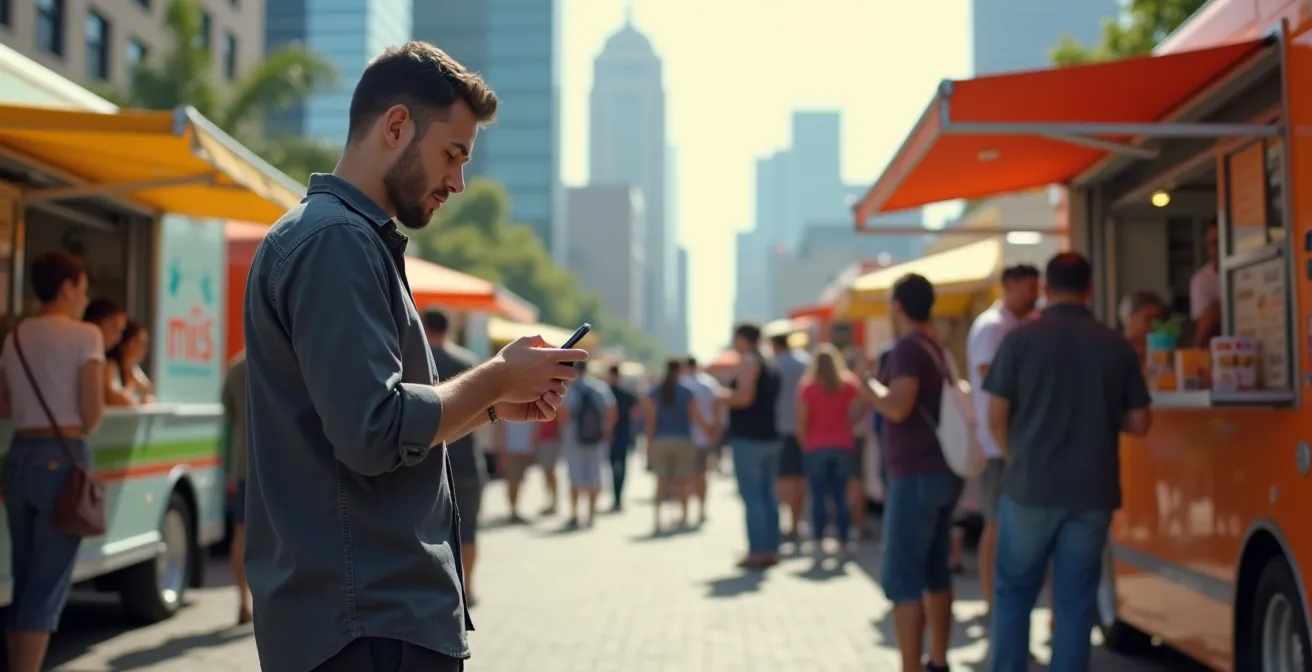
The scene is familiar: a bustling city street, a dozen colorful food trucks, and a line of 20 people snaking from the most popular one. You’re hungry, short on time, and intimidated. The typical advice? “Be patient,” “read the menu,” “have your card ready.” This is advice for tourists. It treats you like a passive consumer waiting your turn. But the world of street food is a dynamic, complex ecosystem with its own language, economics, and social codes. To truly conquer it, you don’t need patience—you need an operator’s manual.
From the gleaming stainless steel of a gourmet burger truck to the humble, cash-only taco cart, there are layers of information waiting to be decoded. This isn’t just about finding good food; it’s about developing an “Urban Food IQ.” It’s about understanding the subtle difference between a genuine local gem and a cleverly marketed tourist trap. It’s about knowing why that $15 burger is priced that way, how to perform a 10-second hygiene check that’s more reliable than a review, and how to eat a dripping taco on a busy sidewalk without sacrificing your shirt.
This guide throws the old advice out the window. We’re not here to teach you politeness; we’re here to teach you strategy. We’ll break down the hidden systems of the street food economy. Forget waiting in line; it’s time to learn how to read the city, understand the game, and eat like you own the block. This is your transformation from an intimidated customer into a savvy urban foodie who always gets the best, fast.
This article will provide you with a full playbook for navigating the urban food landscape. Below is a summary of the pro-level strategies we will cover, from decoding costs to mastering the art of eating on your feet.
Summary: How to Order from a Food Truck Like a Pro in a 20-Person Line?
- Why Your $15 Burger Supports a Small Business Owner Directly?
- How to Judge Hygiene at a Street Cart Without Seeing the Kitchen?
- Food Hall vs. Food Court: What Is the Quality Difference?
- The Viral Pastry Mistake That Wastes 2 Hours of Your Day
- How to Eat Tacos Standing Up Without Ruining Your Shirt?
- How to Find Authentic Cheap Eats in San Francisco’s Tourist Districts?
- The Tablet Mistake at Coffee Shops That Costs You 20% Extra
- How to Experience NYC on a $150 Daily Budget Without Missing the Icons?
Why Your $15 Burger Supports a Small Business Owner Directly?
The first shock for any street food novice is the price. A $15 burger from a truck? You could get that at a sit-down restaurant! This reaction is common, but it misses the entire economic picture. That price isn’t just about a patty and a bun; it’s an “Economic X-Ray” of the brutal realities of running a mobile micro-business. Before a single burger is sold, an owner is deep in the red. According to 2024 estimates from Toast, new food trucks cost between $50,000 and $175,000 just to get on the road.
That initial investment is just the beginning. The price of your lunch covers a mountain of relentless, often invisible, operating costs. A pro understands this. Your $15 isn’t just for food; it’s paying for:
- Permits and Licensing: Operators often pay thousands annually for multiple permits to operate in different locations.
- Commissary Kitchen Rental: Most US cities legally require trucks to use a licensed commercial kitchen for prep and cleaning, a cost that runs $500 to $2,000 per month.
- Daily Utilities: The propane for the grill and gasoline for the generator average $50 to $100 every single day.
- Location Fees: Parking at a popular food truck park isn’t free. Organizers often take 15-20% of total sales or charge flat fees of up to $500 per day.
- Local Sourcing: Unlike massive chains, most independent trucks support other small businesses by sourcing high-quality ingredients from local farms and bakeries.
Seeing that $15 burger through this lens transforms your perspective. You’re not just buying a meal; you’re funding a dream. You’re supporting an entrepreneur navigating a high-risk, high-cost industry. The journey from a simple food truck to a stable business is immense, but possible. In 1974, King Taco started from a converted ice cream truck and grew into a beloved Southern California restaurant chain, proving that your lunch order can be the seed of a future culinary empire.
How to Judge Hygiene at a Street Cart Without Seeing the Kitchen?
One of the biggest anxieties for street food newcomers is safety. Is it clean? How can you know when the kitchen is a hidden box on wheels? The answer isn’t to hope for the best; it’s to perform a quick “Hygiene Forensics” audit. A savvy local can assess a truck’s standards in under 30 seconds by looking for a few critical tells right at the service window. It’s a skill that builds immense confidence and ensures you’re eating safely from the more than 30,000 food trucks operating across the US.
Forget online reviews. You need real-time data. Look for the prominently displayed health grade. In major US cities, trucks are required to post a letter grade (A, B, or C). An “A” is a clear green light. A “Grade Pending” sign isn’t necessarily a red flag; it often just means they’ve had a recent inspection and are awaiting the official result. The absence of any sign, however, is a major warning.
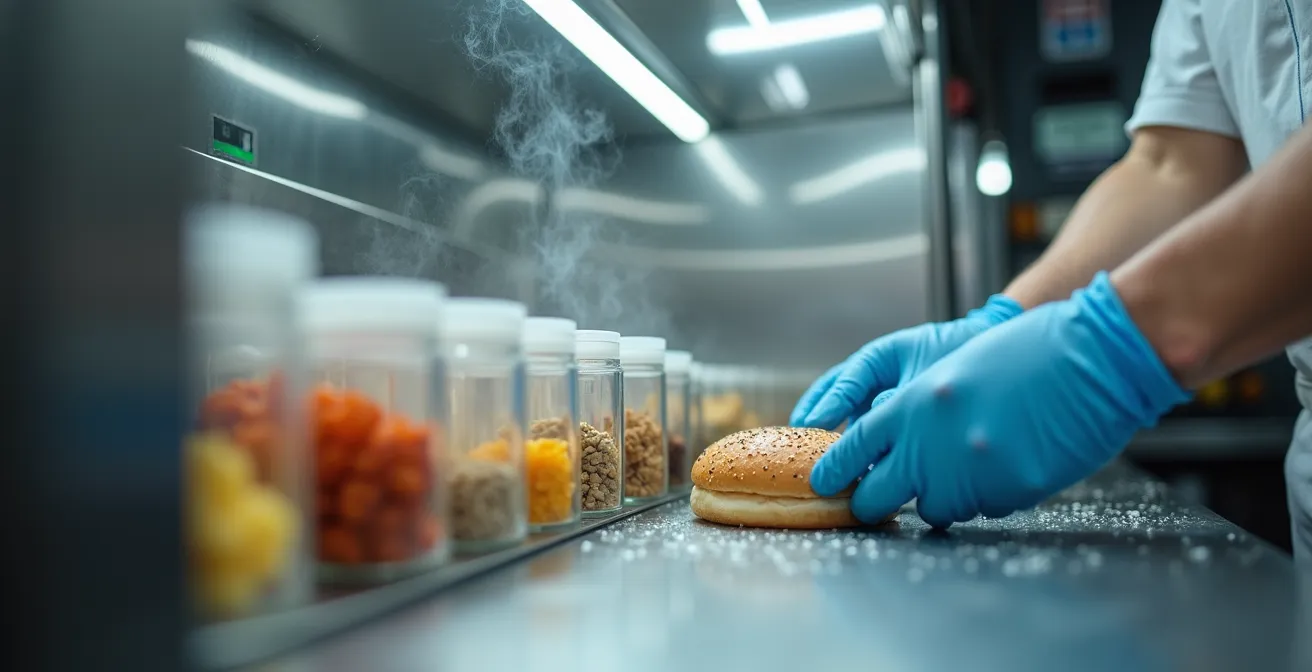
Beyond the grade, your own eyes are the best tool. Watch the workflow. Is there a dedicated sink for hand-washing, separate from the food prep area? This is an FDA Food Code requirement. Observe how money is handled. The person taking cash should not be the same person preparing your food without changing gloves. This cross-contamination point is critical. Finally, look at their “mise en place”—the organization of their ingredients. Are they stored in clean, covered, temperature-controlled containers? Or are they sitting out at room temperature? A clean, organized window is a strong indicator of a clean, organized kitchen.
Your 5-Point Food Truck Hygiene Audit
- Visual Scan: Identify all points where the truck communicates its quality. Look for the health department grade, the cleanliness of the window, and the condition of the truck itself.
- Evidence Gathering: Inventory the key hygiene indicators. Is there a separate hand-washing station? Are gloves being used and changed correctly? Are ingredients properly stored?
- Coherence Check: Compare the visual cues with the staff’s actions. Does a clean-looking truck have staff with messy habits? Consistency is the hallmark of professionalism.
- Gut Check: What is your immediate impression? Trust your intuition. A feeling of unease is a powerful signal that something might be off, even if you can’t pinpoint it.
- Decision Plan: Based on your audit, make a clear call. If it passes, order with confidence. If you see multiple red flags, walk away. There’s always another truck.
Food Hall vs. Food Court: What Is the Quality Difference?
The urban food landscape has evolved beyond solo trucks. Two concepts that often get confused are the food hall and the food court. To the untrained eye, they seem similar: a collection of vendors under one roof. But for the savvy diner, they represent two completely different philosophies of eating, and knowing the difference is key to managing your expectations and finding quality. A food court is about utility; a food hall is about experience.
The fundamental distinction lies in the business model. A traditional mall food court’s primary goal is to lease space to the highest-bidding national chains. The result is a predictable, franchise-driven environment built for speed and volume. A food hall, conversely, is a curated space. A developer or management group hand-selects a mix of local, chef-driven, and artisanal concepts to create a unique culinary destination. They invest in shared premium facilities and a cohesive, experience-focused design that encourages customers to linger.
This table breaks down the key indicators that separate a high-quality food hall from a standard food court. As one analysis of the business model highlights, the difference is by design, not by accident.
| Aspect | Food Hall | Food Court |
|---|---|---|
| Business Model | Curated chef-driven concepts | Franchise leasing to chains |
| Vendor Selection | Developer-curated local chefs | Highest-bidding national brands |
| Infrastructure Cost | Shared premium facilities | Individual franchise buildouts |
| Design Philosophy | Experience-focused, encourages lingering | Utilitarian eat-and-leave model |
| Typical Examples | Ponce City Market, Gotham West Market | Mall food courts nationwide |
Recognizing these differences allows you to choose your dining environment strategically. If you need a quick, reliable bite from a brand you know, the food court serves its purpose. But if you’re looking for authentic local flavor, culinary innovation, and a vibrant atmosphere, the food hall is your destination. It’s the brick-and-mortar evolution of the independent food truck spirit.
The Viral Pastry Mistake That Wastes 2 Hours of Your Day
In the age of social media, we’ve all seen it: a picture of a spectacular, one-of-a-kind pastry that goes viral, generating massive, hours-long queues. This is “The Hype Trap,” and falling into it is the biggest mistake an aspiring street food pro can make. You see a line and assume it means “the best,” but often it just means “the most famous.” Wasting half your day for a single croissant-donut hybrid is a rookie move, especially when superior alternatives are often available with no wait at all.
Case Study: The Cronut® Phenomenon
When Dominique Ansel Bakery in NYC launched the Cronut®, a croissant-donut hybrid, it became an instant global sensation. To this day, it generates queues that can last two to three hours. What most people in that line don’t realize is that the main queue is almost exclusively for that single, famous item. Inside, the bakery sells a wide array of other world-class pastries with little to no wait. The pro move is to either pre-order the viral item weeks in advance through an app like Resy or, even better, to skip the hype and enjoy an equally delicious, non-viral creation in minutes.
The Hype Trap preys on your fear of missing out. The solution is to employ a “System Hacking” mindset. Instead of joining the herd, you need to outsmart the line. A true insider knows there are always backdoors and alternative plays to get an equal or better experience without the wait. The key is to think like a local, not a tourist ticking off a bucket list item.
Here are four pro strategies to beat the viral pastry line and reclaim your time:
- Pre-Order Through Apps: Check platforms like Tock, Resy, or the bakery’s own website. Many allow you to secure the viral item days or even weeks ahead, letting you walk right past the queue.
- Target 30-Minutes After Opening: The initial rush is for the die-hards who need to be first. This wave often clears out within the first half-hour, leading to a significant drop in wait time.
- Find the Former Pastry Chef: Do some quick research. Where did former employees of the famous bakery open their own shops? They often recreate similar, high-quality items without the crushing hype.
- Ask About the Second Line: This is the ultimate insider move. Walk up to the front and politely ask the staff if there’s a separate, shorter line for all other items. In many cases, there is.
How to Eat Tacos Standing Up Without Ruining Your Shirt?
You’ve successfully navigated the line, decoded the menu, and secured a plate of glorious, authentic tacos. Now comes the final challenge: eating them on a crowded sidewalk without ending up with salsa and carnitas all over your clothes. This is the physical test of a street food pro. It requires technique, posture, and an understanding of taco physics. A sloppy performance is a dead giveaway of an amateur.
The most common mistake is standing upright and holding the plate at waist level. This creates a massive drop zone for falling ingredients. The secret is to close that gap and use gravity to your advantage. The foundation of clean taco consumption is a proper stance, a move affectionately known as “The Taco Lean.” It’s a simple, athletic posture that protects your torso and ensures any casualties land on your plate, not your person.
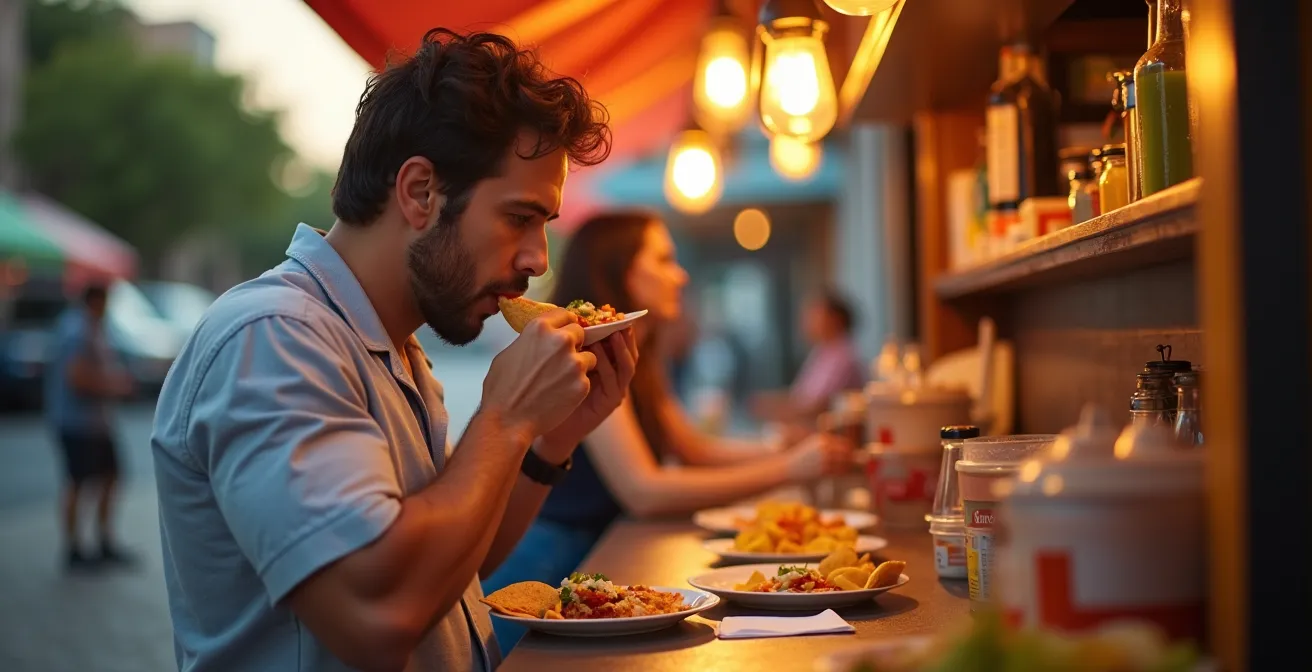
Mastering this technique is a game-changer, elevating you from a clumsy eater to a graceful street-side gourmand. It’s a small detail that makes a huge difference in your overall experience. Here is the four-step technique to perfect your form:
- Master the Taco Lean: Stand with your feet shoulder-width apart. Lean forward from your hips, keeping your back relatively straight. This creates a “safety zone” between your taco and your shirt.
- Two-Tortilla Strategy: Authentic taco spots often serve their tacos on two corn tortillas. This isn’t just for show. The bottom tortilla acts as a built-in backup plate, catching any drippings and fillings to create a delicious bonus taco at the end.
- The Chin-Plate Technique: Hold the paper plate directly under your chin, not out in front of you. This drastically shortens the distance for any falling debris, guiding it safely onto the plate.
- Strategic Salsa Application: Don’t drown your entire taco in salsa at once. This compromises the tortilla’s structural integrity. Instead, apply salsa bite by bite for maximum control and a cleaner eat.
How to Find Authentic Cheap Eats in San Francisco’s Tourist Districts?
San Francisco is a world-class food city, but its tourist-heavy districts like Fisherman’s Wharf and Chinatown’s main drag can feel like a minefield of overpriced, mediocre food. Finding authentic, affordable gems in these areas seems impossible, but it’s not—if you know the city’s hidden codes. A pro doesn’t just wander aimlessly; they use specific strategies to get off the beaten path, even when they’re just a block away from it.
The key is to look for the patterns of local life, not the signs aimed at tourists. This means ignoring the glossy storefronts on the main avenues and seeking out the places where actual San Franciscans eat. It requires a bit of detective work, but the payoff is a meal that is both more delicious and easier on your wallet. This is where your “Urban Food IQ” truly shines, allowing you to find value where others only see tourist traps.
Instead of relying on generic travel guides, use this local-approved strategy to find the real deal in SF’s busiest neighborhoods:
- The Alleyway Rule: The best food is often found just off the main street. In Chinatown, skip the tourist-filled Grant Avenue and explore the side streets like Ross Alley for legendary dim sum. In the Mission, the city’s best taquerias are often tucked away in alleys like Clarion, just steps from the trendier Valencia Street.
- The Office Worker Lunch Window: The Financial District is a ghost town on weekends, but from 11:30 am to 2:00 pm on weekdays, it’s home to some of the best, most affordable lunch specials in the city. These spots cater to office workers on a budget and often disappear after the lunch rush.
- Follow the City Workers: Keep an eye out for city vehicles at lunchtime. When you see a cluster of SFMTA or Rec & Park trucks parked, you’ve likely found a beloved, no-frills, cash-only spot that’s been serving authentic, cheap eats for decades.
- Use the Legacy Business Registry: San Francisco has an official registry of multi-generational businesses that are considered cultural assets. Searching this list is a fantastic way to discover hidden, family-run diners and cafes that offer incredible value and history.
These techniques are universal. You can apply the same logic in any major city: look in the alleys, follow the workers, and search for the historic spots. This is how you escape the tourist bubble and eat authentically.
The Tablet Mistake at Coffee Shops That Costs You 20% Extra
You’ve ordered a simple $4 cold brew. The barista flips a tablet screen toward you. The options are bold and clear: 18%, 20%, 25%. A small “No Tip” button is hidden in the corner. The people in line behind you are watching. This is modern “tip-flation,” a form of social and digital pressure designed to make you over-tip for simple counter service. A pro knows how to navigate this situation calmly and confidently, without being guilted into an unnecessary expense.
The first step is to understand the context. Should you even tip at a food truck or coffee shop? It’s a gray area. A recent survey by Forbes Advisor revealed that 40% of customers don’t tip for this kind of service. This statistic isn’t an excuse to be cheap; it’s a tool to relieve the social pressure. Knowing that a significant portion of people don’t tip gives you the confidence to make your own decision based on the service provided, not on a pre-selected button.
These Point-of-Sale (POS) systems are engineered to nudge you toward higher amounts. The key is to take back control. Don’t let a tablet dictate your generosity. Have a plan and execute it without hesitation. Here are four strategies to handle tablet tipping pressure like a pro:
- Locate the Custom Button First: Before you even look at the big percentages, train your eyes to find the smaller, less prominent “Custom Amount” or “No Tip” option. It’s often intentionally designed to be hard to see.
- Know the Counter Service Standard: For a simple transaction like pouring a coffee or handing you a pastry, a tip is appreciated but not required in the same way as for a sit-down meal. A tip of 10% or simply rounding up to the nearest dollar is becoming the accepted norm.
- Recognize Dynamic Pricing: Be aware that some advanced POS systems will actually suggest higher tip percentages for larger orders, regardless of the level of service. Your tip should reflect the service, not just the total bill.
- Have a Mental Script Ready: The pressure comes from feeling like you’re holding up the line. Decide your amount *before* the tablet is turned. Having a default plan (e.g., “I always hit ‘Custom’ and add $1”) allows you to act quickly and confidently.
This isn’t about being stingy; it’s about being intentional. Tipping should be a conscious choice to reward good service, not an automatic reaction to digital pressure.
Key Takeaways
- See the Economics: A high price on a food truck menu isn’t a rip-off; it’s a reflection of immense overhead. You’re supporting a high-risk small business.
- Trust Your Eyes, Not the Hype: The best hygiene check is your own 30-second audit of the service window. The longest line is often a trap for tourists.
- Master the Mechanics: Pro-level street eating involves specific physical techniques (like the “Taco Lean”) and social strategies (like navigating tablet tipping) to ensure a smooth experience.
How to Experience NYC on a $150 Daily Budget Without Missing the Icons?
New York City on a budget seems like a contradiction. With sky-high prices for hotels, attractions, and food, a daily budget of $150 can feel impossibly tight. But this is where all your skills as a street food pro come together. By applying the principles of “System Hacking” and leveraging the city’s vast and diverse food scene, you can not only survive but thrive. The food truck industry is a massive part of the American culinary landscape, and a recent report estimated the food truck industry’s value at $4.3 billion, a testament to its scale and importance, especially in a city like New York.
The secret to conquering NYC on a budget is to treat the city itself as a resource. You must separate the “iconic experience” from the “official ticket price.” You don’t need a $25 ticket to see the Statue of Liberty; you need a great view of it. You don’t need a three-course meal in Times Square; you need to taste the authentic, diverse flavors of the real New York. This mindset shift is everything. It allows you to build an incredible itinerary that’s rich in experience and light on cost.
This is your playbook for an iconic NYC day, powered by your Urban Food IQ. It combines street food wisdom with public transit hacks and free cultural experiences to keep you well under your $150 limit.
- The Icon-Adjacency Hack: Get world-class views of the Statue of Liberty and the Manhattan skyline for free by taking the Staten Island Ferry. It runs 24/7 and costs nothing, while the official tours cost upwards of $25.
- The Pro Food Budget: Your food costs can easily stay under $40 for the day. Start with a classic $5 bodega Bacon, Egg, and Cheese (BEC) for breakfast. For lunch, head to an ethnic enclave like Chinatown or Jackson Heights, Queens, for a massive and delicious $15 lunch special. For dinner, grab a few iconic $1 pizza slices. You’ll eat better and more authentically than any tourist in Times Square.
- The OMNY Fare Cap: Don’t worry about counting subway rides. New York’s OMNY payment system has a weekly fare cap. After you take 12 paid rides between Monday and Sunday, all subsequent rides are free. At a current cap of $34, it’s a budget-saver for an active traveler.
- The Pay-What-You-Wish Museum Strategy: Many of NYC’s top museums have special hours or policies for budget-conscious visitors. The Metropolitan Museum of Art has a “suggested donation” policy for NY residents and a pay-what-you-wish for students, the Brooklyn Museum is free on the first Saturday of the month, and MoMA offers free admission on the first Friday evening of each month.
By combining these strategies, your daily fixed costs for food and transport can be under $50, leaving you a generous $100 for a museum donation, a coffee, or a small souvenir. You’ll have seen the icons, eaten authentic food, and navigated the city like a local, not a tourist.
Your training is now complete. You have the tools to decode pricing, judge hygiene, bypass hype, and navigate the urban landscape with confidence. The city is your dining room. Get out there and eat smart.
Frequently Asked Questions About Ordering from Food Trucks
Is food from a food truck safe to eat?
Yes, provided you use your judgment. Food trucks in most US cities are regulated and inspected just like restaurants. The key is to perform your own quick “Hygiene Forensics” by looking for a posted health grade, a clean service window, separate hand-washing facilities, and proper staff procedures like glove changing between handling money and food.
Why are food trucks sometimes as expensive as restaurants?
The price reflects massive hidden operational costs beyond just ingredients. These include vehicle purchase and maintenance (up to $175,000), expensive city permits, mandatory commissary kitchen rentals ($500-$2000/month), daily fuel costs, and location fees that can be up to 20% of sales. You’re paying for a full-fledged small business, not just a meal.
Do I have to leave a tip at a food truck?
Tipping at food trucks and other counter-service spots is optional but appreciated. There’s no strict rule, and surveys show up to 40% of customers don’t tip for this type of service. If the service was good, a 10% tip or rounding up to the nearest dollar is a common and fair gesture. Don’t feel pressured by pre-set options on a payment tablet.