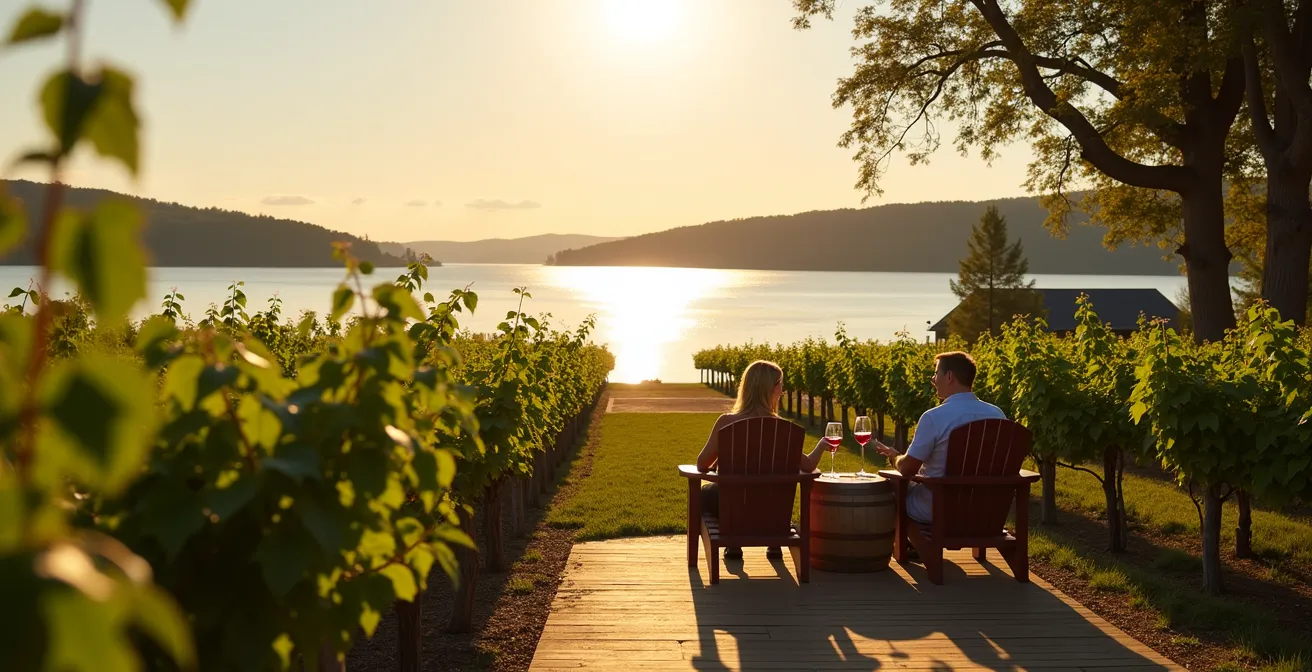
The key to a budget Finger Lakes wine trip is not spending less, but tasting smarter by maximizing the quality and diversity of your experience for every dollar spent.
- Prioritize wineries based on terroir and value, not just the lowest tasting fee, to discover world-class Riesling and Pinot Noir.
- Adopt professional tasting strategies, like using a spittoon and planning your route efficiently, to sample more wines without fatigue or hidden costs.
Recommendation: Embrace the region’s full offering by pairing wines with local artisan cheeses and staying at a B&B for invaluable insider tips that far outweigh the initial cost.
The sticker shock of a Napa Valley wine tour is a rite of passage for many American wine lovers. You imagine idyllic vineyards, but the reality often involves crowded tasting rooms and a bill that rivals a weekend getaway. This experience has left many enthusiasts wondering: where can you find high-quality American wine, rich terroir, and an authentic experience without the California price tag? The answer lies east, in the cool-climate embrace of New York’s Finger Lakes (FLX) region.
Many guides on budget wine travel offer the same tired advice: pack a picnic, share tastings, visit in the off-season. While these tips have their place, they miss the fundamental point. A truly memorable and affordable wine trip isn’t about being cheap; it’s about being strategic. It’s about understanding the unique value proposition of a region and making choices that enhance your sensory experience, not just shrink your expenses.
But what if the real secret wasn’t just saving money, but learning to *taste smarter*? This guide adopts the mindset of a sommelier. We will move beyond simple cost-cutting to explore how strategic planning—from the order of your sips to the roads you drive and the bed you sleep in—can unlock a richer, more profound, and ultimately more valuable wine journey. We’ll show you how to maximize your “experience-per-dollar” and return home with not only affordable, exceptional bottles but also a deeper appreciation for one of America’s most exciting wine regions.
This article provides a complete roadmap for planning your trip. We’ll cover everything from understanding the region’s signature wines to mastering the logistics of tasting, lodging, and local cuisine, all through the lens of value and quality.
Summary: Your Smart Budget Guide to the Finger Lakes
- Why New York Riesling Tastes Different Than Washington Riesling?
- How to Taste 20 Wines in One Day Without Getting Drunk?
- Willamette Valley vs. Sonoma: Which Is Better for Pinot Noir Lovers?
- The Driving Mistake That Ruins Your Wine Country Vacation
- How to Order Your Tastings from White to Red for Maximum Flavor?
- Why ‘American Cheese’ Is a Misnomer for a Complex Dairy Industry?
- B&B vs. Historic Inn: Which Offers the Best Local Insight?
- Why American Food Is Much More Than Just Burgers and Fries?
Why New York Riesling Tastes Different Than Washington Riesling?
The soul of the Finger Lakes is found in a single grape: Riesling. But not all American Riesling is created equal. While Washington State produces excellent, often fruit-forward versions, New York’s Finger Lakes Riesling offers a distinct personality shaped by its unique terroir. The region’s deep, glacially-carved lakes act as a massive climate moderator, protecting the vines from harsh winters and extending the growing season. This, combined with the area’s characteristic slate and shale soils, imparts a signature high-toned acidity and a pronounced flinty minerality that is more reminiscent of German or Alsatian Riesling than its West Coast counterparts.
This unique profile is the core of the FLX value proposition. You aren’t just getting a “cheaper” wine; you are experiencing a world-class, cool-climate style that is difficult to replicate elsewhere in the United States. And the value is tangible; recent data shows an average tasting fee of just $12 per person in the Finger Lakes, compared to a staggering $49 in Napa Valley. This affordability allows you to explore the subtle differences between wineries lining Cayuga, Seneca, and Keuka lakes, tasting how a vineyard’s specific location and a winemaker’s touch can influence the final product. It’s an exercise in “terroir-on-a-dime” that is simply not possible in more expensive regions.
To truly capitalize on this, focus your attention on family-run operations where you are more likely to speak with someone directly involved in the winemaking process. Visiting during the shoulder season, particularly in late spring, can also lead to more intimate experiences and even waived tasting fees with a bottle purchase. The goal is to connect with the place, understand the “why” behind the taste, and discover the incredible quality that makes FLX Riesling a global benchmark.
How to Taste 20 Wines in One Day Without Getting Drunk?
The math of a wine tour can be daunting: four wineries with five tastings each equals twenty sips. Approaching this traditionally is a recipe for palate fatigue and impairment. The sommelier’s secret to extensive tasting isn’t a high tolerance; it’s a strategic approach centered on one key tool: the spittoon. While it may feel awkward at first, spitting is the single most important technique for serious tasting. It allows you to fully assess a wine’s aroma, texture, and flavor profile on your palate without the cumulative effects of alcohol. This keeps your senses sharp and your judgment clear from the first pour of the day to the last.
This paragraph introduces the concept of strategic tasting. To better visualize the tools of the trade, it is helpful to see a professional setup. The illustration below breaks down this process.
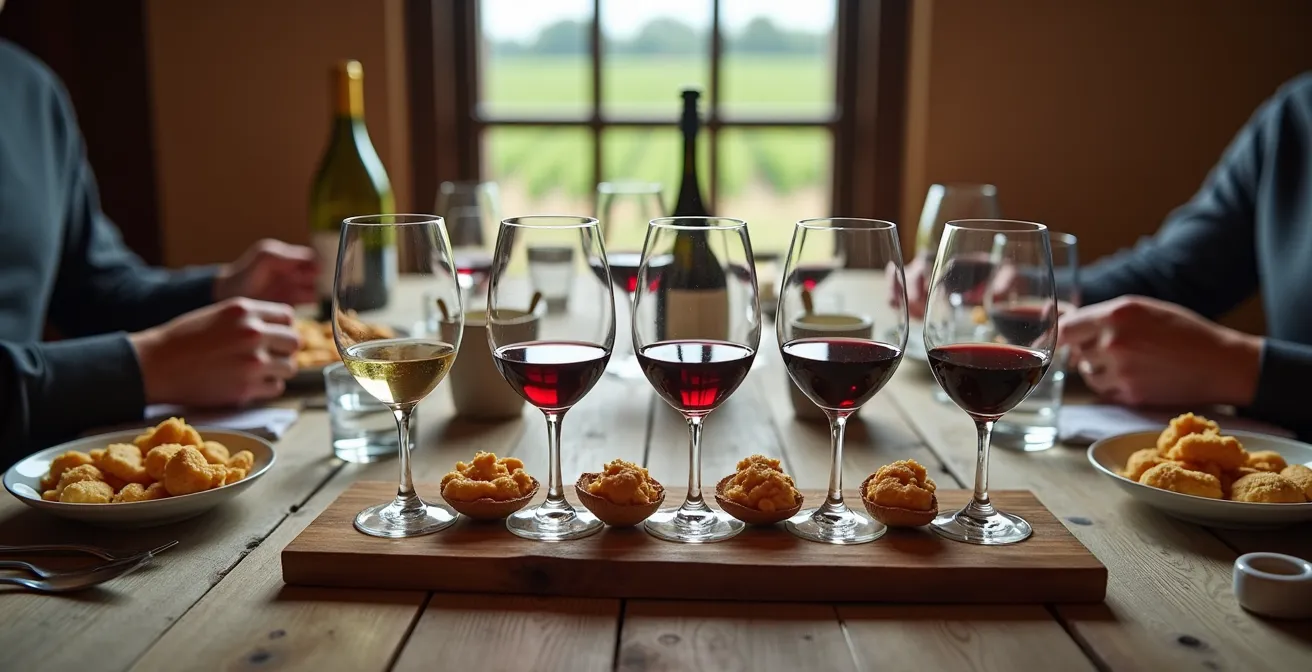
As this image shows, a professional approach involves more than just a glass. Using the spittoon, along with cleansing your palate with water and plain crackers between wines, is crucial. This method allows for a much higher “value density” in your tasting day. Instead of becoming overwhelmed after two wineries, you can thoughtfully engage with four or even five, doubling the number of wines you can critically evaluate. Sharing flights is another common and accepted practice in the FLX, effectively halving your alcohol intake and cost while doubling your tasting exposure.
Case Study: The Finger Lakes Designated Driver Strategy
To manage both costs and sobriety, many visitors utilize services like Finger Lakes Winery Tours. Their data on private group tours shows that by having a designated driver, couples or small groups can visit 3-4 wineries and comfortably share tasting flights (4-5 wines per stop). This strategy allows them to sample up to 20 different wines while significantly reducing individual alcohol consumption. With tasting fees in the region often as low as $2-$8 per person and frequently applied as credit toward bottle purchases, the cost-effectiveness is immense.
This table illustrates the clear benefits of adopting a more strategic tasting method compared to the traditional approach.
| Strategy | Wines Tasted | Cost per Person | Sobriety Level |
|---|---|---|---|
| Traditional Full Pour | 10-12 wines | $40-60 | Impaired |
| Shared Flights | 15-20 wines | $20-30 | Moderate |
| Spit & Taste Method | 20-25 wines | $40-60 | Clear-headed |
| DD Rotation Plan | 20+ wines | $20-30 (split) | Alternating sobriety |
Willamette Valley vs. Sonoma: Which Is Better for Pinot Noir Lovers?
While Riesling is king in the Finger Lakes, the region is rapidly gaining a reputation for its elegant, Burgundian-style Pinot Noir. For wine lovers who typically look to Oregon’s Willamette Valley or California’s Sonoma Coast, the FLX offers a compelling and budget-conscious alternative. The cool climate that gives Riesling its zesty acidity also allows Pinot Noir to develop delicate red fruit flavors, earthy undertones, and a refined structure, free from the overripe or “jammy” notes that can sometimes characterize warmer climate versions.
The primary advantage for the budget-conscious connoisseur is, once again, value. A comprehensive cost analysis reveals that the average tasting fee in Sonoma is $48, and in the Willamette Valley it’s around $25-$35. In contrast, Finger Lakes tastings hover in the $10-$20 range. This price difference extends to bottle purchases as well, with high-quality FLX Pinot Noir often available for $25-$30, whereas comparable bottles from Willamette or Sonoma can easily command $40-$60 or more. This means you can explore a nascent but exciting Pinot Noir region for a fraction of the cost.
Case Study: A Budget Pinot Noir Itinerary
Wineries like Heart & Hands Wine Company on Cayuga Lake have become destinations for their exclusive focus on cool-climate Pinot Noir and Riesling. Visitors report creating a diverse “Pinot-Plus” tour by combining a visit to Heart & Hands with other pioneering red wine producers like Red Tail Ridge Winery. This curated itinerary provides a world-class tasting experience for what they estimate is about 60% less cost than a comparable tour in the Willamette Valley, allowing them to purchase several premium bottles for the price of one or two from Oregon.
For the discerning Pinot Noir lover, the Finger Lakes presents an opportunity to get in on the ground floor. It’s a chance to discover producers who are mastering this challenging grape in a unique climate, all while your travel dollars go significantly further. It’s the definition of smart exploration: high-quality discovery without the premium price tag.
The Driving Mistake That Ruins Your Wine Country Vacation
The single biggest mistake visitors make in the Finger Lakes isn’t choosing the wrong wine—it’s underestimating the geography. The name “Finger Lakes” is literal; these are long, thin bodies of water. Driving from the northern tip of Seneca Lake to the southern end can take over 35 minutes without traffic. Attempting to crisscross from the east side to the west side for back-to-back tastings is a logistical nightmare that wastes precious time and fuel, and adds unnecessary stress to what should be a relaxing day.
Effective planning is a form of currency here. The most efficient strategy is to dedicate one day to the east side of a lake and another to the west. This “geographic efficiency” minimizes drive time and maximizes tasting time. Furthermore, cell service can be notoriously spotty between wineries nestled in the rolling hills, making offline maps an absolute necessity. The most critical element, however, is planning for sobriety. A designated driver is non-negotiable. The winding rural roads and strict enforcement make driving after even a few “sips” a terrible risk. And it’s a financially devastating one, as state enforcement data highlights potential New York DWI costs over $10,000 in fines and fees.
This aerial view helps to put the scale of Seneca Lake and its winding roads into perspective, emphasizing the need for smart route planning.
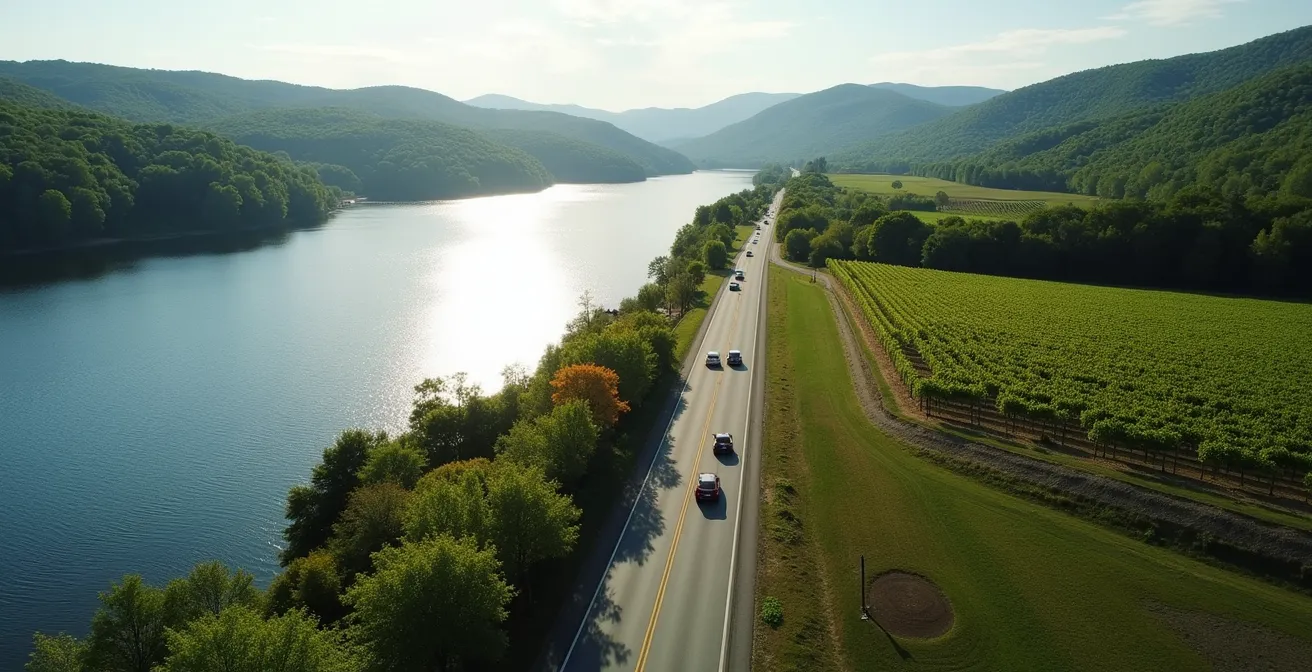
By treating your itinerary like a logistical puzzle, you save time, money, and ensure a safe, enjoyable trip. A well-planned route is the unsung hero of a successful and budget-friendly wine country vacation.
Your Action Plan: Seneca Lake Smart Driving Strategy
- Plan for Distance: Budget a minimum of 35 minutes to drive from one end of Seneca Lake to the other, without stops.
- Divide and Conquer: Dedicate separate days to the wineries on the east and west sides of the lake to avoid time-consuming crossings.
- Use the ‘Right Turn Rule’: On busy weekends, plan your route to primarily involve right turns into winery entrances to avoid waiting for traffic.
- Buffer Your Time: Add a 15-minute buffer between tasting appointments to account for rural road conditions and unexpected delays.
- Go Offline: Download maps of the region before you leave, as cell service is unreliable in many areas between the lakes.
How to Order Your Tastings from White to Red for Maximum Flavor?
Once you’re at the tasting bar, another layer of strategy comes into play: the order of your sips. Tasting wines in a haphazard sequence can fatigue your palate, causing you to misjudge or fail to appreciate the later wines in the flight. The guiding principle is to move from light to heavy, dry to sweet, and white to red. This “palate strategy” ensures that delicate flavors are not overpowered by more robust ones.
A well-structured tasting is a sensory journey. Each wine should prepare your palate for the next, building in intensity and complexity. Starting with a crisp sparkling wine, for example, cleanses the palate with its acidity and effervescence, making it more receptive to the nuances of a dry Riesling. Similarly, tasting a bold Cabernet Franc before a lighter Pinot Noir would overwhelm the delicate notes of the Pinot. Preserving your palate is a way of maximizing the value of your tasting fee; it ensures you are giving every wine a fair chance to shine.
Case Study: The ‘One Bottle Strategy’ for Budget Buyers
Fox Run Vineyards on Seneca Lake exemplifies this structured approach. They offer four distinct tasting flights (sweet, dry, red, or Riesling) for just $10 each. This allows visitors to methodically taste through their preferences. Staff report that customers who follow a logical tasting order, like the one outlined below, are more confident in their choices and often make a more satisfying single-bottle purchase. They select a wine in the $25-30 range that truly represents the best value *for them*, rather than guessing or buying a wine they didn’t fully appreciate.
Follow this optimal sequence, standard among sommeliers and tasting room professionals in the Finger Lakes, to get the most out of every flight:
- Start with Sparkling wines to cleanse the palate.
- Move to Dry Riesling – the FLX signature varietal.
- Progress to Gewürztraminer for its aromatic complexity.
- Taste Chardonnay before transitioning to reds.
- Sample Rosé as a perfect bridge between whites and reds.
- Try lighter-bodied Pinot Noir before bolder reds.
- Progress to Cabernet Franc – the region’s standout red varietal.
- Always save Ice Wine or Late Harvest wines for the very end, regardless of color, due to their intense sweetness.
Why ‘American Cheese’ Is a Misnomer for a Complex Dairy Industry?
The term “American cheese” often conjures images of single-wrapped processed slices. In the Finger Lakes, however, it means something entirely different. The region is at the forefront of the American artisan cheese movement, boasting a cheese trail that rivals its wine trails in quality and passion. Just as the cool climate is ideal for certain grapes, the lush pastures are perfect for dairy farming, leading to a boom in farmstead creameries producing world-class products.
Exploring the Finger Lakes Cheese Alliance is a perfect, budget-friendly complement to wine tasting. It adds a delicious cultural layer to your trip, proving that the region’s culinary prowess extends well beyond the vineyard. These are not industrial operations; they are small, family-run farms where the cheese is often made just steps from where the animals are milked. This provides an incredible “farm-to-table” experience that is both authentic and affordable.
Case Study: The Finger Lakes Cheese Alliance Success Story
Lively Run Dairy, established in 1982, is a prime example of this excellence. As one of New York’s first farmstead goat dairies, they have demonstrated the sophistication of American artisan cheese on a national stage. Their Cayuga Blue goat cheese has won prestigious awards from the American Cheese Society in 2017, 2018, 2022, and 2024. This proves that “American cheese” can and does mean world-class quality. A visit for a tasting or tour offers an inexpensive, educational, and delicious activity that pairs perfectly with the region’s wines.
Pairing local wines with local cheeses creates a synergy that elevates both. This budget-friendly guide shows how you can create a gourmet tasting experience for a fraction of what you’d pay in a restaurant.
| Local Cheese | Producer | Price Range | FLX Wine Pairing |
|---|---|---|---|
| Cayuga Blue | Lively Run | $8-12/portion | Off-dry Riesling |
| Aged Cheddar | Sunset View | $6-10/portion | Cabernet Franc |
| Fresh Chèvre | Side Hill Acres | $5-8/portion | Sauvignon Blanc |
| Cheese Curds | Multiple farms | $4-6/bag | Light Pinot Noir |
B&B vs. Historic Inn: Which Offers the Best Local Insight?
When planning a budget trip, it’s tempting to default to the cheapest chain motel. However, in a region like the Finger Lakes, this is a missed opportunity. Your choice of lodging can be one of the most powerful tools for enhancing your trip. The debate often comes down to a Bed & Breakfast versus a more formal Historic Inn. While both offer more character than a motel, the B&B often provides a superior return on investment for the savvy traveler, not in amenities, but in insider knowledge.
B&B hosts are typically long-time residents who are deeply embedded in the local community. They are a living, breathing guidebook. They know which new winery has a talented young winemaker, which restaurant offers the best farm-to-table dinner, and which scenic route isn’t in the travel books. This local insight is invaluable and can save you time and money by steering you toward hidden gems and away from tourist traps. The hearty, home-cooked breakfast included in the price also represents a significant saving, easily a $40 value for a couple each day.
As the experts at Travel by Brit note, these connections can unlock unique opportunities. In their “Best Wineries in the Finger Lakes Guide,” they highlight this exact point:
B&B hosts in the FLX often have personal relationships with winery owners and chefs. This can lead to exclusive, money-can’t-buy perks like a recommendation for a winery’s ‘secret’ library tasting or a last-minute table at a popular restaurant.
– Travel by Brit, Best Wineries in the Finger Lakes Guide
While a historic inn might offer a restaurant on-site and more formal service, a B&B or a farm stay offers a level of authenticity and personal connection that defines the “experience-per-dollar” philosophy. The slightly higher nightly cost is often an investment that pays dividends in the form of a more curated, efficient, and memorable trip.
| Lodging Type | Average Cost/Night | Included Benefits | Local Insight Score |
|---|---|---|---|
| B&B | $150-250 | Hearty breakfast ($40 value), owner tips, personal connections | 9/10 |
| Historic Inn | $200-350 | Amenities, restaurant, formal service | 6/10 |
| Farm Stay/Winery Guesthouse | $100-180 | Authentic experience, winery access, kitchen facilities | 10/10 |
| Chain Motel | $80-120 | Basic breakfast, predictable quality | 3/10 |
Key Takeaways
- The Finger Lakes offers a world-class wine experience centered on high-value Riesling and Pinot Noir, for a fraction of the cost of regions like Napa or Sonoma.
- A smart budget strategy focuses on maximizing “experience-per-dollar” through strategic planning, not just cost-cutting.
- Logistics are crucial: plan driving routes efficiently, use professional tasting techniques like spitting, and choose lodging that provides valuable local insight.
Why American Food Is Much More Than Just Burgers and Fries?
A wine trip to the Finger Lakes is an immersion in a vibrant culinary landscape that shatters the stereotype of monotonous American food. The region’s identity is deeply rooted in its agricultural heritage, a fact that Cornell University research documents with its tally of over 100 wineries and 13+ artisan cheese producers. This farm-to-table ethos extends far beyond wine and cheese, creating a rich tapestry of unique local flavors that are both delicious and affordable.
To truly experience the FLX, you must explore its hyper-local specialties. This is where the real “taste of place” comes alive. Instead of a generic chain restaurant dinner, assemble a gourmet picnic from a local institution like Wegmans. Skip the fries and try Syracuse’s famous salt potatoes. For dessert, forgo the typical and seek out the region’s iconic grape pie or a scoop of wine-infused ice cream. These experiences are not just meals; they are a direct connection to the area’s culture and history.
This culinary exploration is perfectly aligned with a smart budget philosophy. Farm stands, local bakeries, and regional festivals offer incredible food at a fraction of the price of a formal restaurant meal. By embracing this approach, your journey transforms from a simple wine tour into a holistic gastronomic adventure. You leave not only with a case of exceptional wine but with a full sensory memory of a region that is a proud and delicious testament to the true diversity of American food.
Your Checklist: The FLX Foodie on a Budget
- Try grape pie from a local bakery, the quintessential FLX specialty ($3-5/slice).
- Sample spiedies (marinated meat sandwiches) at a regional festival, a Binghamton-area BBQ tradition ($8-10).
- Order salt potatoes as a side at a casual restaurant, a simple Syracuse classic ($5-7).
- Visit a Wegmans supermarket to assemble a gourmet picnic with local products ($15-20/person).
- Stop at roadside farm stands for the freshest seasonal produce direct from the growers.
- Taste Finger Lakes wine ice cream for a unique local treat ($4-6/scoop).
- Purchase award-winning artisan cheese directly from the creameries along the cheese trail ($6-12).
- Explore the growing craft cidery scene between winery visits for a different kind of tasting ($5-8/flight).
Now that you have the complete strategy, from tasting techniques to lodging and local cuisine, the next step is to start mapping out your own personalized Finger Lakes itinerary. Begin by choosing a lake, identifying a few must-visit wineries and creameries, and booking that B&B.