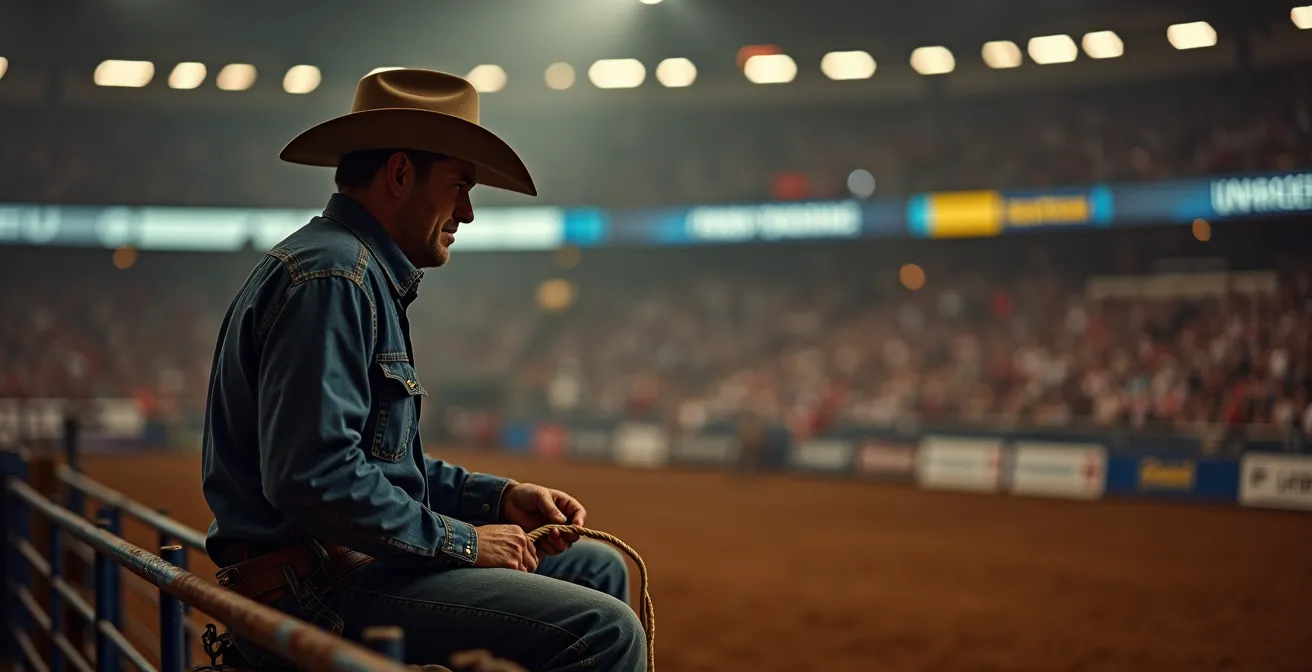
The roar of the crowd, the explosion from the chute… a rodeo can feel like pure chaos if you don’t speak the language. This guide is your personal announcer, translating the action beyond the 8-second buzzer. You’ll learn that the bull is a prized athlete, scoring is a delicate dance between man and beast, and every event in the arena tells a story. Forget being a confused tourist; it’s time to become an informed fan.
Alright folks, listen up! You’re sitting there, maybe at the NFR in Vegas or the Houston Rodeo, the smell of dust and popcorn in the air. The announcer’s voice is booming, the music is blaring, and a cowboy just got launched into the stratosphere by a two-thousand-pound beast. You clap when everyone else does, but you’re wondering: What just happened? Everyone knows the goal is to stay on for eight seconds, but that’s like saying the goal of football is just to cross a line. There’s a whole universe of skill, strategy, and culture playing out in that arena that most people miss entirely.
You’ve heard the basics: the rider can’t touch the bull with his free hand, and the scoring is out of 100. But that’s just scratching the surface. What makes one ride an 85 and another a 92? Why do the cowboys treat their hats with more reverence than a family heirloom? And why does it seem like the bull gets better treatment than the rider? This isn’t just a simple sport; it’s a spectacle rooted in Western heritage. This guide is your insider pass. We’re going to decode the hidden language of the rodeo, from the nuances of the score to the unwritten rules of the grandstands. By the end, you won’t just be watching the action—you’ll be seeing the 8-second symphony for the masterpiece it is.
To see what the absolute pinnacle of this sport looks like, watch this. This is the legendary 100-point ride—perfection in the dirt, where both bull and rider perform flawlessly. This is the moment every single person in the arena, from the cowboys to the fans, dreams of witnessing.
In this guide, we’ll break down everything you need to know to appreciate the artistry and athleticism on display. From the surprising economics of bull welfare to the subtle etiquette that separates a rookie from a regular, here is your roadmap to gaining true arena intelligence.
Summary: Your Guide to Rodeo Intelligence
- Why the Bull Is Treated Better Than the Cowboy?
- How to Wear a Cowboy Hat Without Looking Like a Costume Party Tourist?
- Barrel Racing vs. Roping: Which Event Requires More Horse Skill?
- The Fence Mistake That Puts Front Row Spectators at Risk
- When to Visit Cheyenne to Catch the ‘Daddy of ’em All’?
- How to Prep a Classic Mustang for a 2,000-Mile Desert Crossing?
- Why Rural Kids Spend All Year Preparing for a 3-Day Fair?
- How to Drive Route 66 Today Without Getting Lost in Dead Ends?
Why the Bull Is Treated Better Than the Cowboy?
Let’s get one thing straight, folks. While you’re cheering for the cowboy, the most valuable athlete in that arena is the bull. These aren’t just angry farm animals; they are multi-million dollar assets, bred for performance and treated like royalty. A top-tier bucking bull is a genetic masterpiece, and their owners protect that investment with a level of care that would make a Kentucky Derby winner jealous. The rider is a contractor here for eight seconds of glory; the bull is the franchise player.
Think about it this way: a good bull can have a career spanning nearly a decade, while the average professional rider lasts just a few brutal years. This economic reality dictates everything. Bulls receive 10-15 pounds of high-protein grain and about 15 pounds of high-quality hay every single day. Many even get regular chiropractic care and acupuncture to keep them in peak physical condition. They are transported in spacious, comfortable trailers and buck, at most, once a day at events. The flank strap you see? It’s a soft cotton rope designed to encourage a kick, not to inflict pain—an uncomfortable bull simply won’t perform.
Case Study: The Hawaii Bull Transportation Investment
To understand the “asset vs. athlete” dynamic, look no further than a PBR event in Hawaii. In 2006, the PBR faced a choice: transport their star bulls by boat for around $100,000 or fly them in custom-built, air-conditioned containers for nearly $350,000. As PBR’s own animal welfare statement confirms, they chose the far more expensive flight. This wasn’t just about logistics; as PBR’s commitment to animal welfare shows, it was a multi-hundred-thousand-dollar decision prioritizing the comfort and safety of their animal athletes over massive cost savings. This is the level of investment we’re talking about.
So next time you see a bull explode out of the chute, remember you’re watching a world-class, pampered athlete. The cowboy is the daredevil, but the bull is the star of the show, and his treatment reflects that status. It’s a crucial piece of arena intelligence that changes how you see the entire event.
How to Wear a Cowboy Hat Without Looking Like a Costume Party Tourist?
Alright, let’s talk about the uniform. Nothing screams “tourist” louder than a cheap, misshapen cowboy hat worn incorrectly. Here in the stands, your hat is a statement. It signals respect for the tradition and shows you’re part of the culture, not just a visitor. Achieving that Western authenticity isn’t hard, but it requires knowing a few non-negotiable rules of etiquette. It’s about more than just covering your head; it’s a sign of respect for the flag, the sport, and the fallen.
First, the basics. That little bow or buckle on the hat band? It always goes to the back. Always. Putting it on the front is the cardinal sin of cowboy hat wear. Second is the material. The unwritten rule is “straw after Easter, felt after Labor Day.” While not a deal-breaker for a spectator, following this seasonal guide shows you’re in the know. But the most important rules are about when to take the hat *off*. A true fan knows that a hat is removed for moments of reverence. This isn’t just polite; it’s a deeply ingrained part of rodeo culture.
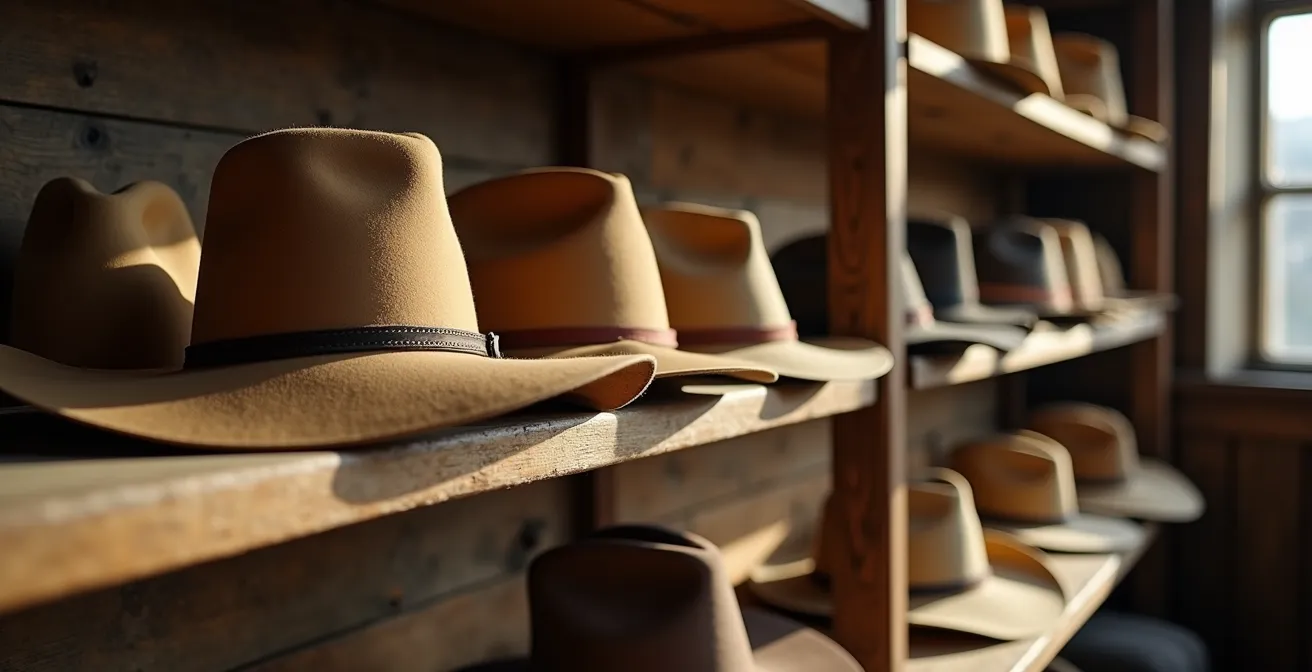
As you can see from the variety of styles, from the classic “Cattleman” crease to the more modern “Brick,” there’s a hat for every personality. But no matter the style, the rules of respect are universal. Observing them is the quickest way to earn a nod of approval from the lifelong fans around you.
Your Action Plan: Cowboy Hat Etiquette
- The Anthem & Prayer: Remove your hat during the US National Anthem and any opening prayer. No exceptions. Hold it over your heart.
- Fallen Rider: If a rider is seriously injured and the arena goes quiet, take your hat off as a sign of respect until they are safely out of the arena.
- Check Your Bow: Before putting it on, ensure the small bow or buckle on the band is at the back of your head. This is the most common rookie mistake.
- Seasonal Materials: To blend in, opt for a straw hat in the spring and summer months and switch to a felt hat after Labor Day for fall and winter.
- Indoors: Traditionally, you remove your hat when entering a building, especially a home or a restaurant. In a modern rodeo concourse, this rule is more relaxed, but for the anthem, it’s absolute.
Barrel Racing vs. Roping: Which Event Requires More Horse Skill?
Before we get to the main event—the raw, explosive power of bull riding—the arena hosts a series of events that showcase a different kind of athleticism: speed, precision, and an incredible partnership between horse and rider. I’m talking about events like barrel racing and team roping. For the newcomer, they might seem like fun “warm-up acts,” but they are fiercely competitive sports that demand years of training and a near-telepathic connection with a highly intelligent animal.
As one seasoned rodeo coordinator put it, these events are intentionally designed to build the energy in the arena. According to a Silver Spurs Rodeo analysis, they are “opening acts’ [that] showcase speed and precision, designed to build crowd energy leading to the raw power and explosive climax of the bull riding main event.” But which one requires more horse skill? That’s like asking if a sprinter or a surgeon is more skilled. They are different disciplines entirely. Barrel racing is a test of pure athletic synergy—speed and agility. Team roping is a test of synchronized strategy—precision and timing under pressure.
Here’s a breakdown to help you appreciate the different skills on display. Notice how the dynamic between horse and rider shifts from a perfect, rehearsed dance in barrel racing to a coordinated, reactive partnership in roping. Each is a masterclass in horsemanship.
| Event | Primary Skill | Horse-Rider Dynamic | Scoring Method |
|---|---|---|---|
| Barrel Racing | Speed & Agility | Perfect synchronization | Timed (fastest wins) |
| Team Roping | Precision & Timing | Coordinated partnership | Timed with penalties |
| Bull Riding | Balance & Strength | Man vs. beast confrontation | Points (up to 100) |
While bull riding is a fight against chaos, these events are a demonstration of perfect control. Appreciating the difference in skill sets is key to understanding the full spectrum of talent at a rodeo. One is about conquering a beast, the others are about dancing with a partner.
The Fence Mistake That Puts Front Row Spectators at Risk
Now, I see you folks down in the front row, and I know you paid for the best seats to be close to the action. But let’s talk safety, because a two-thousand-pound bull with a bad attitude doesn’t care about your ticket price. The most common mistake a first-timer makes is assuming every spot along the fence is equally safe. It’s not. There are specific zones where a loose bull is more likely to run, and knowing where they are is your first line of defense.
Your safest bet for a front-row seat is always near the bucking chutes—the area where the bulls and riders start. This zone is heavily reinforced and has a clear escape route for personnel. The most vulnerable spots are typically along the long, open stretches of the arena fence. While modern arenas have excellent safety features, a determined bull can still get close. But your real insurance policy isn’t the fence; it’s the two or three guys in the middle of the arena who look like they’re dressed for a circus. These are the bullfighters.
PBR Safety Innovation: The Modern Bullfighter
Don’t call them rodeo clowns. The modern bullfighter is an elite athlete whose sole purpose is to protect the fallen rider. As detailed in the PBR’s own 101 guide, these professionals put their bodies on the line to distract the bull after a ride, creating a window for the cowboy to escape. They use strategic positioning and incredible agility to draw the bull’s attention away from the dismounted rider and guide it toward the exit gates, protecting everyone in the arena, including those in the front row. They are the secret service of the dirt.
When you’re choosing your seat, look for the ‘runway’ or secondary barrier between the main fence and the stands. And most importantly, keep an eye on the bullfighters. Their position in the arena is a great indicator of where the action is, and their presence is your guarantee that even when things go wrong, there are experts ready to make it right.
When to Visit Cheyenne to Catch the ‘Daddy of ’em All’?
If you’ve caught the rodeo bug and want to see the sport at its grandest, most historic scale, then you need to make the pilgrimage. I’m talking about Cheyenne Frontier Days in Wyoming, known to everyone in the rodeo world as the “Daddy of ’em All.” This isn’t just another stop on the tour; it’s the Super Bowl, the World Series, and the Mardi Gras of rodeo all rolled into one epic, ten-day festival of Western culture. For any true fan, this is a bucket-list destination.
This event has been running for over a century and it’s where legends are made. The scale is immense, the competition is the fiercest, and the atmosphere is electric. Planning a trip requires a little foresight, as hotels and tickets sell out months in advance. The event is a massive celebration that goes far beyond the arena, with parades, pancake breakfasts, an old-time Western village, and nightly concerts from the biggest names in country music. For instance, the 129th annual Cheyenne Frontier Days is scheduled for July 18-27, 2025, a ten-day-long spectacle.
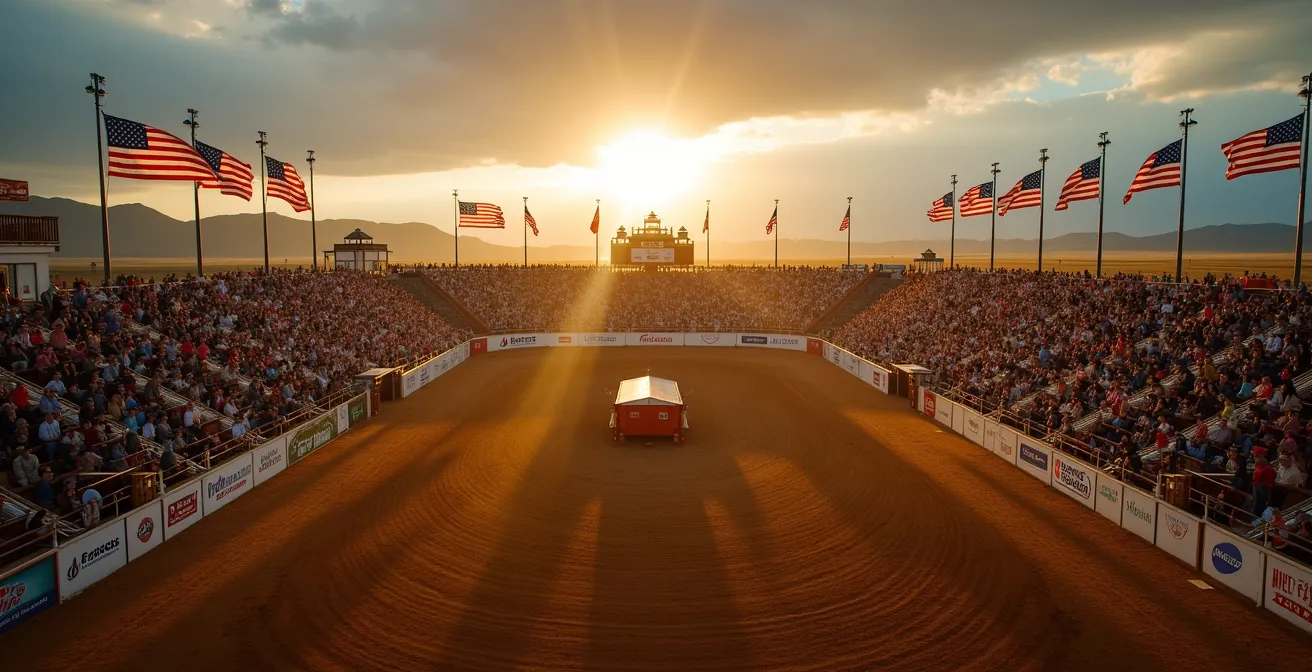
To truly experience it, you need more than a single afternoon. A 3-day trip is ideal. You could start your morning with a free pancake breakfast downtown, spend the afternoon at the PRCA Rodeo, and cap off the night with a concert under the Wyoming stars. Don’t miss the Grand Parade, a spectacle with horses, antique carriages, and marching bands that feels like a trip back in time. This is more than a rodeo; it’s a full-immersion experience into the heart of American Western heritage.
How to Prep a Classic Mustang for a 2,000-Mile Desert Crossing?
That’s an interesting question, but let me reframe it for you. How do you prep a human body for 8 seconds of the most violent, unpredictable motion imaginable? The answer is the same: it’s all about meticulous preparation, balance, and core strength. You think these cowboys just hop on and pray? Wrong. A bull ride is a technical performance, and success is forged long before the chute gate opens. Just like you wouldn’t take a classic car on a cross-country trek without tuning the engine and checking the chassis, a rider doesn’t face a bull without perfecting his form.
The rider’s body is the machine. The goal is to stay perfectly centered, using your core and inner thighs to counter the bull’s explosive movements. As second-ranked PRCA bull rider Shawn Hogg explained to Texas Monthly in a detailed breakdown, it’s a science of posture: “Lift on your rope to stay seated on the bull’s back and keep yourself centered—don’t lean too far back or too far forward. Stick your chest out and hold your free hand up.” That free hand isn’t for show; it’s a counterbalance, like a tightrope walker’s pole, helping the rider adjust to every spin and kick.
The 8-Second Physical Preparation of Wiley Petersen
Professional bull rider Wiley Petersen is a perfect example of preparation beating raw talent. For years, he relied on natural ability. But after a slump, he committed to a systematic training regimen with a dedicated coach. The transformation was profound. By focusing on core strength, balance exercises, and mental visualization, his confidence soared and his riding percentage increased dramatically. It proved that in a sport of chaos, the most prepared athlete has a definitive edge. It’s not about being the strongest; it’s about being the most controlled.
So, when you’re watching a ride, don’t just see a guy holding on for dear life. Watch his posture. See how he keeps his chest out and his eyes focused. Notice how his free arm moves to counter the bull’s spin. You’re not watching a passenger; you’re watching a highly-tuned pilot navigating a storm.
Why Rural Kids Spend All Year Preparing for a 3-Day Fair?
Every single champion you see in this main arena, earning six-figure checks, started somewhere. And that somewhere is usually a dusty local fair, riding a sheep. That’s not a joke! The journey to the PBR is a long, arduous road that begins in childhood. This is the pipeline, the grassroots system that develops the next generation of rodeo stars. For these rural kids, the 3-day county fair isn’t a vacation; it’s the culmination of a year’s worth of work, the first step on a professional ladder.
The progression is a core part of American rodeo culture. A young kid might start with “mutton bustin'” (sheep riding) at age five. If they show promise, they graduate to junior steer riding around age eight. By their teens, they are joining high school rodeo associations, traveling every weekend to competitions, and practicing on bucking machines or at clinics run by former pros. This isn’t a casual hobby; it’s a lifestyle that requires immense family support and significant financial investment, including annual membership fees and travel costs.
This ladder has clear, defined rungs. It’s a dedicated path that weeds out those who lack the commitment long before they ever see a professional arena. Here’s what that journey looks like:
- Ages 5-7: Start with “mutton bustin'” at local fairs to learn balance and overcome fear.
- Ages 8-12: Progress to junior steer riding, facing larger and more challenging animals.
- Ages 13-17: Join high school rodeo programs, competing regularly and attending training clinics.
- Age 18+: Purchase a professional membership card (like for the PBR) and begin entering pro-level events, starting from the bottom.
So when you watch a rider nod his head in the chute, you’re not just seeing an 8-second ride. You’re seeing the result of a fifteen-year journey that started on the back of a sheep, fueled by passion, sacrifice, and an entire community’s support.
Key Takeaways
- Bull riding scoring is a 100-point system, with 50 points for the bull’s performance (difficulty) and 50 for the rider’s skill (control).
- The bulls are highly valuable, meticulously cared-for athletes, often receiving better treatment and having longer careers than the riders.
- Success is not luck; it’s the result of intense physical preparation focusing on core strength, balance, and technique, often starting from a young age.
How to Drive Route 66 Today Without Getting Lost in Dead Ends?
Alright, let’s bring it all home. Navigating the world of rodeo for the first time can feel like driving old Route 66 without a map—full of confusing turns, dead ends, and inside knowledge you wish you had. This is your final map. Let’s talk about the most important part: the score. Understanding the score is the key that unlocks the entire sport. It turns chaos into a calculated performance.
Remember this: it’s a 100-point system, and it’s a 50/50 partnership. The rider is judged on a scale of 0-50 for his control, rhythm, and spurring technique. He needs to look in command, matching the bull’s movements like a dance partner. At the same time, four different judges are scoring the bull from 0-50 based on his raw power, difficulty, and athleticism. How high does he kick? How fast does he spin? How much attitude does he show? A great ride on a dull bull won’t score high, and a rider who barely hangs on to a superstar bull won’t either. The magic happens when a great rider meets a great bull, both having their best day.
And if you’re ever on a real road trip through the heart of rodeo country, you’re never far from the action. Historic venues dot the landscape near the old Mother Road, each with its own story.
| State | Venue | Event Highlights | Distance from Route 66 |
|---|---|---|---|
| Oklahoma | Lazy E Arena | National Finals Steer Roping | 15 miles |
| Texas | Cowtown Coliseum | PBR weekly events | Adjacent |
| New Mexico | Rodeo de Santa Fe | Traditional rodeo since 1949 | 5 miles |
Your journey to understanding rodeo ends here. You now have the map. You know that the bull is an athlete, the rider is a technician, the gear has its own code, and the score is a duet. You’re no longer lost on a backroad; you’re on the main drag, ready for the show.
Now that you have the insider’s playbook, the next step is to use it. At the next event, listen for the scores, watch the bullfighters, and notice the details you never saw before. You’re not just a spectator anymore. Welcome to the world of rodeo!
Frequently Asked Questions About Bull Riding
Is scoring just about staying on for 8 seconds?
No, riders score 0-50 points based on control, rhythm, and spurring technique while bulls score 0-50 for difficulty, creating a combined 100-point maximum. Simply staying on for 8 seconds with poor form will result in a low score.
What does ‘in the well’ mean?
This is announcer slang for when a rider gets pulled too far forward over the bull’s shoulders, dropping down between them. It’s a position of no control from which recovery is nearly impossible, almost always leading to a quick buck-off.
Should I leave after the regular rounds?
Never! The ‘short-go’ or championship round is the grand finale. It features the top-scoring riders from the preliminary rounds matched up against the highest-ranked, most difficult bulls. This is where the biggest scores and most exciting rides happen.